Boosting quality, productivity and uptime with Premier Automation
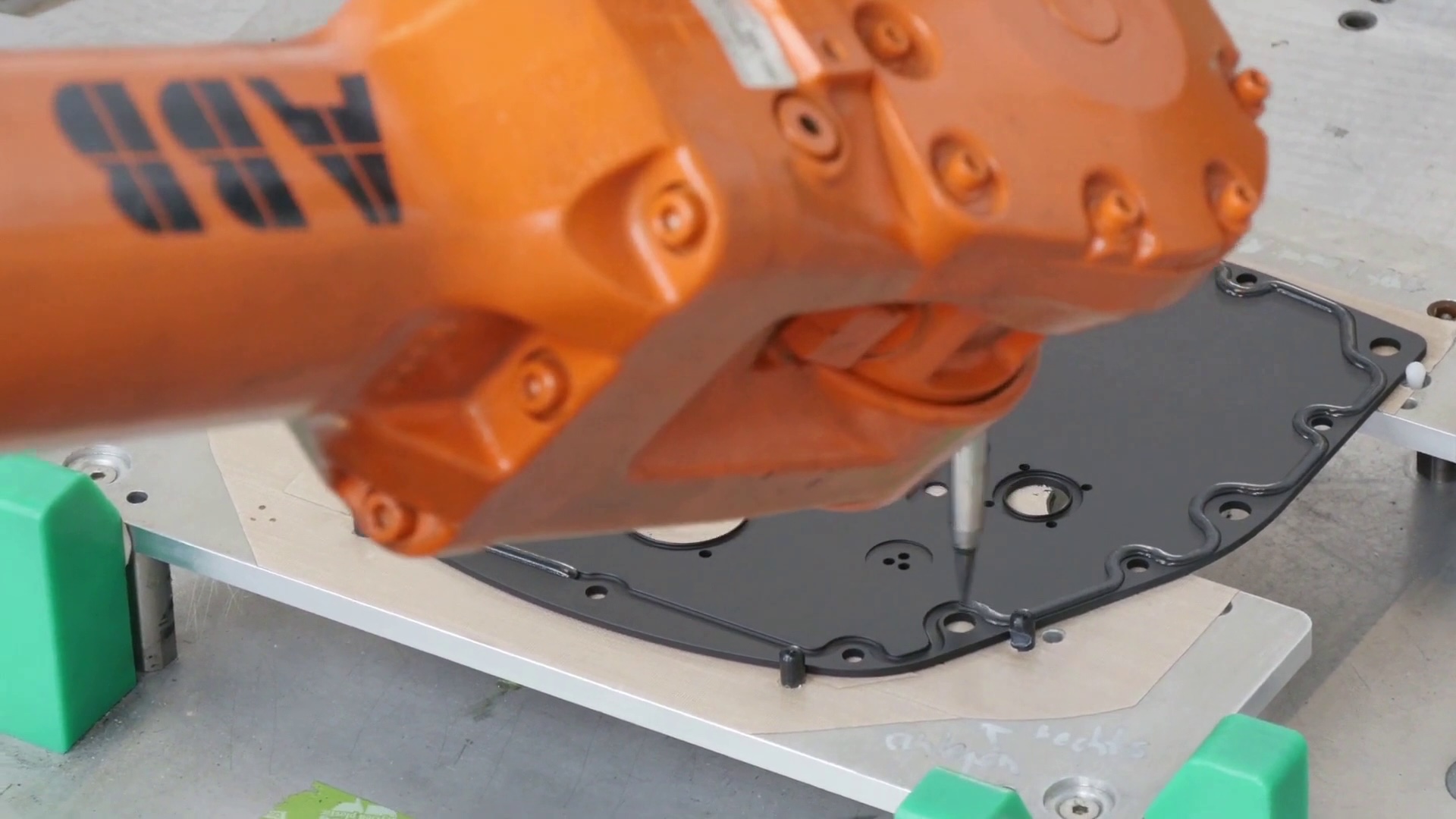
In a competitive manufacturing environment, welding needs to be consistent, efficient and repeatable, with minimal rework and reliable throughput. Robotic Welding Systems are increasingly chosen by UK manufacturers because they can stabilise quality, reduce cycle times, improve operator safety, and help production teams cope with labour shortages and rising demand. When designed correctly, robotic welding becomes more than an automation project, it becomes a long-term capability that supports growth, product changes, and better overall equipment effectiveness.
Premier Automation designs and builds new robot systems, integrates used robots, and modifies or updates existing automated systems to meet customers’ process requirements and payback criteria. Founded in 2000, we’ve quickly developed into one of the UK’s leading suppliers of robot-based automation and control systems. Operating from our large Bedford facility, we support customers nationwide with design, manufacturing, controls, installation, commissioning, programming, and after-sales support, all delivered by a highly skilled team of designers, mechanical and electrical engineers.
Robotic Welding Systems for repeatable weld quality and less rework
When welding is performed manually, results can vary between operators, shifts and even across the same shift as fatigue sets in. Small differences in torch angle, travel speed, contact tip distance or joint positioning can lead to spatter, undercut, porosity or inconsistent penetration. Robotic Welding Systems help reduce that variation by repeating the programmed path with controlled speed and timing, producing more uniform results across batches.
This consistency improves quality and also improves planning. When weld quality becomes predictable, inspection and rework reduce, and downstream processes become more stable. In many environments, that translates directly into higher output with the same labour hours.
Premier Automation has established a reputation for excellence in robot integration, with experience integrating a wide range of robot models from the world’s leading manufacturers in diverse applications. That matters because welding cells are not just a robot arm and a torch. They are a complete engineered system where fixturing, guarding, process equipment, controls, and programming all work together to achieve a reliable weld outcome.
Robotic Welding Systems designed around your parts, volumes and payback
No two welding jobs are identical. Material types, joint geometry, part tolerances, batch sizes, takt time, and factory layout all influence the best approach. Robotic Welding Systems should therefore be engineered around your technical and commercial criteria, not forced into a one-size-fits-all solution.
Premier Automation provides honest and unbiased advice to guide you to the most appropriate automation. We welcome the opportunity to share our experience and help identify the right solution to your production problems. Sometimes that means a fully automated high-throughput cell; other times it means a flexible system that handles multiple products with fast changeovers; and in some cases it may mean upgrading or re-engineering an existing robot system rather than starting again.
A typical project begins with a detailed discussion and, where needed, a site survey to understand:
- The parts you weld, the joints involved and the acceptance criteria
- Current cycle times, bottlenecks and throughput targets
- How parts are currently presented, and the fixturing opportunities
- Where quality issues or rework commonly arise
- Safety requirements and operator interaction
- How often product changes are expected
- The payback criteria and the wider impact on production
From there, the system can be designed to deliver robust performance with a clear focus on return on investment.
Controls that are intuitive and compliant
In any automation system, the control system is the heart of the installation. Robotic Welding Systems must be functional, reliable and also intuitive for the people using them every day. A clear interface, sensible fault handling, safe modes, and maintainable documentation all contribute to higher uptime and easier support.
Premier Automation specialises in designing and manufacturing new control systems for a wide range of industrial applications, including robots, special purpose machinery and process lines. We are proud to be a Siemens Solution Partner, and our design work is executed in the latest Eplan platform. We can provide full schematics, parts lists, panel layouts, cable schedules, EN13849 safety reports and controls risk assessments, supporting both safety and compliance.
All panel build is carried out internally by fully qualified electricians, and all control panels are fully tested in our workshop prior to despatch. During installation and commissioning, our controls electricians wire and connect the system, then test power supplies and inputs/outputs before our software engineers install and commission the control software and deliver any required training. This approach reduces project risk and ensures the system is built, tested and supported by a team that understands it end to end.
Robotic Welding Systems that can evolve through upgrades and relocation
Manufacturing needs change. Parts evolve, volumes rise, factories reorganise, and equipment ages. The best Robotic Welding Systems are built to adapt, and sometimes the smartest route is to upgrade, re-engineer or relocate an existing system.
Premier Automation offers a comprehensive range of services for customers looking to upgrade or re-engineer existing automation, or relocate systems within a facility, to a new UK location, or internationally. The first stage is typically a site survey visit where we assess all elements of the system and discuss requirements in detail.
A system upgrade may be needed because performance has declined over time, components require replacement, throughput demands have increased, or a new product needs a modified weld path, different tooling, or different fixturing. In other cases, a customer may want to re-use an existing robot in a new cell, which can be highly cost effective when managed correctly.
Our in-house machining and fabrication facilities help us deliver changes quickly, including tooling parts, robot pedestals, support frames, machine guarding and spreader plates. Our experienced team can also assemble and wire parts and sub-assemblies, supporting faster turnaround where downtime needs to be minimised.
Powered by advanced programming and digital twin
Programming is often where performance is won or lost. Premier Automation provides robot and PLC programming support across a comprehensive range of systems, from modifications to existing programmes through to Industry 4.0 digital twin development. We use tools such as Robot Studio and Siemens PLC Sim to create and edit programmes offline, helping minimise downtime at the point of installation.
Off-line programming allows you to optimise cell design before manufacture, refining reach, clearance, cycle time and weld paths early. It can also be used to re-programme working cells without shutting down production for long periods. On-site, our engineers can re-programme existing robot systems to improve performance or accommodate new products, including systems integrated by other companies as well as our own.
Choosing Premier Automation for robotic welding
Robotic welding delivers its best results when it is treated as a full engineered solution: robot selection, cell layout, fixtures, controls, safety, programming, and support. Premier Automation combines deep integration experience with strong control system capability, in-house build quality, and practical support across the full lifecycle of the system.
If you’re considering Robotic Welding Systems, we welcome the opportunity to discuss your requirements, assess your current process, and recommend a solution that meets your technical needs and your payback criteria. From single cells to more sophisticated automation, we’ll help you create a robust, reliable installation that improves quality, productivity and uptime for years to come.