Automated Palletising In London for Faster, Safer End-of-Line Operations
For manufacturers and logistics teams around London, Automated Palletising In London is becoming a practical way to improve output, reduce manual handling, and keep packing areas running smoothly. Premier Automation designs and integrates robot systems that help businesses stack products accurately, safely, and consistently, with solutions tailored to real production demands.
Why Automated Palletising In London is a smart investment
Palletising is one of the most repetitive jobs on a production line. It can also be one of the most physically demanding, especially where cartons, bags, trays, or containers are moved continuously across long shifts. Manual pallet loading often leads to inconsistent stacks, slower throughput, and avoidable strain on staff.
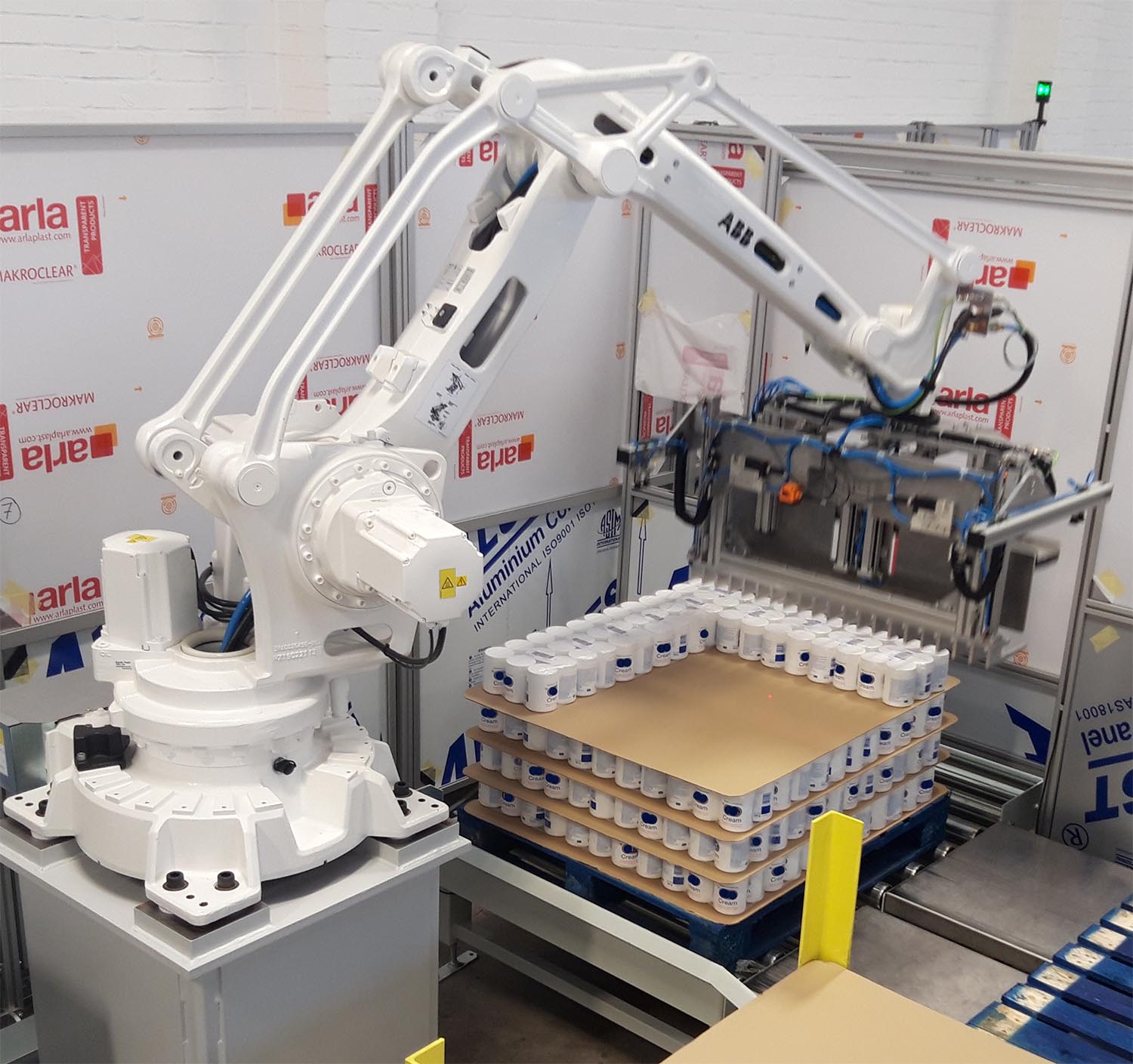
Automation solves these issues by giving you a repeatable process. A robotic palletising cell can place products in the same pattern every time, helping improve load stability and reducing product damage in storage and transport. It also allows staff to move into more valuable roles such as quality checks, line supervision, or materials planning.
For growing businesses, another benefit is flexibility. Product sizes, packaging formats, and pallet patterns can change over time. A well-designed system can be programmed to handle multiple recipes, which means your automation supports future growth rather than locking you into one product format.
How Automated Palletising In London improves safety and consistency
Safety is a major reason businesses upgrade end-of-line processes. Repetitive lifting, twisting, and stacking can increase the risk of workplace injuries. A properly integrated robotic system reduces these manual tasks and helps create a safer working environment. Premier Automation builds systems with safety in mind, including guarding, controls, and risk assessment processes aligned with UK requirements.
If you are reviewing your current setup, it is also worth reading the HSE guidance on machinery and work equipment safety at HSE Machinery Safety. This gives a helpful overview of employer responsibilities and safe operation principles.
Consistency is another big advantage. Robots do not tire during a shift, and they do not vary their placement from one pallet to the next. That means neater stacks, fewer collapsed loads, and smoother handover to wrapping, warehousing, and transport. Over time, these small gains add up to better performance across the whole operation.
What to expect from a modern palletising system
A modern palletising setup can be designed around your line rather than the other way round. Depending on your products and available space, the system may include single or twin infeed conveyors, pallet positions, pallet handling, and integration with downstream equipment such as stretch wrappers.
Premier Automation works across a wide range of automation projects and applies that experience to palletising cells, including robot integration, control systems, programming, and commissioning. This is important because palletising is never just about the robot itself. The best results come from good overall system design, including product flow, gripper selection, controls, and operator access.
Many businesses also want the option to upgrade existing equipment rather than replace everything. In some cases, an older system can be re-engineered to improve cycle times or handle new products. In others, a complete new cell provides the best payback. The right route depends on your current process, output targets, and floor space.
If you are comparing suppliers, it can be useful to review industry resources from organisations such as BARA, which supports automation and robotics across UK manufacturing.
Automated Palletising In London for different production environments
No two production sites are the same, which is why palletising systems need to be matched to the application. A food producer handling cartons has different needs from an engineering business moving heavy boxed components. Throughput, product stability, line speed, and changeover frequency all affect the final design.
Some businesses need a straightforward single-line palletising cell for one product. Others need multi-line handling, multiple pallet positions, or integration with conveyors and wrapping systems. There is also growing interest in cobot palletising for operations that need a compact footprint and easier changeovers, especially where product volumes vary.
For many operations, Automated Palletising In London also supports longer running times and better planning. When pallet loading is automated, production can continue with fewer stoppages, and teams can focus on stock movement, machine performance, and quality control instead of constant manual stacking. This is especially useful for sites aiming to improve throughput without expanding headcount in the same area.
Choosing a partner for Automated Palletising In London
The best automation projects start with a clear understanding of your process. A good integration partner will assess your current line, review the products you handle, and recommend a system that makes commercial sense as well as technical sense. That includes honest advice on whether a new system, upgrade, or reconfiguration is the better option.
Premier Automation has extensive experience across robot integration, control system design, programming, fabrication, installation, and after-sales support. That joined-up approach makes a real difference because your palletising cell is part of a wider production process, not a stand-alone purchase.
It also helps to choose a team that can support future changes. Packaging formats evolve, customer requirements change, and production volumes rarely stay the same for long. Working with an experienced automation partner means your system can be adapted as your business grows.
If you are planning improvements to your end-of-line process, Premier Automation can help you explore practical palletising options that fit your site, your products, and your production goals. From new robot cells to upgrades and system integration, their team can guide you towards a reliable solution that delivers long-term value.