How can Automated Palletising help me? A Practical Guide for Manufacturers
How can Automated Palletising help me? For many manufacturers, packers and logistics operations, the answer starts with labour efficiency, safer handling and more consistent end-of-line performance. If your team is manually stacking boxes, bags, cartons or containers onto pallets every day, automated palletising can remove repetitive strain, improve load quality and help your production line keep moving at a steady pace.
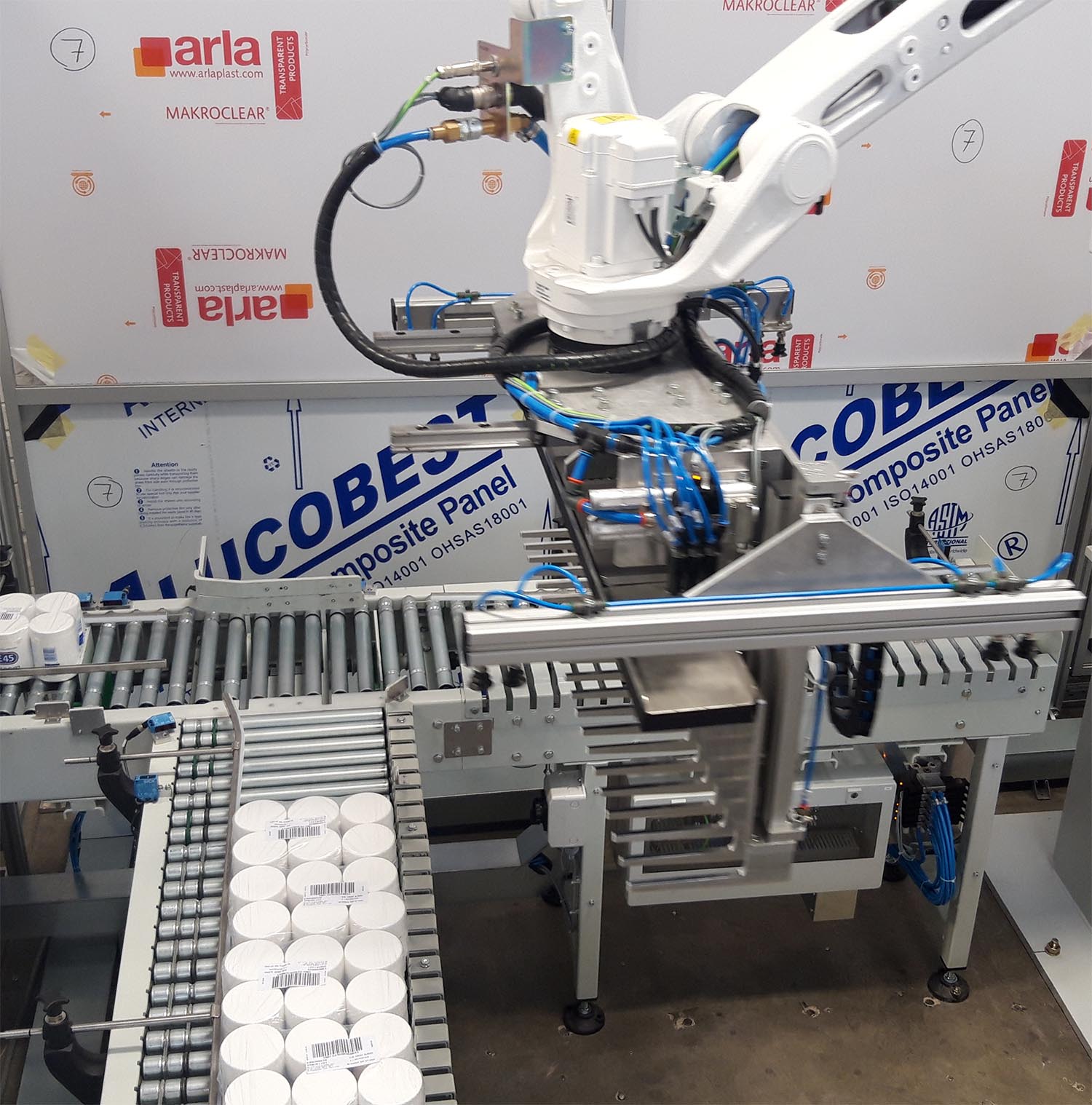
Automated palletising uses a robot, cobot or purpose-built handling system to pick products from a conveyor and place them onto pallets in a set pattern. The system can be designed around your product size, weight, packaging type, pallet format, available floor space and production targets. For businesses under pressure to increase output without adding more manual handling, it can be a highly practical investment.
Premier Automation designs and builds new robot systems, integrates used robots, modifies existing automated systems and re-engineers older robot cells to improve efficiency. Based in Bedford, the company supports manufacturers across the UK and internationally with automation systems designed around real production needs.
How can Automated Palletising help me reduce manual handling?
Manual palletising is physically demanding. Operators may need to lift, twist, reach and repeat the same movement hundreds or thousands of times during a shift. Over time, this can increase fatigue, slow production and raise the risk of injury. The Health and Safety Executive provides guidance on workplace machinery and safe use of equipment, which is relevant when businesses are reviewing manual and automated processes: HSE Machinery Safety.
An automated palletising system can take over the repetitive lifting and stacking work. This allows staff to focus on supervision, quality checks, materials movement, machine operation and other tasks that add more value. It can also help create a more stable working environment by reducing reliance on manual labour for physically demanding roles that may be difficult to recruit for.
For products such as cartons, trays, sacks, tubs or cases, a well-designed robot or cobot palletising cell can provide repeatable handling while reducing pressure on the workforce. Premier Automation has experience designing special grippers for different products, helping ensure the robot can handle the item safely and accurately.
Improving consistency at the end of the line
One of the biggest advantages of automated palletising is consistency. Manual stacking can vary from one operator to another, especially during long shifts or busy periods. Uneven pallets can cause issues during wrapping, storage, transport and unloading. A robot follows the same pattern each time, helping to create neat, stable and repeatable pallet loads.
This can reduce product damage and improve confidence in how goods leave the production area. If your products are moving through conveyors, stretch wrappers or downstream logistics equipment, consistent pallet presentation can make the whole process smoother.
Premier Automation can integrate palletising systems with other equipment, including conveyors and stretch wrappers, to form a more complete end-of-line solution. This is useful for manufacturers that want more than a standalone robot cell and need a joined-up system that fits into their existing process.
How can Automated Palletising help me increase productivity?
How can Automated Palletising help me increase output? The main benefit is that a robot can work at a steady, predictable rate without the same fatigue limitations as manual palletising. This does not mean every application requires the fastest robot available. The best system is the one that matches your line speed, product type, available space and payback criteria.
For some businesses, the improvement may come from faster cycle times. For others, it may come from fewer stoppages, reduced manual handling delays or better use of operators across the factory. A robot palletising system can also support longer production runs, shift changes and more consistent performance during peak demand.
Premier Automation provides honest and unbiased advice on whether automation is right for a specific application. Automation is not suitable for every process, so a proper review of the product, line layout, throughput requirement and commercial case is essential before moving forward.
Supporting different products, patterns and layouts
Modern palletising systems can be designed for single lines, multiple lines, single pallet positions, twin pallet positions or conveyor-fed pallet arrangements. This flexibility matters because no two production sites are exactly the same. Some businesses need a compact cobot palletising cell. Others need a higher-speed industrial robot with multiple infeeds and integration into existing machinery.
Premier Automation offers several palletising cell options, including systems based around ABB palletising robots and ABB GoFa cobots. Options can include carton pre-orientation, multiple infeeds, pallet conveyors and integration with downstream equipment. This means the system can be tailored to the product flow, rather than forcing the customer to change the entire production process around the robot.
The British Automation & Robot Association is a useful industry body for understanding the wider role of robotics and automation in UK manufacturing: BARA. As more companies review productivity, labour availability and safety, robotic palletising continues to be a practical area for automation investment.
How can Automated Palletising help me make better use of space?
How can Automated Palletising help me if floor space is limited? A well-designed system can be built around the space available, provided the product flow, guarding, pallet access and operator interaction are properly considered. In some cases, a compact cobot cell may be suitable. In others, a traditional industrial robot cell may offer the reach, payload and speed required.
The right layout depends on product size, pallet height, conveyor position, pallet movement and safety requirements. A detailed site survey helps identify what is possible and what may need to change. This is where experience matters. Poorly planned automation can create new bottlenecks, while a carefully designed system can improve the end-of-line process without unnecessary disruption.
Premier Automation can also modify, upgrade or relocate existing systems. If you already have a robot cell that no longer fits your products or production targets, it may be possible to re-engineer it rather than starting again. Existing robot systems can be adapted to reduce cycle times, handle new products or improve overall efficiency.
Making the investment work commercially
Automated palletising should be judged on practical and commercial value. The payback may come from reduced manual handling, improved throughput, fewer product damages, better labour allocation, longer running hours or a combination of these. For many businesses, the aim is not simply to install a robot; it is to solve a production problem in a cost-effective way.
This is why system design should begin with your process requirements. Product dimensions, weight, pallet pattern, wrapping needs, current staffing, shift patterns, downtime and maintenance expectations all affect the business case. A good automation partner will look at both the technical requirements and the financial criteria before recommending a solution.
Premier Automation works with customers to develop robust and reliable automation systems that meet technical and commercial needs. Its engineering team covers mechanical design, electrical engineering, control systems, robot programming, PLC programming, manufacturing, installation, commissioning and after-sales support.
How can Automated Palletising help me plan for future growth?
How can Automated Palletising help me prepare for new products or increased demand? A properly designed system can provide a stronger foundation for growth. If your product range changes, your pallet patterns evolve or your output targets increase, the system may be adaptable through tooling changes, programming updates or cell modifications.
Premier Automation uses tools such as offline programming and digital twin development to optimise cell design and reduce downtime during changes. Its team can also provide on-site robot programming, PLC programming and support for systems originally integrated by other companies.
For businesses considering palletising automation, the next step is a practical review of the process. Premier Automation can assess your production line, discuss your targets and advise whether a new robot system, used robot integration, cobot palletising cell, upgrade or re-engineered solution would be the most suitable route forward.