
What is Robot Cell Design? A Practical Guide for Manufacturers
What is Robot Cell Design? It is the process of planning, engineering and building a safe, efficient robotic work area that can carry out a defined manufacturing task with consistency. A robot cell may include the robot itself, guarding, tooling, conveyors, control panels, sensors, vision systems, safety systems and operator interfaces. For manufacturers, good cell design is not just about installing a robot. It is about creating a complete system that fits the product, the process, the available floor space and the required return on investment.
Premier Automation designs and builds new robot systems, integrates used robots, and modifies existing automated systems to suit individual production requirements. With experience across machine tending, palletising, welding, gluing, gasket dispensing, cobots, control systems and programming, the aim is always to provide a robust solution that improves productivity without overcomplicating the operation.
What is Robot Cell Design? The Basics Explained
A robot cell is a dedicated area where a robot performs one or more tasks as part of a manufacturing process. This could involve loading and unloading a CNC machine, stacking cartons onto pallets, applying adhesive, welding components, handling parts from a conveyor, or working with a vision system to identify randomly placed items.
Good design starts by understanding the process. What is the part size? How is it presented to the robot? What cycle time is required? How many product variants are involved? Does the robot need to work with operators, machines, conveyors, fixtures or external equipment? These questions shape the layout, the robot choice, the end-of-arm tooling, the control system and the safety approach.
Premier Automation provides honest, unbiased advice because automation is not suitable for every application. A well-designed cell should solve a real production problem, not simply add technology for the sake of it.
Why Cell Layout Matters
The layout of a robot cell affects cycle time, safety, access, maintenance and future flexibility. A poorly planned layout can leave operators struggling to load parts, engineers unable to reach equipment, or the robot making unnecessary movements that slow production down.
During the design stage, engineers consider how products enter and leave the cell, where operators stand, how tooling is changed, how guarding is accessed, and how the robot interacts with surrounding machinery. This is especially important in busy factories where space is limited or where an existing production area needs to be reorganised.
Based in Bedford, Premier Automation operates from a large facility with strong transport links, supporting projects locally, nationally and internationally. This includes new installations, system relocations and re-engineering projects where existing robot systems need to be moved, upgraded or adapted for new products.
What is Robot Cell Design? Safety, Controls and Compliance
What is Robot Cell Design? It is also a safety-led engineering process. A robot cell must protect operators, maintenance teams and nearby staff while allowing the system to run efficiently. This can involve machine guarding, interlocked access points, emergency stops, safety-rated controls, light curtains, scanners and clear operator procedures.
The control system is central to the cell. It manages robot communication, peripheral equipment, safety devices, operator interfaces and links to other factory systems. Premier Automation designs control systems using the latest Eplan platform and can provide schematics, parts lists, panel layouts, cable schedules, EN13849 safety reports and controls risk assessments.
For wider guidance, the HSE machinery safety guidance is a useful authority source for businesses considering automated equipment. Organisations such as BARA also provide valuable industry context around robotics and automation in the UK.
Choosing the Right Robot, Tooling and Equipment
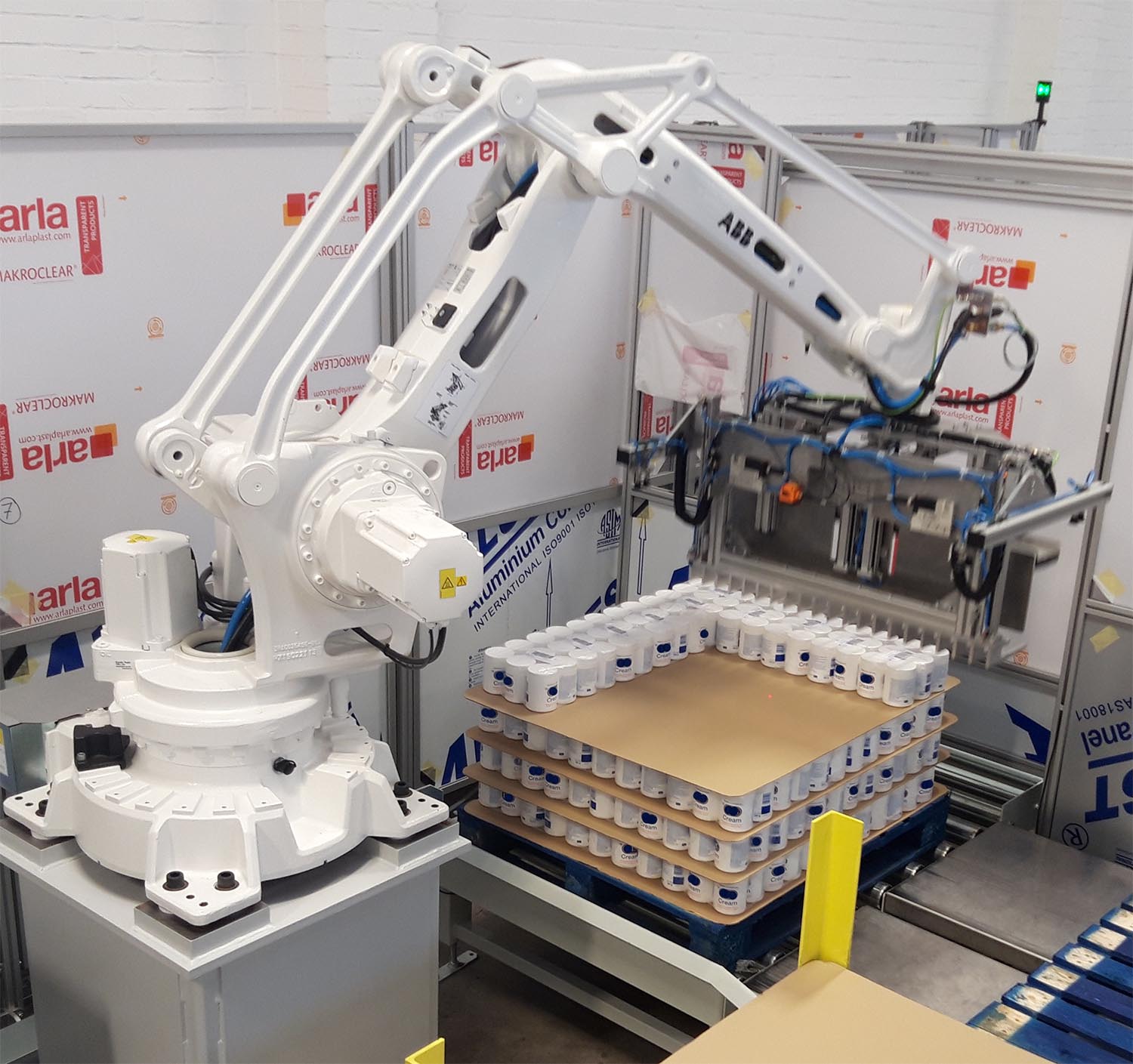
The robot is only one part of the cell. The success of the system often depends on the tooling, fixtures, conveyors, sensors and control logic around it. For example, a palletising cell may need carton conveyors, pallet positions and special grippers. A machine tending cell may need trays, pallets, machine interfaces, vision systems or quick-change tooling. A gluing or gasket dispensing cell may need accurate path control and process-specific dispensing equipment.
Premier Automation has experience integrating a wide range of robot models from leading manufacturers and holds ABB Value Provider status. This reflects proven integration, programming and training capability, helping installations operate with high levels of uptime and efficiency.
In some cases, a collaborative robot may be the right choice. Cobots can be useful for compact layouts, simpler programming and applications where flexibility is important. They are often used for palletising, machine loading, inspection, assembly and dispensing tasks. However, they still require proper assessment, tooling and safety integration.
What is Robot Cell Design? Planning for Productivity and Payback
What is Robot Cell Design? At a commercial level, it is the link between technical performance and payback. A robot cell should reduce cycle times, improve consistency, increase capacity, reduce manual handling, support longer unmanned running or improve quality. The benefits need to be measured against the cost of the system, installation, training, maintenance and any production disruption during commissioning.
Offline programming can help improve return on investment by creating a digital twin before manufacture or by allowing changes to be tested without stopping production. Premier Automation uses tools such as Robot Studio and Siemens PLC Sim to create and edit programmes offline, helping minimise downtime at the point of installation.
For existing systems, the best option may be an upgrade rather than a new cell. Older systems can often be re-engineered to improve performance, reduce cycle times or handle new products. This can involve replacing worn components, redesigning tooling, updating PLC or robot programmes, improving guarding, or relocating the system to a more efficient position within the factory.
Designing a Cell Around Real Production Needs
Every successful robot cell starts with a detailed understanding of the customer’s process. The product, handling method, required speed, available labour, future production plans and budget all influence the final design. A simple, reliable solution is often better than a complex system that is difficult to operate, maintain or adapt.
Premier Automation supports customers from initial assessment through to design, build, installation, commissioning, programming and after sales support. Control panels are built and tested in-house by qualified electricians, while mechanical engineers, electrical engineers and programmers work together to deliver complete automation systems.
What is Robot Cell Design? In practical terms, it is the careful planning of a robotic system so it works safely, efficiently and commercially for the business using it. If your company is considering a new robot system, upgrading an existing cell, relocating automation or improving production performance, Premier Automation can help assess the options and develop a cost-effective solution built around your process.