What are Robot Systems in Manufacturing? A Practical Guide for UK Production Teams
What are Robot Systems in Manufacturing? For many production businesses, they are carefully designed automation solutions that use industrial robots, control systems, tooling, guarding and software to carry out repeatable tasks with speed, accuracy and consistency. A robot system is not just the robot arm itself. It is the complete cell or process around it, built to solve a specific manufacturing challenge, whether that is palletising, machine tending, welding, dispensing, handling, loading, unloading or product assembly.
For manufacturers trying to reduce cycle times, improve output quality or make better use of labour, robot systems can offer a practical route forward. The key is choosing the right solution for the process, budget, space, safety requirements and payback target. That is where experienced integration matters.
What are Robot Systems in Manufacturing? The Core Components Explained
A robot system normally includes an industrial robot or cobot, end-of-arm tooling, control panels, PLCs, sensors, safety equipment, guarding, conveyors, fixtures and software. Each element needs to work as one complete system. The robot may carry out the visible movement, but the surrounding control system manages timing, safety, communication and interaction with other machinery.
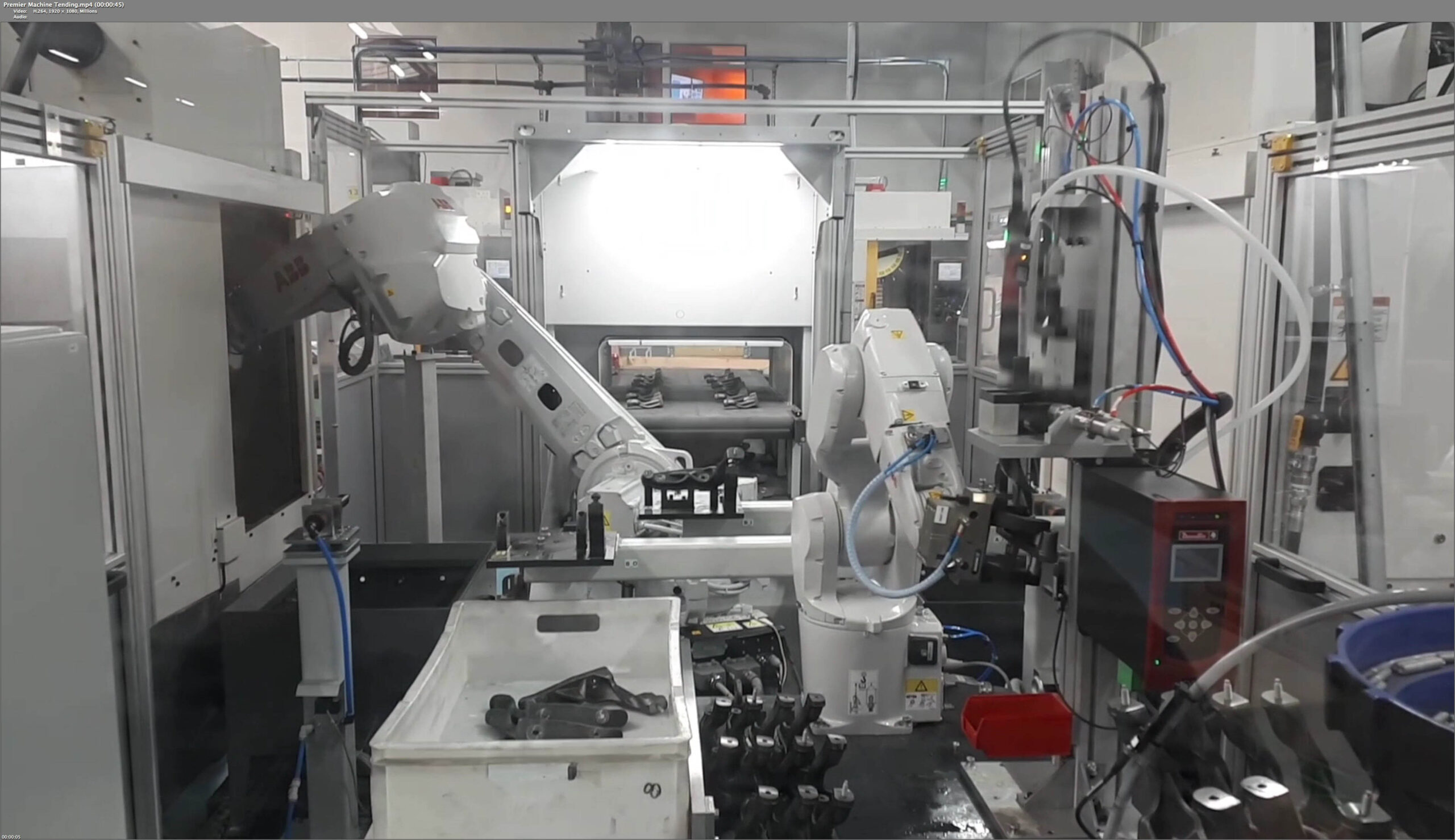
For example, a robotic palletising cell may include an infeed conveyor, pallet position, product orientation system, robot base frame, gripper, guarding and controls. A machine tending cell may include fixtures, vision, automatic doors, part trays and machine interfaces. The best systems are designed around the process, rather than forcing the process to fit a standard robot layout.
Premier Automation designs and builds new robot systems, integrates used robots and modifies existing automated systems to suit individual process requirements and commercial payback criteria.
Where Robot Systems Are Used In Manufacturing
Robot systems are used across a wide range of manufacturing and logistics applications. Common examples include palletising, machine loading, welding, gluing, gasket dispensing, pick and place, assembly support and materials handling. They are particularly useful where tasks are repetitive, physically demanding, time-sensitive or require consistent accuracy over long production runs.
In palletising, robots can stack products quickly and consistently, helping to reduce manual handling and improve load stability. In machine tending, robots can load and unload CNC machines, injection moulders or presses, allowing operators to focus on quality checks, preparation and higher-value work. In welding and dispensing, robots can repeat accurate paths that help maintain consistent results across batches.
Collaborative robots, often called cobots, are also becoming a practical option for many manufacturers. They can be useful where space is limited, product variation is high or a more flexible automation setup is needed. Their suitability still depends on the task, safety assessment and required output.
What are Robot Systems in Manufacturing? Why Integration Matters
What are Robot Systems in Manufacturing? They are engineered solutions, not off-the-shelf purchases. A robot needs to be specified, programmed, guarded, connected and tested correctly before it can deliver reliable results. Poor integration can lead to downtime, awkward operator interaction, safety issues or a system that fails to meet the required cycle time.
An experienced integrator will assess the process first. This may include product sizes, weights, throughput targets, available space, existing machinery, operator access, maintenance needs and safety requirements. From there, the system can be designed with the correct robot model, tooling, control architecture and cell layout.
Safety is a major part of any robot installation. Manufacturers should consider machinery safety guidance from the HSE, along with relevant standards and risk assessments. Trade bodies such as BARA also provide useful information around robotics and automation in UK industry.
New, Used and Re-Engineered Robot Systems
Not every project requires a completely new installation. In some cases, a used robot can be integrated into a new cell to reduce upfront cost. Existing robot systems can also be re-engineered to improve efficiency, reduce cycle times or handle new products. This can be a strong option for manufacturers that already have automation equipment but are not getting the performance they need from it.
Premier Automation can assess existing robot systems and advise whether they can be upgraded, modified, relocated or re-used. This may include replacing tooling, updating controls, revising programmes, improving guarding, integrating new conveyors or changing the robot’s role within the process.
Relocation can also form part of a wider production change. Moving a robot cell within a factory, to another UK site or to an international facility requires careful planning. Services may include strip-down, transport, recommissioning, safety checks, controls updates and operator training.
What are Robot Systems in Manufacturing? Benefits for Production Teams
The main benefits of robot systems usually fall into productivity, quality, safety and cost control. Robots can carry out repetitive tasks consistently, helping to reduce variation and maintain steady output. They can also support longer production runs, improve machine utilisation and reduce reliance on manual handling for heavy, awkward or repetitive work.
For many businesses, the payback comes from several areas working together. A robot may reduce labour pressure, cut scrap, increase throughput, improve safety and make production planning more predictable. In machine tending, for example, automated loading can help machines run for longer periods with less direct supervision. In palletising, it can reduce physical strain while keeping finished goods moving efficiently.
The right result depends on honest assessment. Automation is not suitable for every process, and a good supplier should be clear about where a robot system will add value and where a simpler solution may be better.
Control Systems, Programming and Long-Term Support
A reliable robot system depends on well-designed controls. The control panel, PLC, HMI, safety circuits, sensors and software all need to be built around the way operators and maintenance teams will use the system. Clear controls make it easier to run, fault-find and adapt the equipment over time.
Premier Automation specialises in robot integration, PLC programming, control system design, panel build, installation and commissioning. Operating from a large facility in Bedford, the company supports projects across the UK and beyond, including new systems, upgrades, relocation, offline programming and after-sales support.
Offline programming and digital twin tools can also help reduce disruption. Programmes can be created or adjusted away from the production line, helping to minimise downtime during installation or process changes.
Frequently Asked Questions
What are Robot Systems in Manufacturing?
They are complete automation setups that use robots, controls, tooling, sensors and safety systems to perform manufacturing tasks such as palletising, machine tending, welding, dispensing or handling.
Can an existing robot system be upgraded?
Yes. Existing systems can often be re-engineered with new tooling, controls, programming or layout changes to improve performance, reduce cycle times or handle new products.
Are robot systems only suitable for large manufacturers?
No. Many small and medium-sized manufacturers use robot systems, especially where they need to improve consistency, reduce manual handling or increase output without expanding floor space.
How do I know if automation is right for my process?
The best starting point is a site assessment. This helps identify the process challenge, technical requirements, safety needs, expected payback and whether a robot system is the most suitable solution.
Choosing the Right Robot System Partner
What are Robot Systems in Manufacturing? They are long-term production assets that need to be designed around real commercial and technical goals. The right partner will take time to understand the process, recommend the most suitable approach and support the system beyond installation.
Premier Automation provides cost-effective robot systems, control systems, upgrades, relocation, programming and after-sales support for manufacturers looking to improve productivity, quality and efficiency. For businesses considering automation, the team can offer practical guidance and a solution shaped around your process requirements.