What is Robot Integration in Manufacturing? A Practical Guide for Improving Production
What is Robot Integration in Manufacturing? It is the process of designing, installing and connecting robots into a production environment so they can work safely, efficiently and reliably alongside machinery, control systems, tooling, conveyors, operators and wider factory processes. For many manufacturers, the aim is not simply to buy a robot, but to create a complete working system that solves a specific production challenge.
Effective robot integration can support faster output, improved consistency, reduced manual handling and better use of skilled labour. It can also help businesses adapt to changing product ranges, rising costs and increased demand for quality. Premier Automation works with manufacturers to design and build new robot systems, integrate used robots, modify existing automated systems and re-engineer older installations to meet technical, commercial and payback requirements.
What is Robot Integration in Manufacturing? The Basics
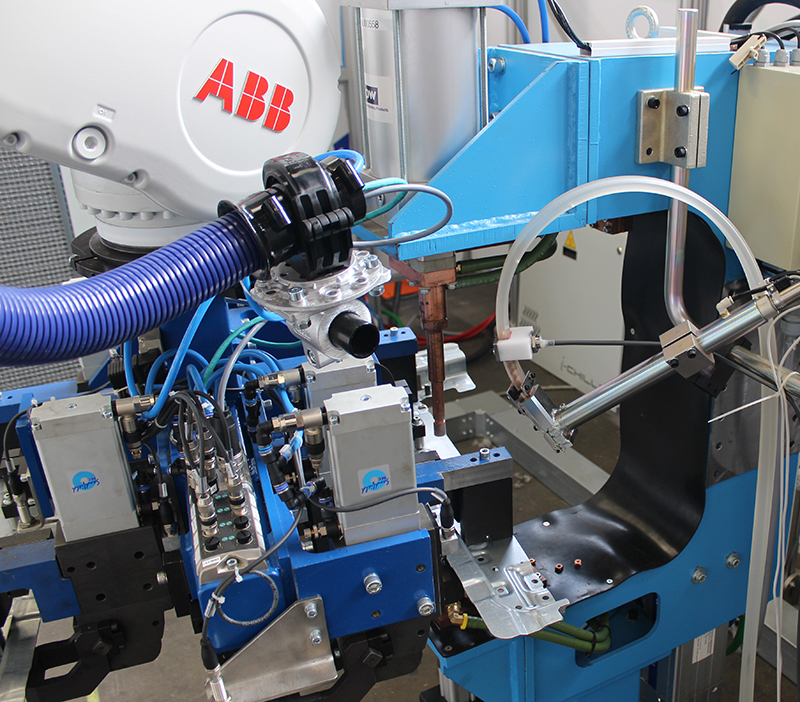
Robot integration brings together the robot, control system, safety equipment, tooling and surrounding production process. A robot may handle loading, unloading, palletising, welding, gluing, gasket dispensing, inspection or assembly, but it still needs to be carefully connected to the rest of the operation.
This often includes robot programming, PLC programming, end-of-arm tooling, guarding, sensors, conveyors, vision systems, machine interfaces and operator controls. The finished system should be safe to use, easy to operate and capable of delivering repeatable results.
Good integration starts with understanding the process. The robot must be selected and configured around the product, cycle time, space available, safety needs and expected return on investment. Automation is not suitable for every task, so honest assessment at the start helps avoid unnecessary cost and complexity.
Why Manufacturers Invest in Robot Integration
Manufacturing companies across the UK are under pressure to improve productivity, control costs and maintain quality. Robot systems can help by taking on repetitive, heavy, hazardous or high-volume tasks. This can reduce human error, improve consistency and free operators to focus on skilled work.
For example, machine tending robots can load and unload CNC machines, presses or moulding equipment with reliable timing. Palletising robots can stack cartons or products consistently, reducing manual handling and improving load stability. Welding robots can help deliver repeatable weld quality, while dispensing robots can apply glue or gaskets with accuracy.
Robot integration can also support lights-out production, where machines continue to operate with minimal supervision. This can be valuable for companies that need to increase output without extending shifts or adding unnecessary labour costs.
What is Robot Integration in Manufacturing? Planning the Right System
The planning stage is where many projects succeed or fail. A well-planned project should consider product flow, tooling, access for maintenance, safety requirements, operator interaction, programming needs and future changes. The system should be built around the customer’s real process, not around a generic automation package.
Site surveys are often used to assess the current process, available space, services, machinery and production targets. This helps identify whether a new robot cell, a used robot, a cobot, or an upgrade to an existing system would be the best option.
Safety must also be designed into the system from the start. Machinery and work equipment should be assessed properly, with suitable guarding, interlocks, emergency stops and control measures. The Health and Safety Executive provides guidance on machinery safety and work equipment here: HSE machinery safety guidance.
New Robot Systems, Used Robots and Existing Automation
Not every project needs a completely new installation. In some cases, integrating a used robot can offer a cost-effective route into automation. In others, an existing robot system can be modified, upgraded or re-engineered to improve performance.
Older systems may need new tooling, updated programming, control system improvements, safety upgrades or changes to suit a new product. A system that once worked well may become inefficient if the production requirement changes, cycle times increase or parts are redesigned.
Premier Automation can also relocate existing systems locally, nationally or internationally. This may be required during a site move, factory reorganisation or production line change. Relocation needs careful planning, as the system may need mechanical, electrical, control and safety checks before it can return to production.
What is Robot Integration in Manufacturing? Controls, Programming and Digital Tools
Controls are central to successful automation. The robot must communicate correctly with PLCs, machines, conveyors, sensors, safety systems and operator interfaces. A reliable control system helps operators understand what is happening, respond to issues and keep production moving.
Robot and PLC programming can be carried out on site, but offline programming is often used to reduce downtime. Digital twin tools can help test layouts, optimise movement and prepare programmes before installation. This can be useful for new systems and for modifying existing cells without interrupting production for longer than necessary.
Premier Automation designs control systems for robots, special purpose machinery and process lines. The company also provides schematics, panel layouts, cable schedules, safety reports and control risk assessments, helping customers receive a complete and practical solution.
Applications for Integrated Robot Systems
Robot integration can support a wide range of industrial applications. Machine tending is common where robots load and unload machine tools, often using pallets, conveyors, trays, fixtures or vision systems. This can improve machine utilisation and reduce repetitive manual work.
Palletising is another popular area. Robots can stack products quickly and consistently, with options for single or multiple infeeds, pallet positions, conveyors and downstream equipment such as stretch wrappers. Collaborative robot palletising can be useful where a compact footprint and flexible setup are required.
Welding, gluing and gasket dispensing also benefit from robotic precision. Robots can follow repeatable paths, control speed and maintain consistent application, which can support improved quality and reduced waste.
Industry bodies such as the British Automation & Robot Association provide useful wider insight into automation and robotics in the UK manufacturing sector.
Choosing the Right Integration Partner
Choosing the right partner matters because robot integration is not just about equipment. It requires process knowledge, mechanical design, electrical engineering, control systems, programming, safety awareness and after-sales support.
A good integrator should listen carefully, assess whether automation is suitable and recommend a solution that fits the technical and commercial aims of the business. The lowest-cost option is not always the best value if it fails to meet cycle times, causes downtime or cannot adapt to future production changes.
Premier Automation operates from a facility in Bedford and supports manufacturers with robot systems, control systems, upgrades, relocation, PLC and robot programming, machining, fabrication and after-sales support. The company’s experience across different robot models and applications allows it to create practical systems that are built around each customer’s process.
Frequently Asked Questions
What is Robot Integration in Manufacturing?
What is Robot Integration in Manufacturing? It is the process of connecting a robot into a production process so it can work safely and efficiently with machinery, tooling, controls, sensors and operators.
Can an existing robot system be upgraded?
Yes. Existing systems can often be re-engineered, reprogrammed, fitted with new tooling, upgraded with improved controls or modified to handle new products and higher throughput requirements.
Is robot automation suitable for every manufacturer?
No. Automation should be assessed carefully against the process, volume, product type, available space, safety requirements and expected payback. A practical feasibility review helps identify whether it is the right choice.
Can used robots be integrated into a production line?
Yes. Used robots can be a cost-effective option when correctly assessed, programmed, tooled and integrated into a safe and reliable working system.
For manufacturers considering automation, upgrading an older system or relocating existing equipment, Premier Automation provides practical support from initial assessment through to design, build, programming, installation and after-sales care.