
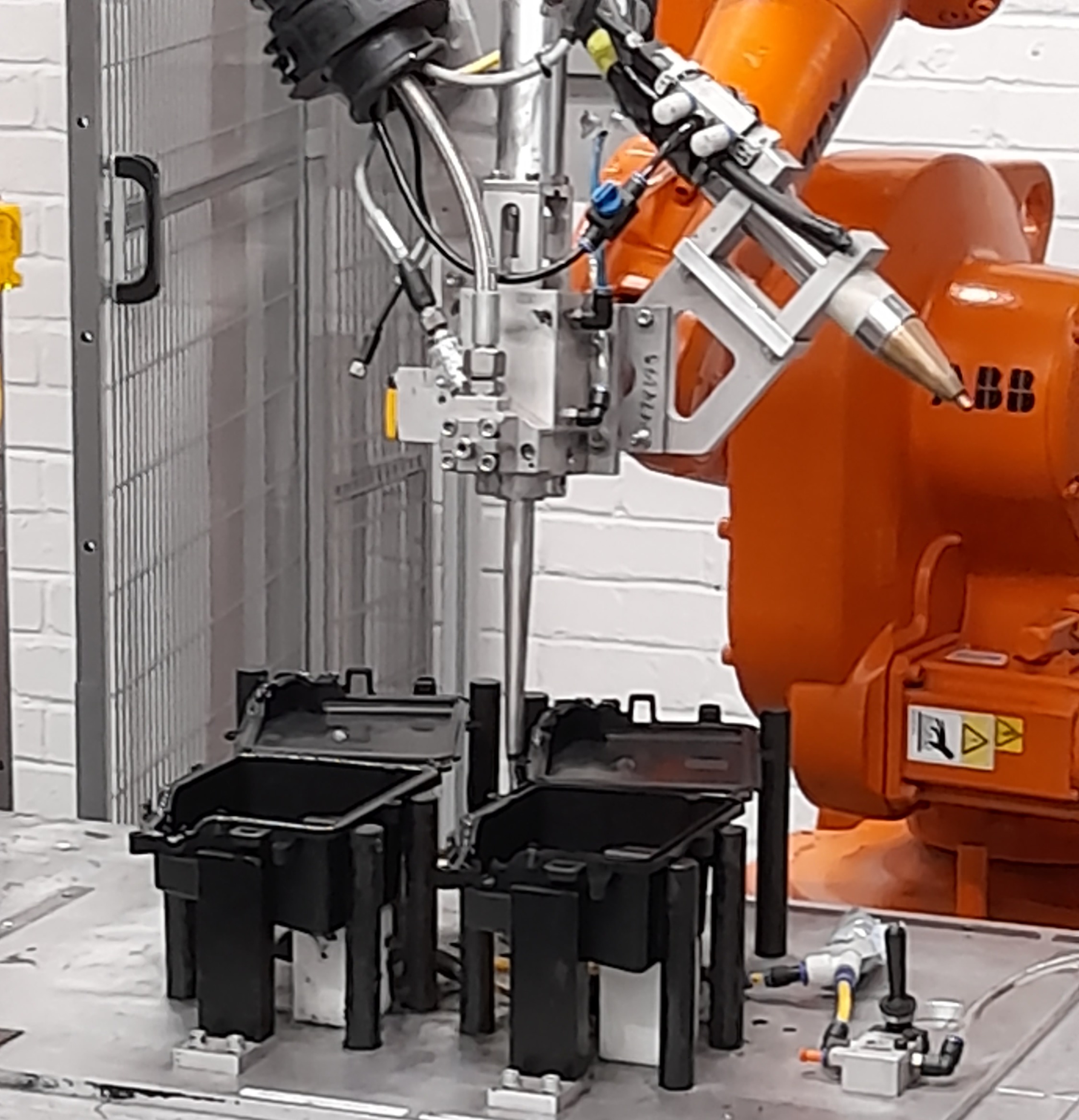
What is a TIG Welding Robot? A Practical Guide for Manufacturers
What is a TIG Welding Robot? For many manufacturers, it is a way to achieve cleaner, more consistent TIG welds while reducing reliance on repetitive manual processes. TIG welding is known for its precision and high-quality finish, but it can be slower and more skill-dependent than other welding methods. By integrating the process with a robot, businesses can improve repeatability, control and productivity across suitable production work.
Premier Automation designs, builds, integrates and upgrades robot systems for manufacturers that need reliable, cost-effective automation. This includes welding applications where the right combination of robot, tooling, controls and process knowledge can make a measurable difference to output and quality.
What is a TIG Welding Robot?
What is a TIG Welding Robot? It is an industrial robot system designed to carry out tungsten inert gas welding using programmed movements, controlled welding parameters and carefully positioned components. TIG welding uses a non-consumable tungsten electrode to create the arc, usually with an inert shielding gas to protect the weld area from contamination.
In a robotic system, the robot moves the torch along a programmed path while the control system manages key variables such as travel speed, arc distance and weld timing. Depending on the application, the system may also include wire feeding, part fixtures, safety guarding, extraction, sensors, vision equipment and quality checks.
The main aim is not simply to replace a welder. It is to create a stable production process that delivers the same quality weld repeatedly, particularly where parts, joints and volumes make automation commercially sensible.
How do they work in production
A TIG welding robot needs more than a robot arm and a welding torch. A successful system starts with understanding the product, weld requirements, batch sizes, material type and available factory space. The parts must be held accurately, because even a small change in position can affect weld quality.
The robot is programmed to follow the correct weld path, often with offline programming used to reduce downtime before installation. A well-designed control system allows the robot, welding equipment, tooling and safety devices to work together. Clear operator controls are also essential so production staff can load parts, select programmes and manage the system safely.
Premier Automation works from a large facility in Bedford and supports manufacturers across the UK with robot integration, control systems, programming, upgrades and relocation. This whole-system approach is important because welding automation needs mechanical, electrical and software elements to work as one.
What is a TIG Welding Robot? Key benefits for manufacturers
What is a TIG Welding Robot? In practical terms, it is a tool for improving consistency, reducing variation and helping manufacturers manage skilled labour more effectively. TIG welding can produce neat, high-quality welds, but manual results depend heavily on the operator’s experience, concentration and working conditions.
A robotic TIG welding system can help by delivering controlled torch movement and repeatable weld paths. This can reduce rework, improve product appearance and support better production planning. Robots can also help remove operators from repetitive or awkward welding positions, which may improve workplace safety and reduce fatigue.
There can also be commercial benefits. Once the correct process is proven, a robot can support steady throughput, predictable cycle times and better use of skilled staff. Rather than spending all day on repetitive welds, experienced welders can focus on set-up, inspection, improvement and more complex work.
Where TIG welding automation is most suitable
TIG welding automation is often suited to applications where weld quality, appearance and repeatability matter. It can be useful for stainless steel, aluminium and other materials where a clean finish is required. Common examples include fabricated assemblies, precision components, enclosures, pipework, frames and parts where the weld path is consistent from one item to the next.
It is not always the best option for every job. If parts vary heavily, volumes are very low, access is difficult or the product design is not automation-friendly, a different approach may be more suitable. Honest assessment at the beginning of a project is essential.
This is where experienced integration matters. Premier Automation provides practical advice based on the customer’s technical requirements, production targets and payback criteria. The right answer may be a new robot cell, a modified existing system, an upgraded control system or a re-engineered process that makes better use of equipment already on site.
What is a TIG Welding Robot? Safety, controls and integration
What is a TIG Welding Robot? It is also a controlled industrial system that must be designed with safety, usability and compliance in mind. Robotic welding cells usually require guarding, interlocks, emergency stops, extraction and safe access for loading, maintenance and inspection. The HSE machinery safety guidance is a useful reference point for businesses considering automated equipment.
Controls are central to the performance of the cell. The operator interface should be clear, reliable and suitable for day-to-day production. Premier Automation designs control systems for robots, special purpose machinery and process lines, using professional design platforms and providing schematics, parts lists, panel layouts, cable schedules, safety reports and controls risk assessments.
Robot programming also plays a major role. Offline programming and digital twin tools can help refine paths, test cell layouts and reduce disruption before commissioning. On-site programming can then be used to fine-tune performance, accommodate product changes or improve cycle times.
Choosing the right robotic welding partner
Selecting a TIG welding robot is not just about choosing a robot brand. The success of the project depends on the design of the cell, the quality of the tooling, the reliability of the control system, the experience of the programmers and the level of after-sales support available.
The British Automation & Robot Association provides useful insight into automation and robotics across UK industry. For individual projects, manufacturers should look for an integrator that can assess the full production requirement rather than offering a one-size-fits-all system.
Premier Automation has experience integrating robot models from leading manufacturers across multiple applications, including welding, machine tending, palletising, gluing and gasket dispensing. The team can design and build new robot systems, integrate used robots, modify existing systems, manufacture tooling, build control panels, provide robot and PLC programming, and relocate systems locally, nationally or internationally.
Frequently Asked Questions
Is robotic TIG welding suitable for small batch production?
It can be, depending on part consistency, set-up time and repeat orders. For high-mix work, careful tooling, offline programming and flexible cell design are important. A site survey can help establish whether the likely payback is realistic.
Can an existing robot be used for TIG welding?
In some cases, yes. An existing robot may be re-used or re-engineered if it has the right reach, payload, accuracy and condition. The wider system, including controls, safety equipment and tooling, must also be assessed.
Does a TIG welding robot remove the need for skilled welders?
No. Skilled welding knowledge is still valuable for process development, inspection, troubleshooting and improvement. Automation often helps businesses use skilled staff more effectively rather than relying on them for every repetitive weld.
What is the first step in considering robotic TIG welding?
The first step is to review the parts, weld requirements, production volumes, quality issues, factory layout and commercial goals. Premier Automation can assess the application and advise whether a TIG welding robot, an upgraded system or another automation solution is the most suitable route.
For manufacturers asking, What is a TIG Welding Robot? the best answer depends on the process, product and business case. Premier Automation offers honest guidance, robot integration expertise and practical engineering support to help customers identify the right welding automation solution for their production needs.