
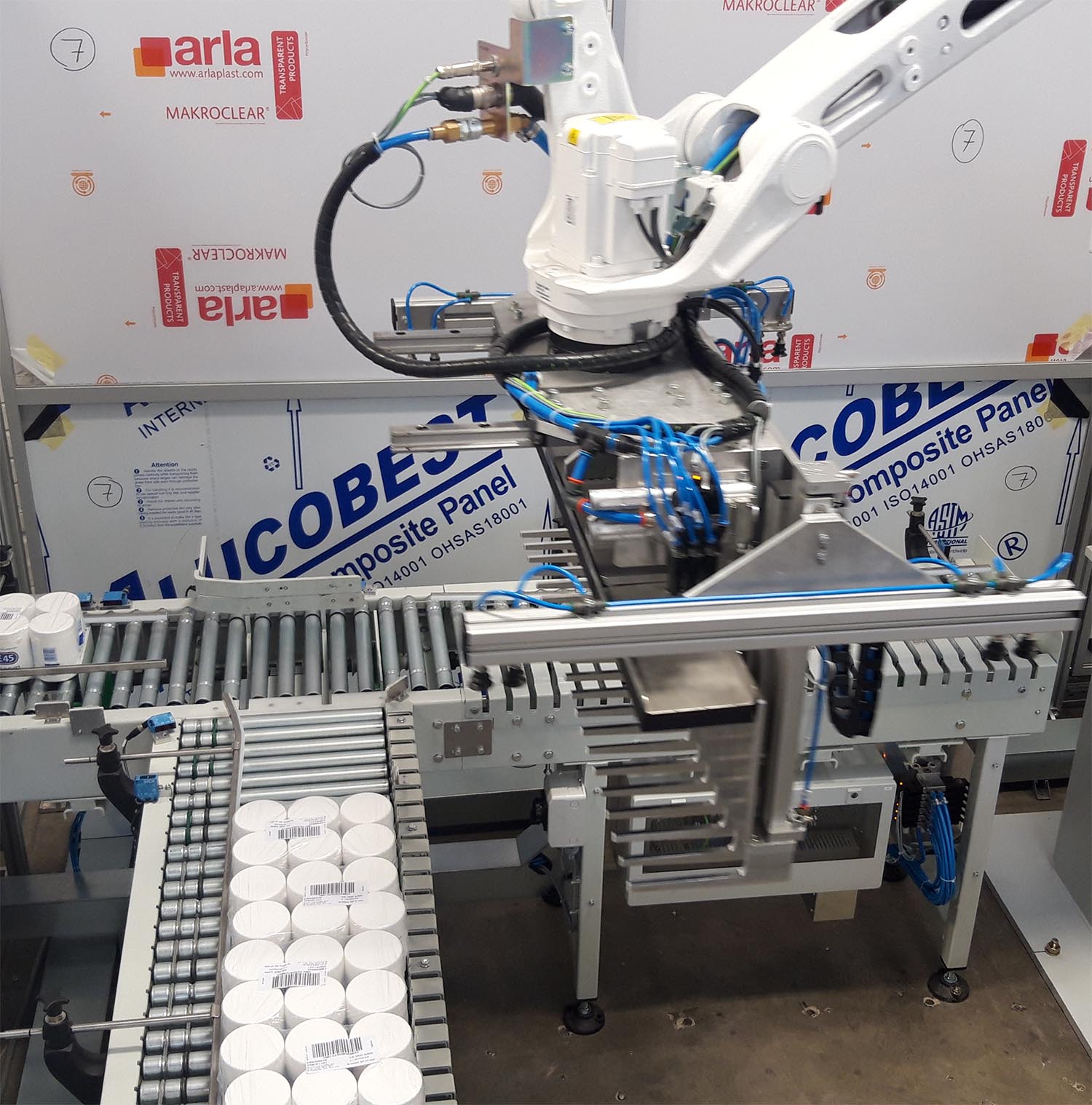
How can Automated Palletising help with consistency? A Practical Guide to Reliable Production
How can Automated Palletising help with consistency? For manufacturers, warehouses and production businesses, the answer often comes down to repeatability. Manual pallet stacking can vary between operators, shifts and busy periods, while an automated system follows a defined process for every product it handles. This can create more uniform pallet loads, predictable cycle times and a steadier flow of finished goods through production. For businesses seeking dependable output without relying on repeated manual handling, robotic palletising can provide a practical route towards greater process control.
How can Automated Palletising help with consistency? Through Repeatable Movements
One of the clearest advantages of automated palletising is that a robot can repeat programmed movements with a high level of consistency. Products can be picked from a conveyor or defined position and placed according to an established pallet pattern. Provided the system receives suitable products in the expected orientation, each movement follows the same programmed sequence.
This repeatability can be particularly useful where cartons, bags, cases or other packaged products need to be arranged in uniform layers. An operator may naturally alter placement slightly during a long shift, especially when production speeds increase or fatigue becomes a factor. A correctly designed automated system continues to apply the same process from one cycle to the next.
How can Automated Palletising help with consistency? By Creating Uniform Loads
A well-formed pallet is easier to store, move and prepare for onward transport. Poorly aligned products can create unstable loads, overhang or inconsistent stacking patterns. Automated palletising systems can be programmed around defined product dimensions, pallet sizes and stacking requirements, helping businesses produce more uniform loads throughout a production run.
This can also support downstream processes. For example, a palletising cell may be integrated with conveyors, stretch wrappers or other equipment to create a more coordinated production flow. Premier Automation has experience designing systems for single and multiple lines, including palletising applications integrated with surrounding automation. The aim is not simply to add a robot, but to develop a solution that works reliably with the wider process.
More Predictable Output Across Shifts
Consistency is not limited to the position of products on a pallet. It also concerns the pace and predictability of the process. Manual output can change depending on staffing levels, individual working speeds and the demands of a particular shift. An automated palletising system works according to defined cycle requirements, helping production teams achieve a more predictable rate of handling.
This does not mean automation is appropriate for every application. Product variety, required throughput, available floor space and expected payback all need to be considered. Premier Automation assesses technical and commercial requirements before recommending a solution, helping customers determine whether a new robotic system, an upgrade to existing equipment or another approach is most suitable.
How can Automated Palletising help with consistency? By Reducing Handling Variations
Repeated manual handling introduces natural variation. Different operators may grip, turn and position the same product in slightly different ways. For some loads this may have little impact, but for high-volume production it can contribute to misalignment, damaged packaging or inconsistent pallet presentation.
Robotic systems use purpose-designed tooling to handle products in a controlled way. The gripper, robot motion and placement pattern can be developed around the application. Premier Automation has designed specialist grippers for a wide variety of products, allowing the handling method to reflect the characteristics of the item rather than forcing every application into a standard arrangement.
Safety must also form part of system design and operation. The HSE guidance on work equipment and machinery provides useful information for employers responsible for machinery in the workplace.
How can Automated Palletising help with consistency? When Products Change
Many businesses do not manufacture or pack one product indefinitely. Carton sizes may change, production volumes can increase and new product lines may be introduced. A suitable automated system can often be programmed or modified to accommodate different pallet patterns and production requirements, depending on the robot, tooling and cell design.
This flexibility matters because consistency should not disappear as soon as a business changes its product range. Existing systems may also be re-engineered where practical. Premier Automation can modify, update and re-programme automated systems to cope with new products, improve cycle times or restore performance. Offline programming tools can also help reduce disruption when changes are being developed.
Choosing the Right Palletising System
Reliable results depend on selecting equipment that suits the actual production process. A basic palletising cell may use a dedicated industrial palletising robot with a single infeed and pallet position. Other operations may benefit from twin pallet positions, multiple infeeds, pallet conveyors or collaborative robot solutions.
The surrounding process is equally significant. Product orientation, conveyor speed, pallet supply, guarding, control systems and downstream equipment can all influence performance. Organisations such as the British Automation & Robot Association provide information about robotics and automation within UK industry.
At its facility in Bedford, Premier Automation designs and builds robot-based automation and control systems for a wide range of applications. Its engineering capabilities include mechanical and electrical design, panel building, robot and PLC programming, installation, commissioning, upgrades and system relocation. This broader capability allows palletising projects to be considered as complete processes rather than isolated pieces of machinery.
Frequently Asked Questions
Can automated palletising handle different products?
Yes, many systems can be designed for different products, pallet patterns or production lines. The exact flexibility depends on product dimensions, weights, tooling and the way items arrive at the palletising cell.
Does a palletising robot always need a large amount of space?
No. The required footprint varies considerably. Dedicated industrial robot cells, compact base-frame systems and collaborative robot solutions can suit different layouts, although a proper assessment is needed before equipment is specified.
Can an existing palletising system be upgraded?
Often, yes. Existing robots, controls, tooling or software may be modified where technically and commercially sensible. A site survey can help identify whether upgrading, re-engineering or replacing the system offers the better option.
Will palletising automation remove every production variation?
No system can compensate for every problem automatically. Inconsistent incoming products, damaged packaging or upstream process issues can still affect performance. Good system design considers these factors and aims to create a robust, repeatable process around realistic operating conditions.
For businesses reviewing palletising consistency, throughput or manual handling requirements, Premier Automation can assess the existing process and develop a solution around individual technical and commercial priorities. Its services cover new robot systems, integration of used robots, upgrades, re-engineering and wider control system support, providing a practical starting point for companies considering their next automation project.