Why use an Automated Palletiser? Practical Benefits for Modern Production
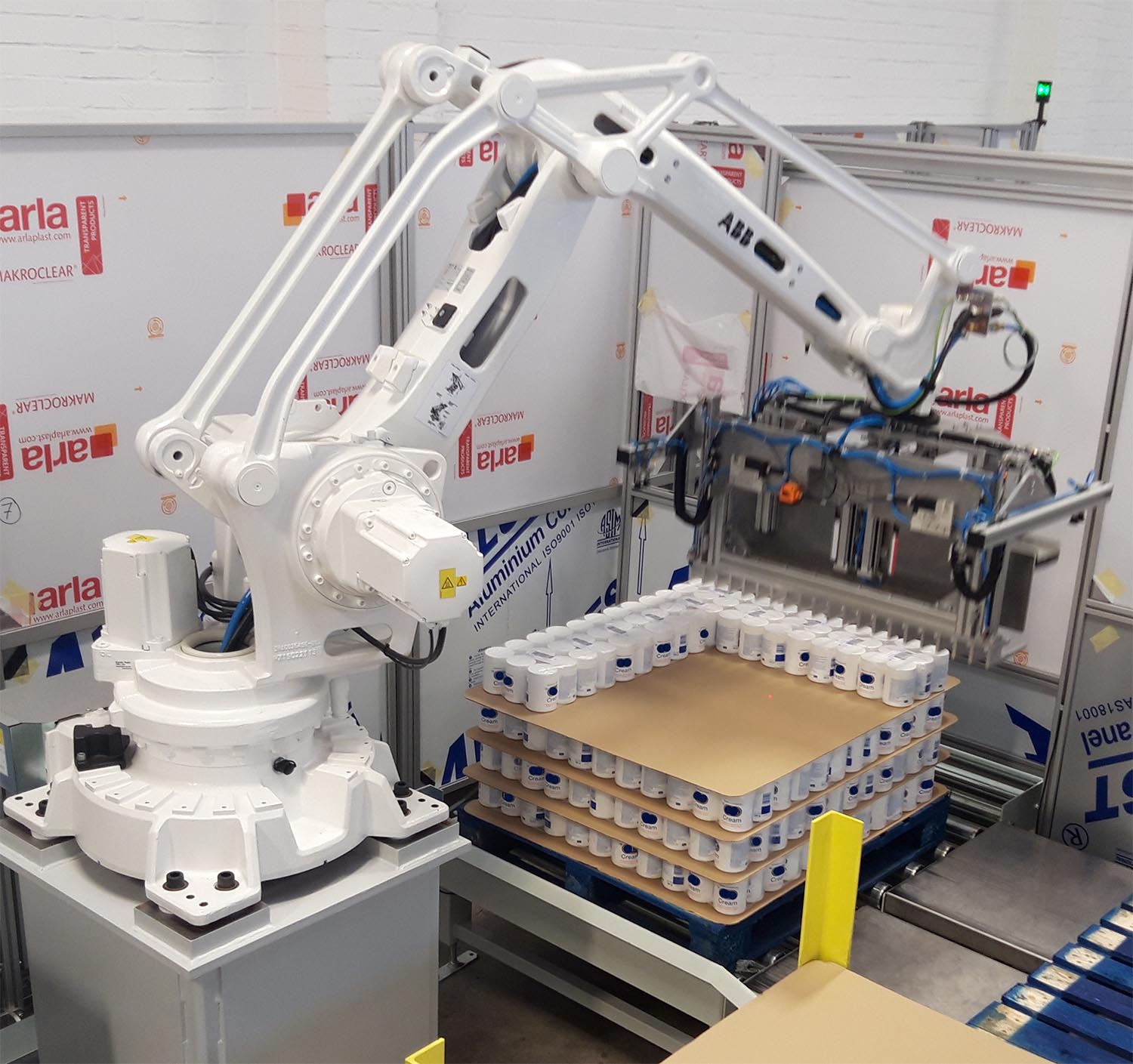
Why use an Automated Palletiser? For many manufacturers, the answer comes down to improving output, reducing repetitive manual handling and creating a more consistent end-of-line process. Palletising can be physically demanding, particularly where cartons or other products must be stacked throughout a long shift. An automated system can take over this repetitive work while following a defined pallet pattern accurately and consistently.
For businesses reviewing production bottlenecks, automated palletising can offer a practical route to greater efficiency. The right solution should be designed around product type, line speed, available floor space and commercial payback rather than automation for its own sake.
Why use an Automated Palletiser? To Improve Production Consistency
Manual pallet stacking can vary between operators, shifts and production runs. Even with experienced staff, fatigue and changing workloads can affect consistency. An automated palletiser follows a programmed sequence, placing each item in the required position to build repeatable loads.
This consistency can make downstream handling easier. Uniform pallets are generally simpler to move, store and prepare for transport. Stable stacking patterns can also help reduce avoidable product movement or damage, particularly where cartons need careful positioning.
Automation can support predictable cycle times too. Once a system has been correctly designed and commissioned, it can repeat the same task without the natural variation associated with continuous manual handling.
Why use an Automated Palletiser? To Reduce Repetitive Manual Handling
Palletising often involves repeated lifting, reaching, turning and bending. These actions can become physically demanding when carried out for hours at a time. Moving repetitive handling away from employees can therefore be an important operational benefit.
The HSE guidance on work equipment and machinery provides useful information for businesses considering machinery safety and responsibilities around work equipment. Any automated palletising project should include suitable risk assessment, guarding, control measures and safe operating procedures for the application.
Removing repetitive pallet stacking can also allow employees to focus on tasks that need judgement, supervision, quality checks, line support or other higher-value input.
Higher Throughput Without Sacrificing Accuracy
A correctly specified palletising system can help maintain steady output during busy production periods. It can be designed to keep pace with the required line speed and work consistently across extended production runs.
This does not mean every business needs the fastest possible robot. A good automation project starts by understanding the actual process. Product dimensions, weights, infeed arrangements, pallet patterns, changeovers and future production plans all influence the right design.
Some operations may need a basic single-infeed cell. Others may benefit from twin infeeds, multiple pallet positions, automatic pallet handling or integration with equipment such as stretch wrappers. The aim is to support the production requirement without unnecessary complexity.
Why use an Automated Palletiser? For Greater Flexibility
Modern robotic palletising can be adapted to a wide range of products and layouts. Different gripper designs can be developed for cartons and other items, while robot programmes can accommodate multiple stacking patterns where the application allows.
This flexibility can be valuable for manufacturers with changing product ranges. A system may be designed around several formats, helping the business respond to different orders without relying on one fixed stacking arrangement. Changeovers still need careful planning, but the right robot cell can provide useful versatility.
The British Automation & Robot Association is also a relevant industry source for organisations exploring robotics and automation in the UK.
Making Better Use of Labour and Production Capacity
Automated palletising does not remove the need for people across a production operation, but it can change where their time is used. Instead of repeatedly stacking products, employees may oversee production, replenish materials, complete checks, manage exceptions or support other processes.
For businesses experiencing a labour constraint at the end of a line, this can reduce dependence on one physically demanding task. It can also help prevent palletising from becoming a bottleneck as production volumes increase.
The commercial case will vary. Labour savings, production hours, throughput, maintenance requirements and the expected life of the system should all be considered. Automation should meet both technical needs and realistic payback criteria.
Why use an Automated Palletiser? To Support Future Growth
A production line that works well at one volume may become difficult to manage as demand increases. End-of-line palletising can become a restriction if more products are produced than staff can stack consistently.
An automated system can provide capacity for growth when planned around realistic future requirements. It may also be possible to integrate pallet conveyors, multiple infeeds or downstream equipment as part of a wider solution.
Existing systems should not be overlooked. In some cases, a robot cell can be re-engineered, reprogrammed or modified to accommodate new products, improve cycle times or support a changed production process. This may offer a cost-effective alternative to replacing an entire system.
Choosing the Right Palletising Solution
The real value of robotic palletising comes from solving a genuine production problem with a system matched to the application. That requires careful assessment of line speed, payload, reach, pallet size, product orientation, gripper design, safety, controls and integration with surrounding equipment.
Premier Automation designs and builds new robot systems, integrates used robots and modifies existing automated equipment. Based in Bedford, the company supports projects locally, nationally and internationally, with experience across robot integration, control systems, programming, upgrades and relocation.
Frequently Asked Questions
What products can an automated palletiser handle?
Applications vary, but robotic palletising systems can be designed for many product types, including cartons and other packaged goods. Product size, weight, surface and required stacking pattern all influence robot and gripper selection.
Can an automated palletiser handle more than one product?
Yes, many systems can be programmed for multiple products or pallet patterns. The practical level of flexibility depends on the product range, tooling, infeed arrangement and required changeover process.
Can palletising be integrated with other equipment?
Yes. A palletising cell may be integrated with conveyors, pallet handling equipment, stretch wrappers and other production machinery to create a more complete end-of-line solution.
Is robotic palletising suitable for every business?
No. Suitability depends on production volumes, product characteristics, available space, process stability and expected payback. A proper assessment should identify whether automation is commercially and technically justified.
Premier Automation can assess new and existing production processes and develop cost-effective robot and control solutions around individual requirements. For businesses considering palletising automation, the team can provide practical guidance on a system that supports operational needs and commercial criteria.