
How do TIG Welding Robots work? A Practical Guide for Manufacturers
How do TIG Welding Robots work? For many manufacturers, the answer starts with understanding how automation can reproduce a skilled welder’s control, consistency and precision across repeated production runs. TIG welding is often chosen where neat, accurate welds are required, and robotic systems can make that process more reliable when the application is suitable. Premier Automation designs and integrates robot-based automation systems that are built around each customer’s production needs, technical requirements and payback criteria.
How do TIG Welding Robots work? The basic process
TIG stands for tungsten inert gas welding. The process uses a non-consumable tungsten electrode to create an arc, while shielding gas protects the weld area from contamination. Filler wire may be added depending on the joint, material and weld specification.
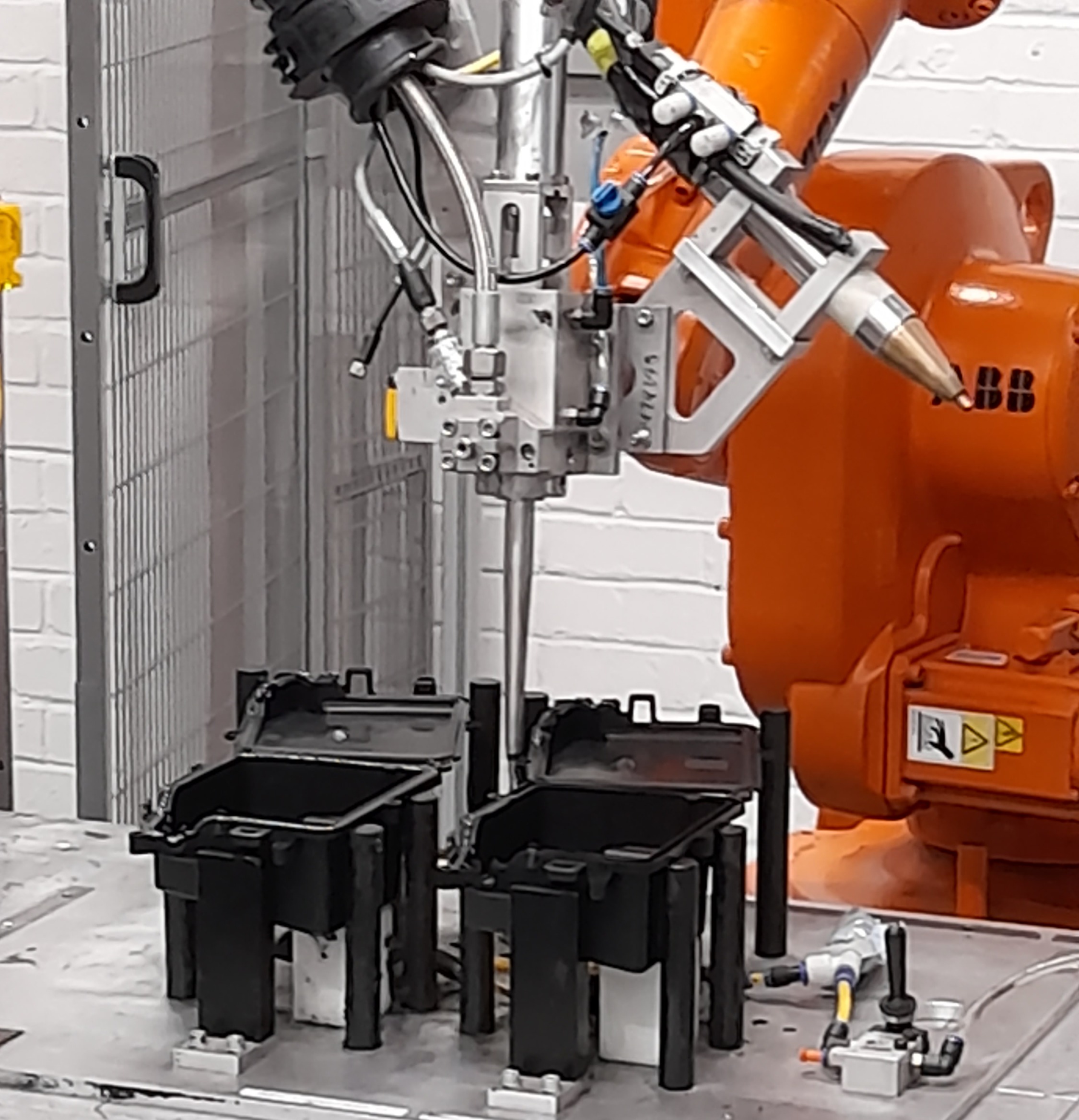
A TIG welding robot follows a programmed path around the component. Instead of an operator manually guiding the torch, the robot controls torch angle, travel speed, arc length and position. The welding power source, gas flow, wire feed equipment and tooling all work together as part of the same controlled cell. This allows the system to repeat the same weld path with a high level of consistency.
The robot itself is only one part of the system. A complete robotic TIG welding cell may include fixtures, guarding, extraction, safety controls, sensors, positioning equipment and a PLC-based control system. Each element has to be designed so the part is held securely, the weld is accessible, and the robot can move smoothly without collision.
Why TIG welding suits automation
TIG welding is valued for clean weld appearance, accuracy and control. It is often used on thinner materials, stainless steel, aluminium and components where weld quality matters as much as strength. The process can be slower than MIG welding, but it delivers excellent control when set up correctly.
Robots are well suited to repetitive TIG welding tasks because they do not tire, vary their technique or lose concentration during long runs. Once the programme, tooling and welding parameters are proven, the system can reproduce the same motion again and again. This can help reduce rework, improve visual consistency and make production planning more predictable.
Automation is not right for every TIG welding job. Low-volume, highly variable or poorly presented parts may still suit manual welding better. A good integrator will assess the process honestly before recommending a system. Premier Automation works with manufacturers to understand whether robotic welding is technically and commercially suitable before a project moves forward.
How do TIG Welding Robots work? Programming and path control
Programming is where the welding path is created and refined. The robot must know exactly where to start, how fast to travel, where to change angle, and where to stop. This can be done using on-site programming or off-line programming with a digital model of the cell.
Off-line programming is useful because much of the work can be prepared before the system reaches production. Engineers can test reach, access, torch position and potential collisions in a simulated environment. This helps reduce disruption during installation and can shorten commissioning time.
Fine adjustment is still usually needed on the real cell. Even small differences in part fit-up, fixture design or material behaviour can affect weld quality. Skilled robot programmers and welding engineers work together to adjust travel speed, amperage, gas coverage and torch position until the process is stable.
The role of fixtures, tooling and repeatability
A TIG welding robot can only weld accurately if the component is presented accurately. Fixtures are used to hold the part in the correct position and prevent movement during welding. Good tooling reduces variation, supports repeatability and helps the robot maintain the correct torch angle throughout the weld.
For some applications, rotary positioners or manipulators are added so the part can be moved into the best welding position. This can improve access, reduce awkward torch angles and support a smoother weld. In other cases, a simpler fixed fixture may be enough.
Premier Automation has in-house machining and fabrication facilities, which can support the design and manufacture of tooling, robot pedestals, guarding, frames and other cell components. This is valuable where a welding system needs to be tailored to a specific part or production layout.
How do TIG Welding Robots work? Controls, safety and integration
Robotic TIG welding cells rely on a well-designed control system. The PLC, robot controller, welding equipment and safety systems must communicate reliably. Operators need a clear interface so they can start cycles, select recipes, monitor faults and manage production safely.
Safety is a major part of any automation project. Guarding, interlocks, emergency stops, extraction and risk assessments should be considered from the early design stage. The HSE provides guidance on work equipment and machinery safety at HSE Machinery Safety, which is a useful reference for businesses planning automated systems.
Integration also includes how the welding cell fits into the wider production process. Some systems may need part loading, unloading, inspection, data capture or communication with factory management systems. Others may be standalone cells focused on one repeatable welding operation.
Benefits for manufacturers
The main benefits of robotic TIG welding are consistency, productivity and process control. For the right application, a robot can deliver repeatable weld quality across batches, reduce dependence on scarce manual welding labour and help improve production flow.
Robotic systems can also support better use of skilled staff. Instead of spending time on repetitive welds, experienced welders can focus on inspection, process development, complex fabrication and quality improvement. This can be especially helpful where recruitment is difficult or production demand is increasing.
Another advantage is traceability. Depending on the control system, manufacturers can capture production data, weld parameters and fault information. This supports quality management and can make it easier to identify process issues before they become larger problems.
How do TIG Welding Robots work? Choosing the right system
The best robotic TIG welding system depends on the component, material, batch size, quality requirements, available floor space and budget. A successful project starts with a detailed review of the existing process. This includes cycle time, weld length, part variation, operator involvement, downstream processes and expected return on investment.
Manufacturers should also consider future flexibility. A welding cell may need to handle new product variants, increased demand or different fixtures later. Designing with future changes in mind can make the system more valuable over its working life.
Industry bodies such as the British Automation & Robot Association can help businesses understand the wider role of robotics in UK manufacturing. For companies based in Bedford and across the wider manufacturing sector, working with an experienced integrator can help turn automation from an idea into a practical production asset.
Updating or re-engineering existing welding systems
Not every project needs a completely new cell. Existing robot systems can often be updated, relocated or re-engineered to improve performance. This may involve new tooling, revised programming, updated controls, improved safety systems or changes to suit a new product.
Premier Automation can assess existing automated systems and advise whether they can be improved, modified or moved. This approach can be cost-effective where a manufacturer already has suitable equipment but needs better efficiency, reduced cycle times or greater flexibility.
Frequently Asked Questions
How do TIG Welding Robots work on different materials?
They work by following a programmed weld path while controlling arc, torch angle, speed and shielding gas. The settings are adjusted to suit the material, thickness and weld specification.
Are TIG welding robots suitable for small batches?
They can be, but it depends on part repeatability, set-up time and the value of the finished component. Small batches may benefit if quality requirements are high or if parts repeat regularly.
Can an existing robot be used for TIG welding?
In some cases, yes. The robot must have suitable reach, accuracy, payload, controls and safety provision. A site survey can confirm whether reuse is practical.
What support does Premier Automation provide?
Premier Automation designs and builds new robot systems, integrates used robots, upgrades existing automation, provides PLC and robot programming, manufactures tooling, and supports relocation or re-engineering projects. For manufacturers considering robotic TIG welding, the team can provide practical guidance based on process needs, cost-effectiveness and long-term production value.