Palletising Robot Systems The UK for Reliable End-of-Line Automation
For manufacturers moving cartons, trays, bags or boxed goods, Palletising Robot Systems The UK can offer a clear improvement in speed, consistency and workplace safety. A good palletising system does more than stack products neatly. It helps keep lines moving, reduces manual handling and creates stable loads for storage and transport. For customers weighing up automation, the real question is not whether robots are impressive, but whether the system will suit the products, space and output levels on site. That practical approach sits at the heart of the work carried out by Premier Automation.
Why Palletising Robot Systems The UK are becoming more common
Palletising is one of the most repetitive jobs in many factories and packing areas. It can also be physically demanding, especially where products are heavy, awkward or arriving at a steady pace for long periods. Manual palletising often leads to inconsistent stack quality, slower output and a greater chance of strain injuries. By automating that stage, businesses can improve consistency while freeing staff for tasks that need closer attention.
For customers, the appeal is straightforward. Robotic palletising helps reduce product damage, build uniform pallet loads and keep pace with production without the same level of fatigue or variation that comes with manual handling. This matters whether the goal is higher throughput, better use of labour or a safer working environment. It can also support longer running times, including operations that continue with limited supervision outside normal production hours.
Premier Automation designs and builds new robot systems, integrates used robots where suitable and modifies existing automated systems to match individual process requirements and payback criteria. That flexibility gives customers more than one route into automation, which can be especially useful where budgets, site constraints or existing equipment all need to be considered carefully.
What customers should expect from a well-designed palletising cell
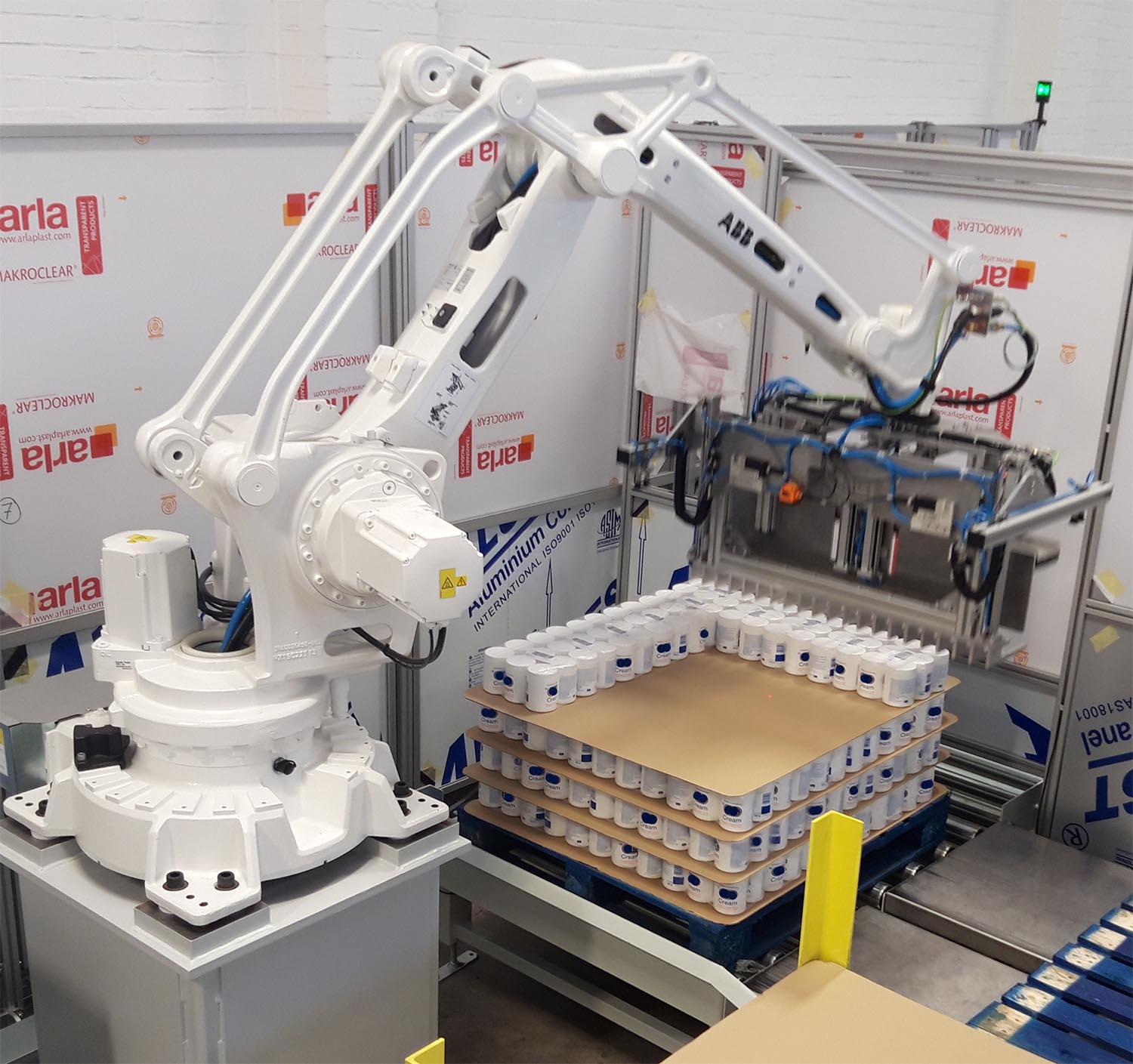
A palletising system should be shaped around the product and the line, not the other way round. That means looking at pack size, weight, infeed speed, pallet pattern, available floor space and how the finished pallets will move to the next stage. Some sites need a straightforward single-line cell. Others may need twin pallet positions, multiple infeeds or integration with downstream equipment such as stretch wrappers or pallet conveyors.
Gripper choice is a major part of performance. A poorly matched gripper can slow the cycle, mark the product or struggle with variation in packs. The right end-of-arm tooling helps the system run more smoothly and handle products securely. The controls matter just as much. Operators need a clear interface, dependable safety features and sensible access for maintenance, cleaning and fault finding.
Safety must be considered throughout the design, build and installation process. Businesses introducing automated equipment should understand their responsibilities and follow recognised guidance such as the information provided by HSE Machinery Safety. Safe automation is not just about guarding; it is about creating a system that works properly for the people using it every day.
Palletising Robot Systems The UK can be tailored to fit different products
No two end-of-line applications are exactly the same. A food producer handling lightweight cartons will have different needs from a manufacturer stacking heavier industrial products. Some customers need a high-speed industrial robot for continuous output. Others may benefit from a collaborative robot where space is limited and flexibility is a higher priority than maximum speed.
Premier Automation has experience across a broad range of robot integration projects and can design palletising cells for single or multiple lines, standard loads or more specialised product handling. The company also designs and manufactures control systems for robots, special purpose machinery and process lines, which means customers can work with one partner across the mechanical, electrical and software elements of the project.
That joined-up approach can make a real difference during installation and commissioning. It also makes it easier to plan future changes. If output increases, products change or the layout of the site is altered, the original system design has a better chance of adapting without major disruption.
Upgrades, relocation and getting more from existing automation
Not every project requires a brand-new installation. Many businesses already have some form of automation in place, but the system may no longer be running efficiently or may not suit current production needs. In those cases, an upgrade can be the better option. Re-engineering may include revised programming, new tooling, updated controls or changes to the layout that improve cycle times and reliability.
Relocation is another area where experience matters. If a production line is being reorganised within a factory or moved to another site, existing automation may still offer strong value. Based in Bedford, Premier Automation supports local, national and international relocation work, helping customers move systems with less risk and less disruption than trying to manage the process alone.
Customers often underestimate how much value can still be recovered from older equipment. A sensible survey and assessment can show whether an existing robot can be upgraded for a new product, repurposed in a fresh cell or re-engineered to improve overall output.
Choosing the right automation partner
For customers, technical knowledge is only part of the picture. The right automation partner should also offer honest advice, realistic planning and support that continues after installation. That includes helping you understand whether automation is the right fit in the first place, what level of return is realistic and how the project should be phased if needed.
It is also worth looking for a company with broad integration experience rather than a narrow off-the-shelf offer. Trade bodies such as BARA give useful background on the UK robotics and automation sector, but day-to-day project success still comes down to good design, clear communication and dependable after-sales support.
If you are considering Palletising Robot Systems The UK, Premier Automation can help with new robot cells, control systems, upgrades, relocations and programming support, giving you a practical route to safer and more efficient end-of-line handling.