Robotic Welding Systems In The UK for Reliable, Scalable Production
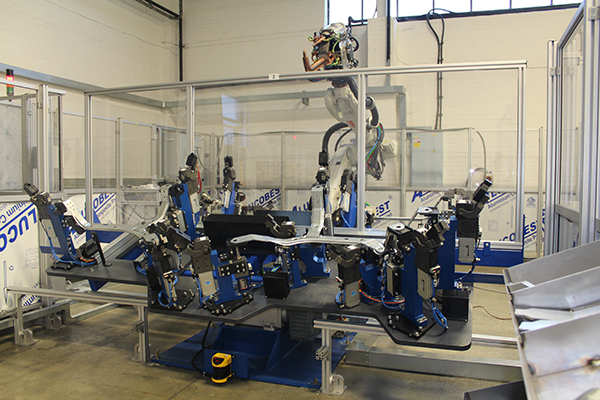
For manufacturers across the UK, welding quality, production speed and labour efficiency all have a direct effect on profitability. Robotic Welding Systems In The UK are becoming an increasingly practical option for businesses that want more consistent welds, improved throughput and better control over repeat production. From straightforward welding cells to fully integrated automation lines, Premier Automation helps businesses develop systems that match their process requirements, floor space and return on investment goals.
Why Robotic Welding Systems In The UK are in demand
Manual welding still has an important place in manufacturing, especially for one-off work, highly specialised fabrication and complex tasks that require hands-on judgement. However, where there are repeat parts, regular volumes and a clear production pattern, robotic welding can offer major advantages. A robot can perform the same movement repeatedly with a high level of accuracy, helping to reduce variation between parts and improve overall quality.
For many businesses, this leads to fewer defects, less rework and more predictable production planning. It can also reduce operator exposure to heat, fumes and repetitive tasks. Safe design remains a key part of any automated installation, which is why guidance from the HSE on machinery safety is relevant when planning and implementing robot-based systems.
The strongest results usually come when the automation is designed around the real production process rather than added as an afterthought. That includes welding position, part presentation, fixture design, cycle time targets, access for maintenance and how the cell fits into the wider workflow.
Where robotic welding adds the most value
Robotic welding is well suited to applications where the same or similar parts are produced on a regular basis. This can include structural fabrications, automotive components, frames, brackets, enclosures and other manufactured parts that require repeatable weld quality. In these settings, automation can help maintain output across long runs while supporting a cleaner, more consistent finish.
It can also benefit operations where lead times are tight and production demands can change quickly. With the right programming and tooling, a robotic welding cell can be adapted for product variations without the need to rebuild the process from scratch. This makes automation valuable not only for high-volume manufacturing, but also for businesses with medium-volume work that needs dependable quality.
Premier Automation works with customers to determine whether a new robotic welding cell, a modified existing system or an updated control setup is the best route forward. That practical approach matters because not every welding challenge needs the same answer. In some cases, re-engineering an existing system can deliver the performance gains a business needs without the cost of a complete replacement.
Planning Robotic Welding Systems In The UK around your process
A successful welding system is about far more than choosing a robot arm. The full solution must take account of part handling, fixtures, guarding, safety controls, software, operator access and future maintenance. If the system is expected to cope with changing products, that flexibility also needs to be built in from the outset.
Premier Automation designs and builds control systems for a wide range of industrial applications, including robot systems, process lines and special purpose machinery. Its engineering team can deliver full schematics, parts lists, panel layouts, cable schedules, safety reports and controls risk assessments. That detailed planning supports a more reliable installation and smoother commissioning process.
The business operates from a large facility in Bedford, with the capacity to design, build and test systems internally before despatch. This can reduce risk at the installation stage and help customers move forward with greater confidence. By carrying out panel build and testing in-house, the team maintains close control over quality and presentation while preparing systems for site integration and commissioning.
Upgrading existing equipment instead of starting again
Not every manufacturer needs a completely new robotic welding cell. Some already have automation in place, but the system may no longer perform as required. Production targets may have changed, components may have become inefficient or the product itself may have evolved over time. In those situations, a system upgrade can be a smart and cost-effective option.
Existing robot systems can often be re-engineered to reduce cycle times, improve weld consistency or accommodate new product requirements. Used robots can also be integrated into updated cells where suitable, helping businesses make the most of available assets. This is particularly useful for companies that want to expand automation in stages rather than commit to a full replacement all at once.
Relocation is another area where experience matters. Moving an automated welding system within the same factory, to another UK site or internationally is rarely a simple lift-and-shift task. Mechanical, electrical and programming factors all need careful management. Premier Automation supports relocation projects with the aim of making the move as efficient and low-risk as possible.
Robotic Welding Systems In The UK and long-term productivity
When automation is specified correctly, the benefits extend well beyond faster welding. Businesses can improve consistency, make better use of labour, reduce waste and create a stronger platform for future growth. Offline programming tools and digital twin methods can also help reduce downtime during updates, allowing changes to be prepared before they reach the shop floor.
Industry organisations such as the British Automation & Robot Association continue to highlight the role of robotics in helping manufacturers improve efficiency and competitiveness. For businesses facing rising production demands, Robotic Welding Systems In The UK can provide a dependable way to strengthen quality and output without losing sight of safety, cost control or operational flexibility.
If you are assessing your current welding process or exploring automation for the first time, Premier Automation can help you review the options and develop a solution that fits your production requirements, technical needs and long-term goals.