The positive impact of Automation on Safety: How Safer Systems Support Better Production
The positive impact of Automation on Safety is one of the strongest reasons manufacturers invest in robot systems, control upgrades and well-designed production cells. For many businesses, safety improvements come from reducing manual handling, limiting operator exposure to hazardous areas, improving consistency and making processes easier to manage. Premier Automation helps manufacturers achieve these gains through carefully designed robot integration, control systems, system upgrades, programming and after sales support.
Automation is often discussed in terms of productivity, cycle times and payback, but safety should sit at the centre of every decision. A well-planned automated system does more than speed up a task. It helps protect people from repetitive strain, heavy lifting, hot work, sharp components, awkward movements and avoidable contact with machinery.
The positive impact of Automation on Safety in everyday manufacturing
In many factories, the riskiest jobs are not always dramatic. They are often repeated hundreds of times a day: lifting boxes, loading machines, stacking products, positioning parts, trimming, welding, dispensing, packing or moving materials between processes. Over time, these tasks can lead to fatigue, slips, trapped fingers, back injuries and inconsistent working practices.
Robots and automated handling systems can take over many of these repetitive or physically demanding jobs. For example, robotic palletising can reduce the need for manual stacking, while machine tending cells can remove the operator from repeated loading and unloading tasks. In welding applications, automation can help limit exposure to heat, fumes, sparks and difficult working positions.
This does not mean people are removed from the process altogether. Instead, their role can shift towards supervision, quality checks, setup, maintenance and higher-value work. That change can make the workplace safer and more efficient at the same time.
Reducing manual handling and repetitive strain
Manual handling remains a common source of workplace injury. Even when individual items are not especially heavy, repeated lifting, twisting or reaching can place strain on the body. Automating these movements can help create a more controlled and ergonomic production environment.
For example, a palletising robot can stack products consistently without tiring, while a cobot palletising cell can support lower-payload applications where space is limited. Machine tending systems can load and unload CNC machines, injection moulders or presses with repeatable movement, reducing the need for operators to stand in awkward positions for long periods.
The Health and Safety Executive provides guidance on machinery, work equipment and employer responsibilities through its work equipment and machinery safety resources. Automation should always be considered alongside proper risk assessment, guarding, training and safe working procedures.
The positive impact of Automation on Safety through planned safeguarding
The positive impact of Automation on Safety depends heavily on the quality of the design. A robot system is only as safe as the way it is specified, guarded, controlled and commissioned. This is where experienced integration matters.
Premier Automation designs systems around the customer’s process, layout, production targets and payback criteria. That includes control system design, panel build, installation, commissioning, EN13849 safety reports and controls risk assessments. These steps help ensure the equipment is not only productive, but also practical for operators to use safely.
Guarding, interlocks, emergency stops, safe access points, light curtains, scanners and control logic all need to work together. Operators must be able to load, inspect, reset and maintain equipment without unnecessary risk. A clear and intuitive interface also supports safer working because it reduces confusion and helps teams respond correctly during normal use or fault conditions.
Safer upgrades for existing robot systems
Many manufacturers already have automated systems in place, but older equipment may no longer meet current requirements. Products change, throughput targets increase, safety expectations develop and control technology moves on. Upgrading or re-engineering an existing system can improve both performance and safety.
Premier Automation can assess existing robot cells and discuss whether modification, relocation, reprogramming or a control system upgrade is the right approach. This can include replacing worn elements, improving guarding, reducing cycle times, adapting tooling for new products or reusing an existing robot in a new application.
Relocation also needs careful planning. Moving a robot system within a factory, across the UK or internationally is not simply a transport job. The system must be dismantled, moved, reinstalled, tested and commissioned properly. A structured approach helps reduce downtime and avoid safety issues once production restarts.
The positive impact of Automation on Safety with reliable control systems
A dependable control system plays a central role in safe automation. It manages the way equipment starts, stops, communicates and responds to faults. Poorly designed controls can create confusion, downtime and unnecessary risk, while a well-designed system supports both productivity and operator confidence.
As a Siemens Solution Partner, Premier Automation designs and builds control systems for robots, special purpose machinery and process lines. Panels are built internally by qualified electricians, tested before despatch and designed to meet relevant British and European standards and directives.
Reliable controls are especially valuable in more complex systems that combine robots, conveyors, vision systems, tooling, scanners, guarding, PLCs and wider factory communication. Organisations such as the British Automation & Robot Association also highlight the role of automation and robotics in supporting UK manufacturing capability.
Keeping operators involved, informed and protected
Good automation is not about creating a system that only engineers can understand. Operators and maintenance teams need clear controls, sensible access, suitable training and support after installation. A system that is difficult to use can lead to mistakes, workarounds and unnecessary delays.
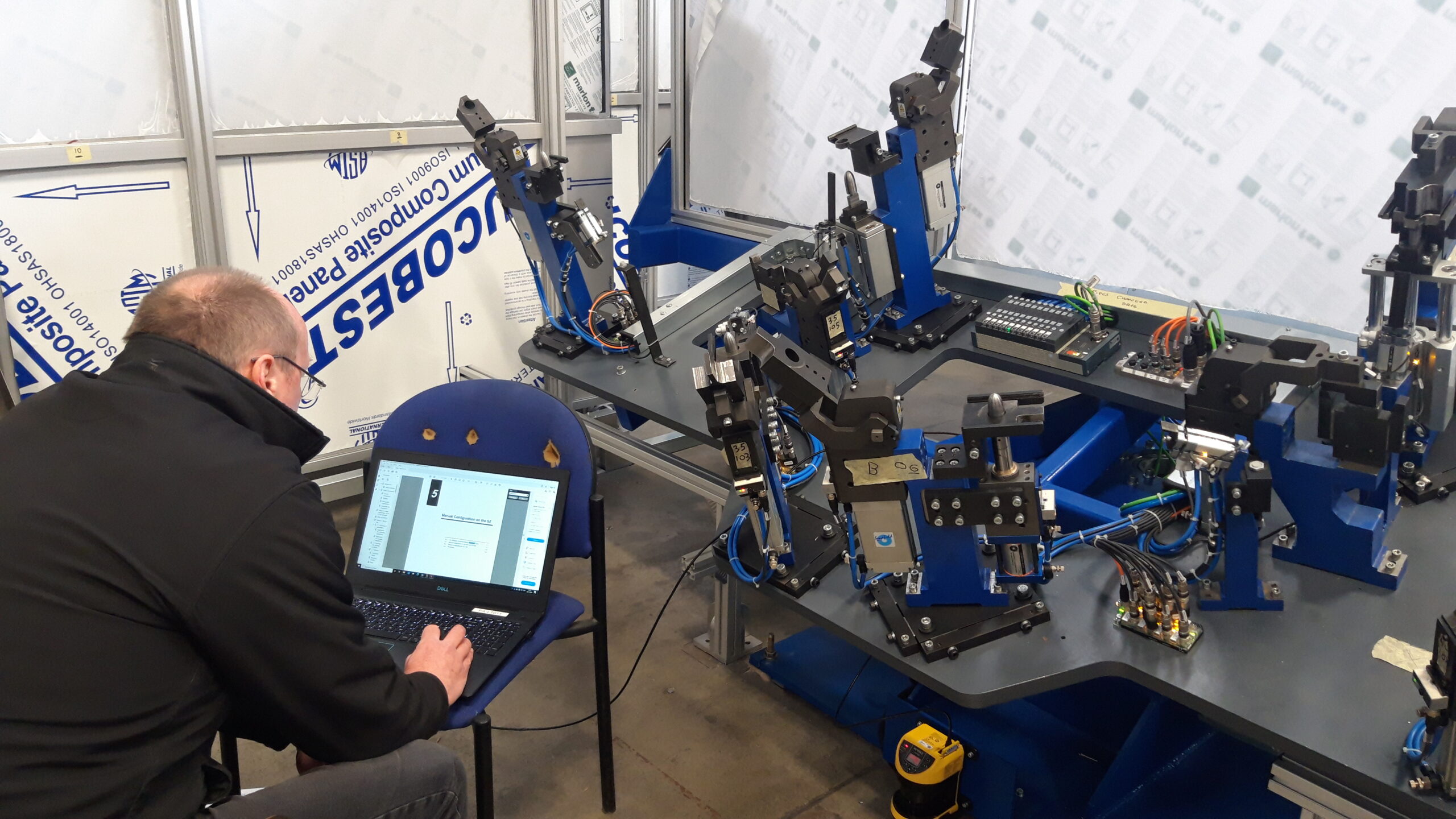
Premier Automation supports customers with robot and PLC programming, offline programming, on-site modifications and after sales support. Offline programming and digital twin tools can help reduce downtime by testing and improving programmes before work takes place on site. This can also help minimise disruption and reduce the pressure to make rushed changes during production.
The company operates from a large facility in Bedford, with strong transport links for projects across the country. Its experience covers single robot cells through to sophisticated automation systems with multiple connected technologies.
Frequently Asked Questions
How does automation improve workplace safety?
Automation can reduce exposure to repetitive, heavy, hot, sharp or hazardous tasks. It can also improve consistency, reduce fatigue and help operators work from safer positions.
Can existing robot systems be made safer?
Yes. Existing systems can often be assessed, upgraded, re-engineered or reprogrammed to improve performance, guarding, control logic and operator access.
Are cobots always safe to use without guarding?
Not always. Cobots have built-in safety features, but every application still needs a proper risk assessment based on tooling, payload, speed, layout and how people interact with the system.
Can automation help reduce manual handling injuries?
Yes. Applications such as palletising, machine tending and material handling can reduce lifting, twisting and repetitive movements, helping to protect operators over time.
The positive impact of Automation on Safety is strongest when systems are designed around real production needs, operator welfare and long-term reliability. Premier Automation provides robot integration, control systems, upgrades, relocation, programming and support for manufacturers looking for practical, cost-effective automation solutions.