The Ultimate Guide to Automated Loading Systems for Smarter Manufacturing
For manufacturers looking to improve output, consistency and safety, The Ultimate Guide to Automated Loading Systems starts with understanding where automation adds real value. Automated loading systems are designed to move parts, products or materials into machinery or production cells with greater speed and accuracy than manual handling alone. For many businesses across the UK, this can mean shorter cycle times, better use of labour and a more reliable production process. Premier Automation helps customers assess whether a new robot system, an upgraded existing cell or a re-engineered control solution is the right fit for their production goals.
Why Automated Loading Systems matters to production teams
Loading and unloading may seem like a small part of the wider process, but it often has a direct impact on efficiency. If operators are spending too much time manually placing parts into CNC machines, presses or other equipment, overall throughput can suffer. There is also a higher risk of inconsistency, stoppages and strain-related injuries when repetitive handling is left entirely to people.
Automated loading systems help solve these problems by creating a repeatable process. A robot or cobot can place components with precision, follow the same routine every time and continue working through long shifts with minimal interruption. This is particularly useful for businesses that want to increase machine utilisation, improve part quality and reduce wasted production time.
Premier Automation has built its reputation on designing practical solutions around individual customer requirements. That includes brand-new robot systems, used robot integration, system modifications and the relocation of existing automation locally, nationally or internationally. Rather than offering a one-size-fits-all answer, the team looks at technical needs, commercial targets and expected payback before recommending the best route forward.
What The Ultimate Guide to Automated Loading Systems should cover before you invest
The best automation projects begin with a clear understanding of the task. That means looking at part size, weight, presentation, machine interface requirements, available floor space and the level of output required. It is also important to decide whether the system should handle one product type or be flexible enough to cope with future changes.
A proper review should also consider safety, maintenance and integration with wider control systems. Guidance from the HSE Machinery Safety framework is useful here, as any automated cell must be designed and operated safely. Businesses should also work with experienced integrators who understand robot applications, PLC programming, guarding, tooling and commissioning. Industry organisations such as BARA also reflect the importance of strong standards and capable integration in successful automation projects.
This is where Premier Automation brings value. Founded in 2000 and operating from a large facility in Bedford, the company supports projects with in-house design, panel build, machining, fabrication, programming and installation. That joined-up approach helps keep projects efficient and allows customers to work with one team from concept through to commissioning.
Existing machinery upgrades
Not every business needs a completely new cell. In many cases, existing automation can be improved to work faster, handle a revised product or regain performance that has dropped over time. Older systems may still have strong foundations, but need updated controls, revised tooling, better programming or a more efficient layout.
Premier Automation regularly works on upgrades and re-engineering projects where customers want to reduce cycle times, improve reliability or adapt an existing robot to a new application. This can be a cost-effective route for manufacturers that want the benefits of automation without replacing everything on the shop floor.
System relocation is another area that is often overlooked. Moving an automated cell within a factory, to a new UK site or overseas requires careful planning, safe disconnection, transportation, recommissioning and testing. With the right experience, businesses can relocate valuable equipment without unnecessary risk and downtime.
Choosing the right type of loading system for your application
Different production environments need different solutions. Some systems are best served by a traditional industrial robot, especially where higher speeds, heavier payloads or tougher conditions are involved. Others benefit from collaborative robots, which can be easier to programme and integrate into smaller spaces.
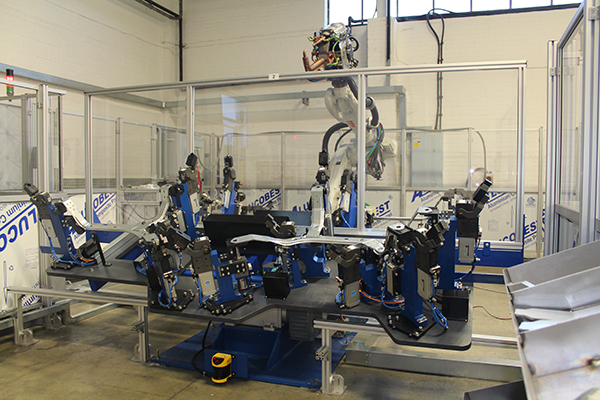
Machine tending is one of the most common uses for automated loading. A robot can load raw parts into a machine tool, unload finished components and even carry out secondary operations if required. Depending on the application, parts may arrive by conveyor, pallet, fixture tray or AMR. Some systems also include vision technology so the robot can locate and grip randomly placed parts accurately.
What matters most is choosing a solution that suits the process rather than forcing the process to suit the robot. Premier Automation works across a wide range of robot models and applications, helping customers build robust systems that match their production reality.
How automated loading systems support long-term growth
A well-designed loading system does more than solve an immediate bottleneck. It can help a business create a more stable production environment, plan labour more effectively and prepare for future demand. Consistent loading improves process repeatability, which can support better quality control and more predictable output.
Automation can also support longer unmanned running periods, especially where offline programming, digital twin tools and reliable control systems are used to reduce downtime during installation and changeovers. For businesses under pressure to improve margins while maintaining quality, that can be a strong commercial advantage.
The real benefit is not simply replacing a manual task. It is creating a smarter process that works reliably day after day, while giving operators more time to focus on skilled, higher-value work. For companies exploring how automation could fit into their operation, Premier Automation offers honest advice, practical engineering support and tailored solutions built around real production needs.