
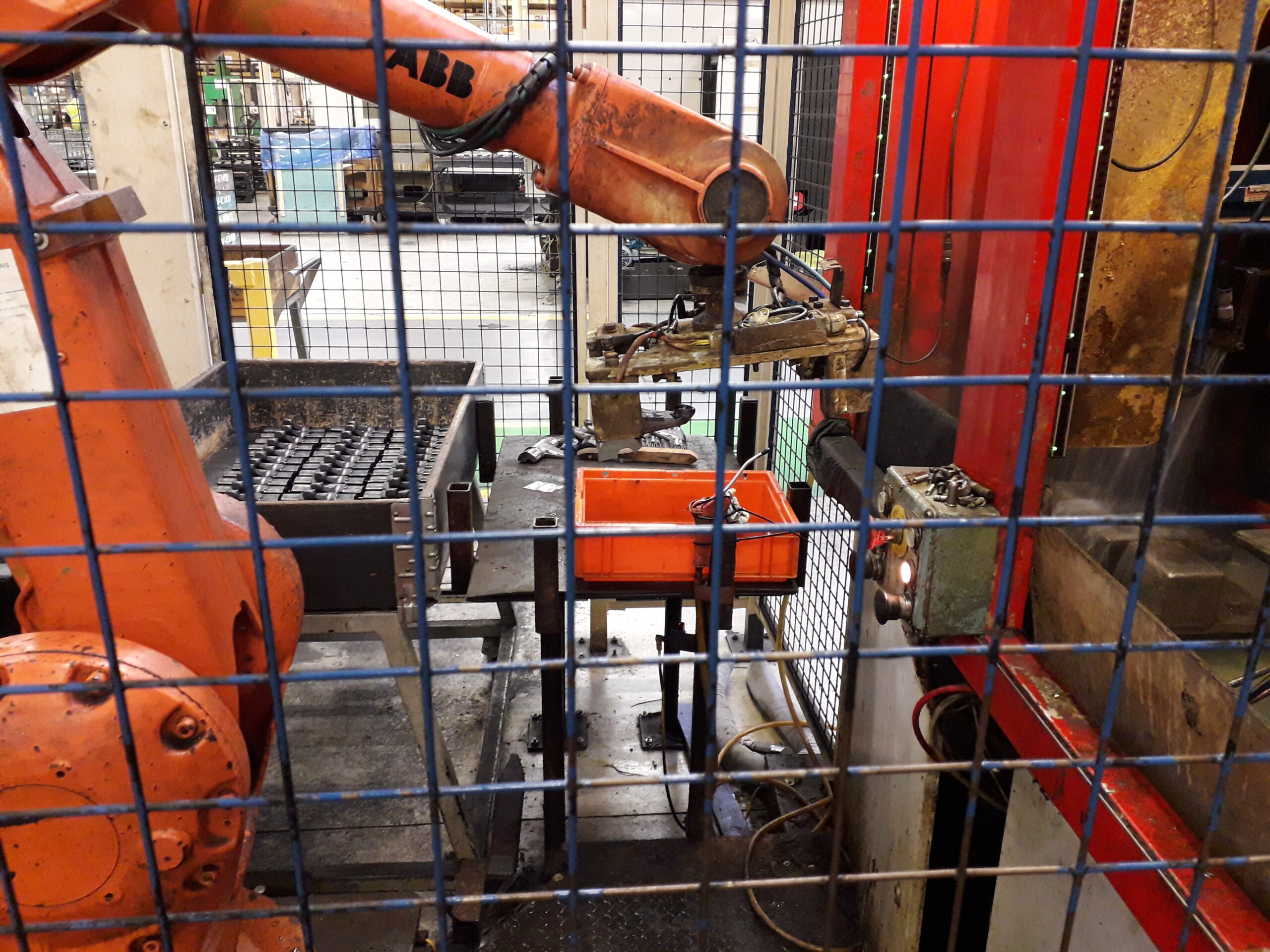
What are TIG Welding Robots? A Clear Guide for Manufacturers
What are TIG Welding Robots? For many manufacturers, they are automated systems designed to carry out precise tungsten inert gas welding with consistent movement, controlled heat input and repeatable quality. Instead of relying solely on manual handling for every weld, a robot follows a programmed path, helping businesses improve accuracy, reduce variation and make better use of skilled staff.
TIG welding is often chosen for applications where neat, clean and strong welds are needed. It is commonly used on stainless steel, aluminium and thin materials where control matters. When this process is combined with a robot system, it can support higher consistency across repeated parts, particularly where the same welds are required again and again.
What are TIG Welding Robots? The Basic Idea
What are TIG Welding Robots? In simple terms, they are industrial robots fitted with TIG welding equipment and programmed to move the welding torch along a set path. The robot controls the torch position, travel speed, arc length and movement pattern, while the welding power source manages the current and welding parameters.
A complete system may include the robot arm, welding power supply, wire feed if required, fixtures, guarding, extraction, control panels and safety devices. It may also include sensors, turntables or positioners to place each component at the correct angle. The aim is not only to make the weld, but to hold the part securely and repeat the process reliably.
Premier Automation designs and builds robot systems around each customer’s production needs, process requirements and payback criteria. This matters because a TIG welding robot is only effective when the tooling, controls, programming and safety arrangements are designed properly around the part being welded.
Where TIG Welding Robots Are Most Useful
TIG welding robots are well suited to repeated welding tasks where quality and consistency are difficult to maintain manually over long shifts. They can be particularly useful for components with regular weld paths, controlled joint fit-up and stable production volumes.
Manufacturers may use them for stainless steel fabrications, automotive parts, aerospace-related components, food-grade equipment, tanks, frames, precision assemblies and other products where weld appearance and repeatability matter. They are especially valuable where a skilled welder is spending a large amount of time on repetitive work that could be automated.
That does not mean every TIG welding job should be automated. Some low-volume, highly varied or difficult-to-fixture jobs may still suit manual welding better. A good automation project starts with an honest review of the parts, weld access, production volumes, quality demands and commercial return.
What are TIG Welding Robots? Key Benefits for Production
What are TIG Welding Robots? For many businesses, they are a way to improve repeatability without removing the need for welding knowledge. The robot follows the programmed path consistently, reducing the small variations that can happen with manual welding across different operators, shifts or fatigue levels.
One of the main benefits is consistent weld quality. Once the system is correctly designed, programmed and tested, it can repeat the same movement and parameters across many parts. This can help reduce rework, improve visual finish and support more predictable inspection results.
Another benefit is productivity. A robot does not need to pause in the same way as a person, and it can be integrated with fixtures, positioners and loading systems to reduce downtime between welds. For the right application, this can improve throughput and help production teams plan more confidently.
Robotic TIG welding can also support safer working. It can reduce direct exposure to heat, arc glare, fumes and awkward repetitive movements. Machinery and automation should always be assessed and guarded correctly, and the HSE provides useful guidance on safe work equipment and machinery at HSE Machinery Safety.
Designing a Practical TIG Welding Robot Cell
A successful robot welding cell is not just about choosing a robot arm. The whole process needs to be considered, including the part design, weld sequence, access, fixturing, cycle time, operator loading, maintenance and safety requirements.
Fixtures are especially important. If a component moves, sits inconsistently or has poor joint fit-up, the robot may repeat the same path perfectly but still produce inconsistent results. Good tooling helps hold the part in the correct place and makes the weld path predictable.
Controls are another key part of the system. Premier Automation designs and manufactures control systems for robots, special purpose machinery and process lines. A well-designed control system should provide reliable operation, clear operator information and safe integration with the rest of the production area.
Offline programming can also help. By creating or editing robot programmes away from the live production cell, manufacturers can reduce disruption during installation or future product changes. This is useful when a business needs to improve a cell, accommodate a new product or reduce downtime.
What are TIG Welding Robots? Choosing New, Used or Upgraded Systems
What are TIG Welding Robots? They can be installed as a completely new robot cell, integrated using a suitable used robot, or created by modifying an existing automated system. The right option depends on the current production setup, budget, technical requirements and expected return.
A new system may be best where the process needs to be designed from the ground up. A used robot can sometimes reduce capital cost if it is suitable for the task and properly integrated. An existing system may be upgraded if the robot, controls, tooling or safety features can be adapted to meet new requirements.
Premier Automation can design and build new robot systems, integrate used robots, and modify or update existing automated systems. Existing robot systems can also be re-engineered to improve efficiency, reduce cycle times or handle new products.
The British Automation & Robot Association provides useful wider information on automation and robotics in UK industry at BARA. For manufacturers considering investment, this wider industry context can help when thinking about long-term productivity, skills and competitiveness.
Why Integration Experience Matters
Robot welding projects need practical engineering experience. The robot must be selected correctly, the welding process must be stable, the part must be held accurately, the controls must be reliable, and the safety system must be suitable for the working environment.
Premier Automation has experience integrating a wide range of robot models from leading manufacturers across many applications. Based in Bedford, the company works with customers locally, nationally and internationally, including system relocation, re-engineering and support.
For many manufacturers, the best result comes from early discussion. By reviewing the part, production targets, quality issues and available space, an automation specialist can explain whether robotic TIG welding is suitable and what the likely benefits and limitations may be.
Frequently Asked Questions
What are TIG Welding Robots used for?
What are TIG Welding Robots? They are used for precise, repeatable TIG welding tasks where consistent quality, controlled movement and neat weld appearance are important.
Can a TIG welding robot replace a skilled welder?
Not completely. Skilled welding knowledge is still needed for process setup, programming decisions, quality checks and troubleshooting. The robot handles repeatable movement, while people guide and manage the process.
Is robotic TIG welding suitable for small batches?
It can be, but it depends on part variation, programming time, fixturing and expected return. Some small-batch work is suitable if products repeat often or share similar weld paths.
Can an existing robot system be upgraded for TIG welding?
In some cases, yes. The robot, controls, safety system, tooling and welding equipment would need to be assessed to see whether an upgrade is practical and cost effective.
For businesses reviewing welding quality, labour availability or production efficiency, Premier Automation can provide honest advice on whether a TIG welding robot system, upgrade or re-engineered cell is the right route forward.