Automated Palletiser Machines In Bedford For Efficient, Reliable Production
Automated Palletiser Machines In Bedford can help manufacturers, packers and logistics operations improve output, reduce manual handling and create a more consistent end-of-line process. For businesses in Bedford and across the UK, investing in a well-designed palletising system is not only about speed. It is about building a safer, more reliable and more cost-effective way to prepare products for storage, transport and dispatch.
Premier Automation designs and builds robot systems that are tailored to individual production needs. This includes new robot systems, used robot integration, system upgrades, re-engineering and relocation. With a strong background in robot integration, control systems, PLC programming and after-sales support, the team can develop palletising solutions that match both technical requirements and commercial payback targets.
Why Automated Palletiser Machines In Bedford Are Becoming More Important
Many production environments still rely on manual palletising, especially where products vary in size, weight or packing format. While this may work for low-volume operations, it can become a bottleneck as demand grows. Repetitive lifting, stacking and reaching can slow production and increase the risk of strain injuries. It can also lead to inconsistent pallet patterns, unstable loads and delays at the end of the line.
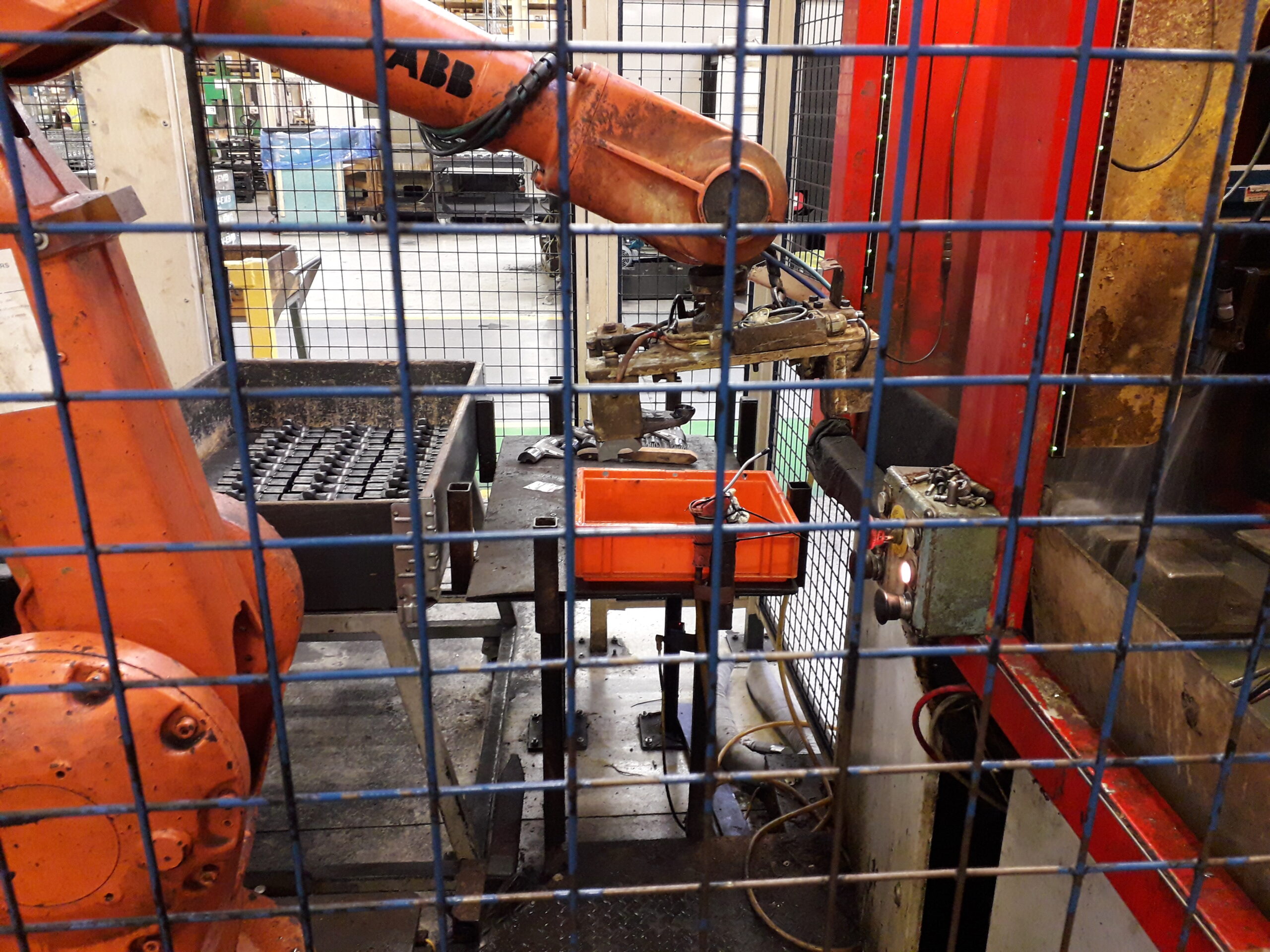
Automated Palletiser Machines In Bedford offer a practical answer to these challenges. A robot palletising system can pick cartons, sacks, trays or other packaged goods from an infeed conveyor and place them onto a pallet in a programmed pattern. This creates stable, repeatable stacks and helps production teams maintain a steady flow through the packing area.
Automation can also improve labour allocation. Rather than using staff for repetitive manual stacking, businesses can redeploy people into quality checks, machine supervision, stock control or other higher-value tasks. For growing manufacturers, this can make a major difference to daily productivity without needing to expand the workforce at the same rate as output.
Designed Around Your Products, Space And Output
A palletising system should never be treated as a one-size-fits-all purchase. The correct design depends on product dimensions, weight, line speed, pallet type, stacking pattern, available floor space, existing conveyors and downstream equipment. Premier Automation works closely with customers to understand these details before recommending the most suitable approach.
Some sites may require a basic palletising cell with a single infeed conveyor and one pallet position. Others may benefit from a twin palletising cell, multiple infeeds, pre-orientation, pallet conveyors or integration with equipment such as stretch wrappers. Cobot palletising can also be a good option where a smaller footprint, easier reconfiguration or close interaction with operators is required.
Premier Automation has experience designing special grippers for many different products. This is a key part of a successful system because the robot must handle items securely without causing damage. For cartons, the gripper may need to manage different box sizes. For delicate or irregular products, the end-of-arm tooling must be carefully engineered to protect product quality while keeping cycle times efficient.
Automated Palletiser Machines In Bedford For Safer Workplaces
Manual palletising often involves repeated bending, lifting, twisting and reaching. Over time, this can contribute to fatigue and injury, particularly where products are heavy or production runs are long. By automating the repetitive part of the process, businesses can reduce physical strain on staff and create a safer working environment.
Safety must be considered from the earliest design stage. Robot cells, guarding, access points, emergency stops, risk assessments and control systems all need to be planned properly. Guidance from the HSE on work equipment and machinery is a useful reference for businesses reviewing their responsibilities around machinery safety.
Premier Automation designs control systems using modern engineering tools and provides safety reports, controls risk assessments, panel layouts, schematics and associated documentation. Control panels are built internally by qualified electricians and fully tested before despatch. This gives customers confidence that the palletising system has been considered as a complete installation, not just as a standalone robot.
Integrating New, Used Or Existing Robot Systems
One of the benefits of working with an experienced robot integrator is flexibility. Some businesses need a completely new palletising cell, while others already have robots or automation equipment that could be re-used, relocated or upgraded. Premier Automation can integrate used robots, modify existing systems and re-engineer older cells to improve efficiency or adapt to new product requirements.
This can be especially useful where a product range has changed, throughput targets have increased or an existing system no longer performs as required. Rather than replacing everything, a detailed assessment may show that changes to tooling, programming, controls, guarding or conveyors can deliver the improvement needed.
Premier Automation also provides robot and PLC programming support, including offline programming and digital twin work. This can help optimise a cell before manufacture or reduce downtime when changes are needed on an existing production line. Support for major robot and PLC platforms allows the team to work on both their own installations and systems originally supplied by others.
What To Consider Before Choosing A Palletising System
Before investing in a palletising system, it is worth reviewing your current process in detail. Look at how many products are being palletised per hour, how often product formats change, how much manual labour is involved, where delays occur and whether pallet quality is consistent. It is also useful to consider future production plans, as a system designed only around today’s output may become restrictive later.
Floor layout is another important factor. A robot palletising cell needs to work with your wider production area, including infeed conveyors, pallet supply, forklift access, guarding and finished pallet movement. In some cases, a compact cobot cell may be suitable. In others, a higher-speed industrial robot with multiple pallet positions may provide the better long-term return.
The British Automation & Robot Association provides wider insight into automation and robotics in the UK, which can be helpful for businesses exploring the role of robot systems in modern production. However, every site still needs a solution based on its own process, product and commercial requirements.
Automated Palletiser Machines In Bedford With Long-Term Support
Automated Palletiser Machines In Bedford should be designed for long-term reliability, not just initial installation. A good system needs robust mechanical design, well-planned controls, clear operator interfaces, safe access for maintenance and the ability to adapt where production needs change.
Premier Automation supports customers beyond the design and build stage. Services include installation, commissioning, training, PLC and robot programming, system upgrades, relocation, machining, fabrication and after-sales support. The company’s in-house capabilities allow it to manufacture tooling, robot pedestals, support frames, guarding and other components where needed, helping to keep projects efficient and cost-effective.
Founded in 2000, Premier Automation has developed into one of the UK’s leading suppliers of robot-based automation and control systems. From single robot cells to more complex automated systems, the team focuses on practical solutions that meet technical requirements and deliver a sensible commercial return.
For businesses reviewing Automated Palletiser Machines In Bedford, Premier Automation can assess your production process, discuss your targets and recommend a system that fits your products, space, output and payback criteria. Whether you need a new robotic palletising cell, an upgraded existing system or support with relocation and programming, the team can provide clear, honest guidance and a tailored automation solution.