
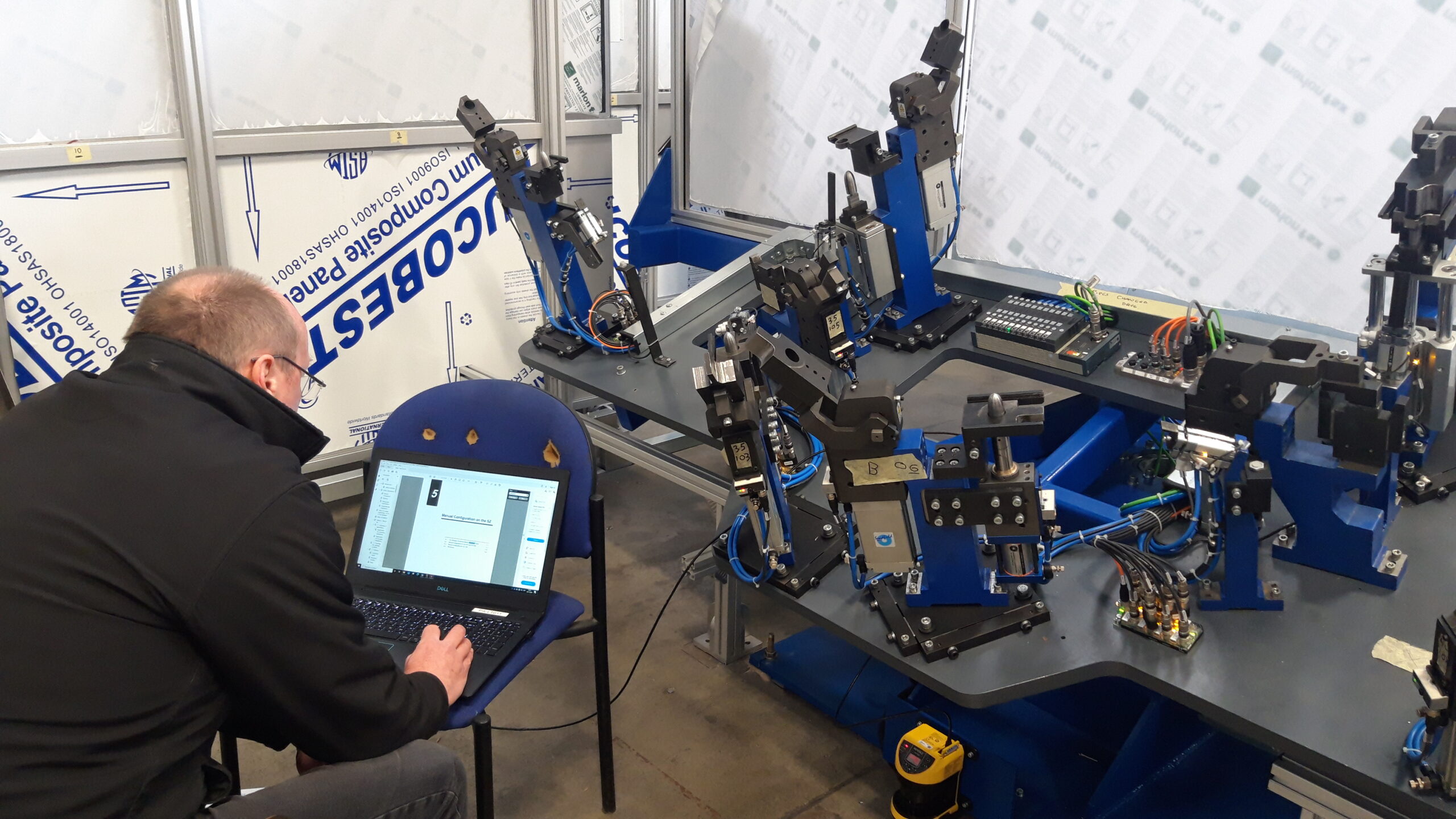
What are the benefits of Automated TIG Welding? A practical guide for manufacturers
What are the benefits of Automated TIG Welding? For manufacturers that need clean, consistent and repeatable welds, automated TIG welding can improve quality, reduce rework and create a more controlled production process. TIG welding is often chosen for high-quality joints, neat finishes and precision work, but manual results can vary depending on operator skill, fatigue, access and production pressure. Automation helps remove many of these variables while keeping the advantages that make TIG welding valuable.
For businesses producing stainless steel, aluminium or specialist fabricated components, the right automated welding cell can make a measurable difference. Premier Automation designs, builds, modifies and integrates robotic automation systems that match each customer’s process, production targets and payback criteria. This includes new robot systems, re-engineered existing systems, robot programming, PLC controls, tooling, guarding and support after installation.
What are the benefits of Automated TIG Welding? Consistency across every weld
One of the main reasons manufacturers look at automated TIG welding is consistency. A robot or automated system follows the same programmed path, torch angle, travel speed and process settings cycle after cycle. This creates a repeatable weld profile, helping reduce differences between operators, shifts or batches.
Manual TIG welding takes skill, and experienced welders remain highly valuable. However, even skilled operators can be affected by fatigue, access limitations or repetitive work. Automation is particularly useful where a part needs the same weld repeated many times, or where a business needs to meet strict quality expectations without increasing labour pressure.
With the right fixturing, control system and programming, automated TIG welding can support better repeatability, cleaner results and reduced inspection failures. For production teams, that means fewer stoppages, less rework and more predictable output.
Better productivity without sacrificing weld quality
Automated TIG welding can help manufacturers increase throughput while maintaining a high standard of finish. The system can be designed to reduce idle time between welds, improve part loading, and maintain steady production speeds. Where suitable, automation can also support longer unmanned or lightly supervised running periods.
Premier Automation has experience integrating robot systems for diverse welding applications, as well as wider manufacturing tasks such as machine tending, palletising, gluing, dispensing and control systems. This broader automation knowledge is useful because welding rarely sits in isolation. The best results often come from looking at the whole process, including part presentation, tooling, guarding, extraction, controls, operator access and production flow.
For some manufacturers, the productivity gain may come from a completely new robotic welding cell. For others, it may come from re-engineering an existing robot system to reduce cycle times, improve reliability or cope with a changed product range.
What are the benefits of Automated TIG Welding? Reduced rework and waste
Rework can quietly reduce profitability. If welds need grinding back, repairing, rechecking or scrapping, production time is lost and material costs rise. Automated TIG welding helps by applying controlled parameters and repeatable movement, which can reduce variation and improve first-time pass rates.
This is particularly valuable where components are expensive, tolerances are tight or finishing requirements are high. Consistent heat input and travel speed can also help reduce distortion where the application is suitable and correctly engineered.
Good system design matters. Fixtures must hold parts correctly, programmes must suit the component, and controls must be reliable and easy to use. Premier Automation designs control systems using Eplan and can provide schematics, panel layouts, cable schedules, EN13849 safety reports and controls risk assessments. The control system sits at the heart of the automation cell, so it needs to support both performance and safe operation.
Improved safety and a better use of skilled labour
Automating repetitive welding tasks can help reduce exposure to heat, fumes, bright arc light and awkward working positions. It can also reduce the amount of manual handling required around a welding process when combined with good fixture design and loading methods.
Manufacturers still need to assess risks properly and comply with workplace equipment requirements. The HSE guidance on work equipment and machinery is a useful reference for understanding employer responsibilities around safe equipment use. Automation must be designed with suitable guarding, emergency stops, access control and risk assessment, rather than treated as a plug-in shortcut.
Another benefit is labour allocation. Skilled welders can be moved away from repetitive production welds and used for inspection, prototype work, complex fabrication, process improvement or supervision of automated cells. This can help manufacturers make better use of specialist skills while improving output stability.
What are the benefits of Automated TIG Welding? Stronger process control and traceability
Automated systems can provide better control over welding parameters, movement, sequencing and operator interaction. Depending on the system requirements, controls can be developed to support data capture, alarms, recipes, user permissions and integration with wider production systems.
Premier Automation specialises in designing and manufacturing control systems for robots, special purpose machinery and process lines. The team works with robot programming, PLC programming, SCADA and custom MES-style systems, helping manufacturers connect welding automation into the wider factory environment where required.
This can be especially useful where different product variants are produced. Programmes can be created or modified to suit new parts, while offline programming and digital twin tools can reduce disruption before installation or during changes. For businesses that need flexibility as well as repeatability, this can make automated TIG welding more practical.
Support for new systems, upgrades and relocation
What are the benefits of Automated TIG Welding? The answer depends on the current process, production volume, part design, quality requirements and commercial target. A well-designed system can improve consistency, productivity, safety and cost control, but it must be engineered around the real application.
Premier Automation operates from a large facility in Bedford, with access to customers across the UK. The company can design and build new robot systems, integrate used robots, upgrade existing automated systems, relocate equipment locally, nationally or internationally, and provide after-sales support.
Automation industry bodies such as the British Automation & Robot Association also highlight the growing role of robotics and automation within manufacturing. For companies considering welding automation, the key is to focus on the business case: weld quality, throughput, labour availability, repeatability, downtime, maintenance and payback.
Choosing the right automated TIG welding partner
Automated TIG welding is not only about selecting a robot. It requires joined-up engineering across mechanical design, tooling, safety, controls, programming, installation and commissioning. A good integrator should be able to assess whether automation is suitable, explain the options clearly and advise honestly when a process may need changing before automation will deliver value.
Premier Automation has built a reputation for robot integration, control systems, upgrades, relocation, manufacturing support, PLC and robot programming, and after-sales service. The company also holds ABB Value Provider status and is a Siemens Solution Partner, supporting strong technical delivery across robot and control system projects.
What are the benefits of Automated TIG Welding? For the right application, they include consistent weld quality, reduced rework, improved productivity, safer working conditions and stronger control over the production process. For support with robotic welding systems, control systems, upgrades or automation planning, Premier Automation can help assess the process and provide a practical solution built around your technical and commercial goals.