
What is Robotic Machine Tending? A Practical Guide for Manufacturers
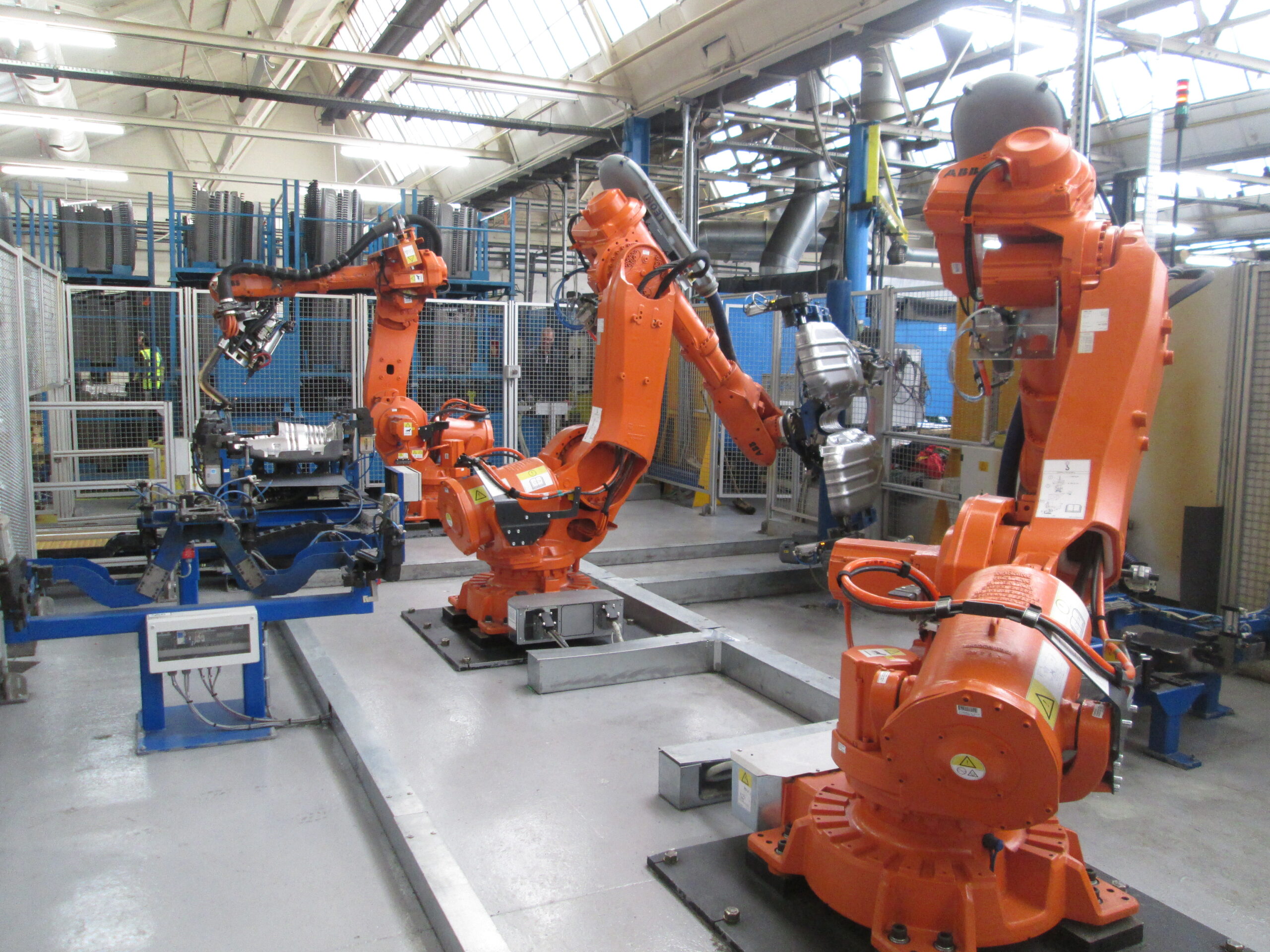
What is Robotic Machine Tending? It is the use of an industrial robot or collaborative robot to load parts into manufacturing machinery, monitor the production cycle and remove completed components. The robot handles the repetitive movement of materials, allowing the machine to continue operating with less manual intervention. This approach is commonly used with CNC machines, presses, injection moulding equipment and other automated production systems.
Robotic machine tending can help manufacturers increase output, improve consistency and make better use of skilled employees. Rather than repeatedly loading and unloading equipment, operators can concentrate on inspection, programming, maintenance and other valuable production activities.
What is Robotic Machine Tending and How Does It Work?
A typical machine tending system includes a robot, a suitable gripper, a component infeed method, safety equipment and an interface with the machine tool. Parts may arrive on a conveyor, in a pallet, inside a fixture or randomly positioned within a container.
The robot collects an unfinished component and places it accurately inside the machine. Once the component is correctly positioned, the robot signals that the production cycle can begin. After machining is complete, the robot removes the finished item and places it on an outfeed conveyor, inspection station, pallet or tray.
Depending on the application, the robot may also clean fixtures, remove swarf, turn components between operations or perform basic quality checks. These additional tasks can create a more complete automated process rather than simply replacing manual loading.
Which Machines Can Be Automatically Loaded?
Machine tending is suitable for a broad range of industrial equipment. CNC lathes and milling machines are among the most common applications, although robots can also load presses, grinders, injection moulding machines, laser cutters and testing equipment.
The correct solution depends on the machine interface, component shape, production volume and available space. Some projects require a traditional industrial robot within a guarded cell, while others may suit a compact collaborative robot. A detailed assessment is needed to establish whether the application can be automated safely and economically.
Manufacturers should also consider the guidance provided by the Health and Safety Executive on work equipment and machinery. Appropriate guarding, interlocks, risk assessments and control measures must form part of the overall system design.
What is Robotic Machine Tending Used to Achieve?
The main purpose of machine tending automation is to keep production equipment working efficiently. A robot can follow the same loading sequence throughout every shift, reducing the variation that can occur during repetitive manual work.
Cycle times can become more predictable because the robot is programmed to complete each movement consistently. Machines may also continue operating during breaks, shift changes or periods when fewer employees are available. With sufficient infeed and outfeed capacity, some systems can support extended unmanned or “lights out” production.
Automation can also improve working conditions. Employees no longer need to handle hot, sharp, oily or heavy components throughout the day. This can reduce exposure to repetitive movements and allow experienced operators to focus on production control and quality.
Choosing the Right Component Feeding Method
There is no single feeding method that suits every project. Fixtures and pre-arranged trays provide predictable component positions, making them suitable for straightforward pick-and-place operations. Pallets can hold larger quantities of work and offer enough capacity for overnight production.
Conveyors provide a continuous flow of parts and can be combined with overhead vision systems. The vision equipment identifies the position and orientation of each component, allowing the robot to collect parts that are not placed in fixed locations.
For factories with several machines, autonomous mobile robots can transport prepared trays between a central loading area and individual tending cells. This arrangement can simplify each cell while allowing components to move automatically between production stages.
What is Robotic Machine Tending Integration?
Integration involves much more than placing a robot beside a machine. The robot, machine tool, control system, guarding, sensors and material handling equipment must communicate reliably. The gripper must also hold unfinished and completed components securely without damaging them.
Premier Automation designs new robotic systems, integrates used robots and updates existing automation to meet individual process requirements. Its engineers can develop control systems, manufacture guarding and support frames, create tooling, program robots and PLCs, and commission the finished system.
Offline programming and digital simulation can be used to test robot movements and optimise the cell layout before installation. This can identify access restrictions, possible collisions and unnecessary movements while reducing disruption during commissioning.
When Does Machine Tending Provide a Good Return?
The strongest applications usually involve repetitive tasks, regular production demand and equipment that currently waits for an operator. However, automation does not need to be limited to extremely high-volume production. Quick-change grippers, flexible programming and vision systems can support manufacturers producing several component types in smaller batches.
What is Robotic Machine Tending likely to cost? The answer depends on the robot, tooling, guarding, machine interfaces and feeding equipment required. Payback should be considered against increased machine utilisation, reduced manual handling, improved consistency and the potential for longer operating hours.
Organisations such as the British Automation & Robot Association provide further information about industrial robotics and automation within UK manufacturing.
Planning a Reliable Machine Tending System
A successful project begins with a clear understanding of the components, machinery and required production rate. Engineers should assess loading positions, cycle times, available floor space, part presentation and the process for handling completed items.
Future production plans should also be considered. A system designed around flexible tooling and adaptable software may accommodate new products more easily. Existing robotic cells can sometimes be re-engineered to reduce cycle times, accept different components or work with replacement machinery.
Based at its facility in Bedford, Premier Automation supports projects across the UK and internationally, including new installations, upgrades and system relocations. Every proposed solution is assessed against the customer’s technical needs and commercial payback criteria.
Frequently Asked Questions
Can a robot tend more than one machine?
Yes. A robot can sometimes serve several machines where the layout, production cycles and component handling requirements allow it. Simulation can help determine the most efficient arrangement.
Can existing machines be automated?
Many existing machines can be integrated with a robotic loading system. Their controls, doors, workholding and safety interfaces must be assessed before a suitable solution is designed.
Are collaborative robots suitable for machine loading?
Collaborative robots can suit lower-payload applications and restricted production spaces. A risk assessment is still required, as additional safety measures may be necessary depending on the tooling, components and operating speeds.
Can machine tending support overnight production?
Yes, provided the cell has sufficient component storage, reliable process monitoring and appropriate systems for managing faults and completed parts.
For manufacturers exploring machine tending, system upgrades or wider robot integration, Premier Automation can assess the process and recommend a practical solution designed around production requirements, safety and achievable payback.