What is an Industrial Control System? It is the coordinated hardware and software that monitors, directs and protects industrial equipment. Rather than relying on manual adjustments, it gives a production cell, machine or process line clear instructions, receives feedback from sensors and responds consistently. For manufacturers, the result can be safer operation, repeatable quality, better visibility and a stronger foundation for future automation.
What is an Industrial Control System? And what does it do?
An industrial control system, often shortened to ICS, is the decision-making layer behind automated production. It may control a single special-purpose machine or connect robots, conveyors, inspection equipment, drives and process equipment across a complete line. The system continuously compares real operating conditions with its programmed sequence, then starts, stops, positions, measures or alarms as required.
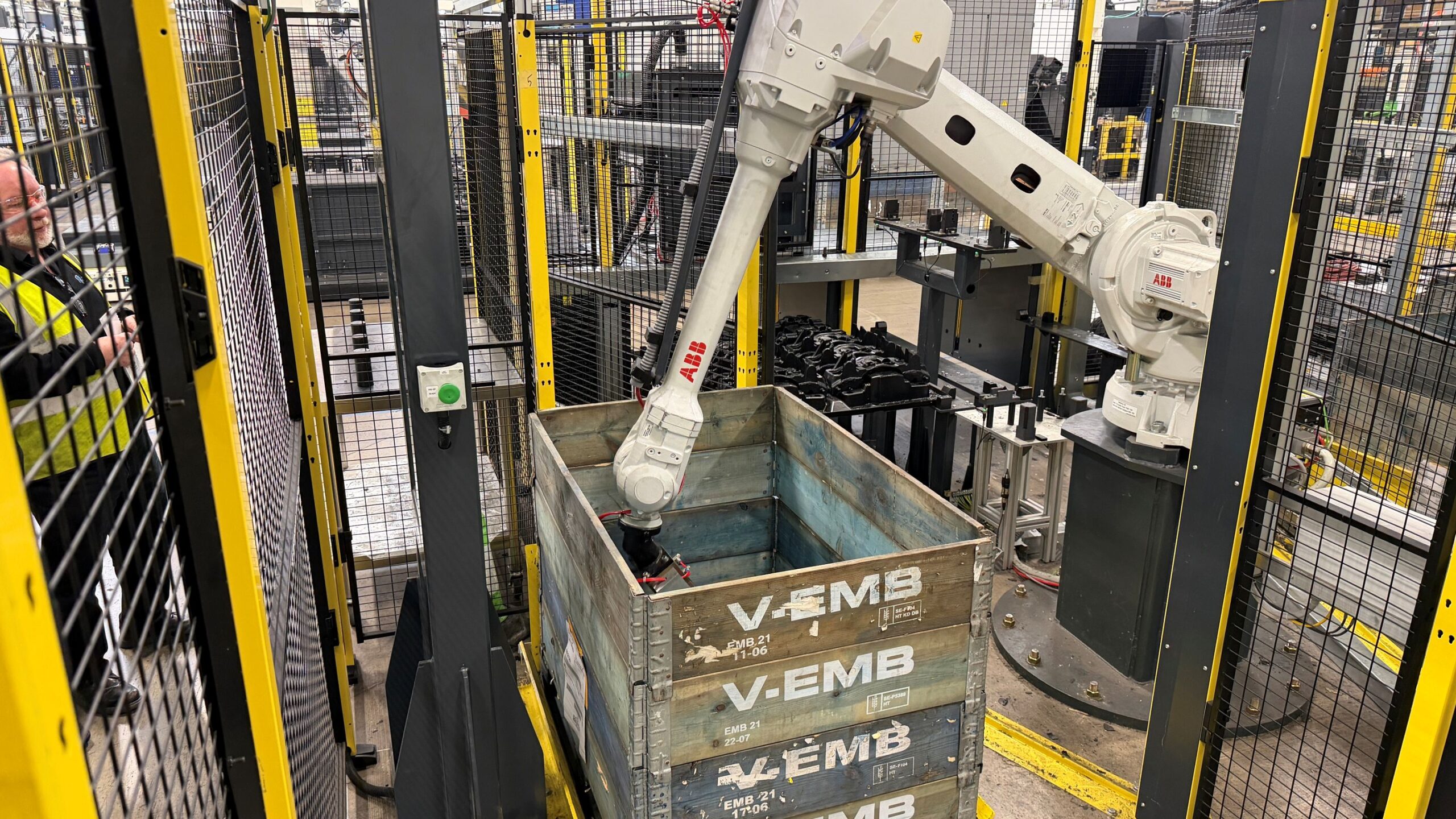
For example, a robot tending a CNC machine needs confirmation that the machine door is safe to open, the part is correctly located and the cycle has finished. The control system manages those signals in the correct order. If a sensor detects a fault, it can stop the sequence, record an alarm and guide an operator towards the appropriate response.
Core components of a control system
Each installation is tailored to its task, but most systems bring together several essential elements. Good design considers how these components communicate, how they are maintained and how easily operators can understand the information presented to them.
-
A programmable logic controller (PLC) runs the sequence and makes fast, reliable decisions from programmed logic.
-
Inputs such as sensors, switches, encoders and vision systems provide information about position, presence, temperature, pressure or quality.
-
Outputs command motors, pneumatic valves, drives, robots, heaters and other equipment to perform work.
-
A human-machine interface (HMI) gives operators access to status screens, recipes, alarms and authorised controls.
-
Safety controls, including safety relays or safety PLCs, monitor guards, emergency stops and protective devices independently of normal operation.
Control panels organise the electrical equipment, terminals, power distribution and network connections in one documented enclosure. Clear labelling, sensible cable routing and accurate drawings are not cosmetic details: they reduce diagnosis time and make later upgrades less disruptive.
What is an Industrial Control System? Used for in a factory?
Industrial control systems support a wide range of practical applications. They can synchronise a palletising robot with a conveyor, control glue or gasket dispensing paths, regulate a welding cell, manage a machine-tending cycle or coordinate a process line. They are equally useful for integrating new equipment with machinery that is already producing valuable output.
The benefit is not simply speed. A well-specified system can enforce repeatable parameters, prevent a cycle beginning in an unsafe state and collect useful production information. That helps a business identify recurring stops, distinguish a material issue from an equipment issue and make improvements based on evidence rather than assumptions.
Planning the right system for your operation
Before selecting controls, define the real operating requirement. Consider product variants, expected cycle time, available floor space, operator interaction, changeover needs and what should happen after a fault. Also ask whether the line will need another robot, additional stations or data exchange with wider business systems later. Planning for spare I/O capacity and sensible network architecture can avoid expensive alterations.
Integration is particularly valuable where equipment from different manufacturers must work as one process. The controller must handle handshakes between machines, preserve safe states during pauses and recover predictably after a stoppage. Commissioning should test normal production, foreseeable faults, restart behaviour and any manual or maintenance modes before handover.
Safety, compliance and maintainability
Automation must be designed with safety at its centre, not added after mechanical decisions have been made. In Great Britain, the HSE guidance on the Provision and Use of Work Equipment Regulations 1998 (PUWER) explains that work equipment must be suitable for its intended use and maintained in an efficient state, efficient working order and good repair. Risk assessment should inform guarding, interlocks, emergency-stop arrangements and safe access for adjustment or cleaning.
Maintainability deserves equal attention. Operators need clear alarm messages rather than cryptic fault codes, while maintenance teams need current electrical schematics, software backups and documented settings. Secure remote-support arrangements and controlled access levels can also help protect production while allowing authorised staff to resolve problems efficiently.
Frequently Asked Questions about What is an Industrial Control System?
These answers address common points raised by businesses considering automation or modernising an existing production cell.
What is an Industrial Control System? Is it the same as a PLC?
No. A PLC is often the central controller within the system, but an industrial control system includes the PLC alongside sensors, drives, operator interfaces, safety devices, networks, panels and the programmed logic that joins them together.
What is an Industrial Control System? What is the role of an HMI?
An HMI is the operator-facing screen or interface. It can display machine status, allow authorised recipe selection, show alarms and support guided fault finding. A well-designed HMI presents only the controls and information needed for the user’s role.
Can an existing machine be upgraded?
Often, yes. A review can identify obsolete controls, unreliable sensors, limited safety functions or missing documentation. Upgrading a panel, PLC, robot controls or HMI may extend the useful life of sound machinery, provided the wider mechanical and safety condition is also assessed.
Premier Automation designs, builds, installs and commissions control systems for robots, special-purpose machinery and process lines. From its facility in Bedford, the team can help you assess a new automation project, upgrade existing controls or develop a practical route to more reliable production.