
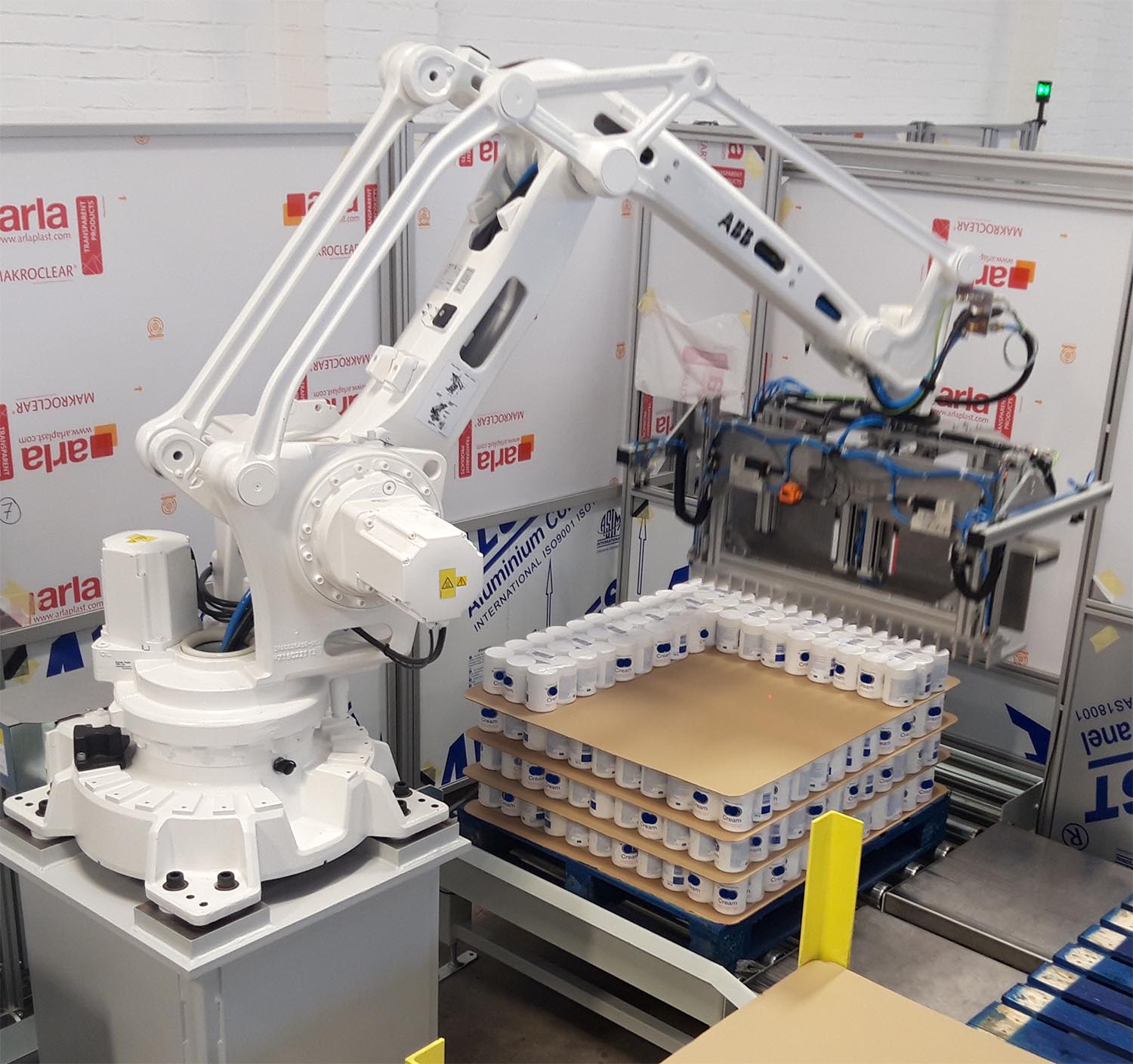
What is a Robot Gripper? It is the tool fitted to the end of a robot arm that allows the robot to pick up, hold, move and release an item. Often called an end effector, the gripper is the part that directly touches the product. Choosing the right one is central to a reliable automated process, whether you are moving boxes, loading a machine, assembling components or handling delicate parts.
A robot arm provides reach and repeatable movement, but it cannot complete a handling task without a suitable end-of-arm tool. Grippers come in many designs and can be powered by air, electricity or vacuum. Their job is to hold a product securely enough for safe, accurate movement while avoiding marks, damage or dropped items.
What is a Robot Gripper? How It Works
A gripper receives a command from the robot controller or a separate control system. It then opens, closes, applies suction or activates another holding method. Sensors can confirm whether a part has been picked, whether the jaws are fully closed or whether vacuum has been achieved. This feedback helps the robot respond appropriately if a component is missing, misaligned or incorrectly positioned.
The gripper must be matched to more than the shape of the item. Engineers consider weight, centre of gravity, surface finish, temperature, cycle time and the required orientation. A gripper lifting a component vertically may need a very different safety margin from one transferring the same part horizontally. Cable and hose routing also matters: poorly protected services can snag, fatigue or restrict the robot’s movement.
What is a Robot Gripper? Common Types
Parallel-jaw grippers are widely used for components with two opposing faces. Their fingers close in a straight line, making them useful for machine tending, assembly and handling regular-shaped products. Custom fingers can be machined to match a part, improving location and reducing the gripping force needed.
Angular grippers use jaws that pivot open and closed. They can provide generous clearance around a component, which is helpful where access is restricted. Three-finger grippers are often used to centre round or irregular objects, while internal grippers expand inside a bore or opening to lift hollow parts.
Vacuum grippers use suction cups, foam pads or purpose-designed vacuum tooling. They are popular for cartons, sheets, glass and packaging because they can handle broad surfaces without clamping the sides. However, porous materials, dusty surfaces and products with holes may require more vacuum capacity or an alternative approach.
Magnetic grippers suit suitable ferrous-metal parts, particularly in metalworking applications. Needle, adhesive and soft robotic grippers can address specialist materials such as textiles, food or fragile items. The answer to What is a Robot Gripper? therefore depends on the task: it may be a simple pair of jaws or a multi-function tool with sensors, tool changers and several handling methods.
What is a Robot Gripper? Selecting the Right Design
Start with the product and process rather than the robot model. Record the smallest and largest part variations, weight range, allowable contact areas, required production rate and any presentation changes. If items arrive inconsistently, vision guidance, compliant fingers or a locating fixture may be needed. If several product formats run on one line, a quick-change tool or adjustable gripper can reduce changeover time.
Grip force needs careful calculation. Too little force risks a dropped part; too much can deform plastic, crush packaging or leave marks on finished surfaces. The gripper’s own weight is equally relevant because it reduces the payload available for the product. In fast applications, acceleration and deceleration can create forces far higher than the item’s static weight.
For collaborative robot applications, the tooling profile, pinch points and operating mode need particular attention. Rounded surfaces and force limitation can help, but a cobot is not automatically safe simply because it works near people. A proper risk assessment should cover the complete cell, including the gripper, product edges, fixtures and any unexpected release of a load.
Integration, Controls and Machinery Safety
A successful gripper installation brings together mechanical design, robot programming, electrical or pneumatic services and guarding. The robot program should include clear pick-and-place confirmation logic, such as checking a part-present sensor before leaving the pick position. Fault recovery is also essential: operators need a safe, straightforward way to deal with a failed pick without bypassing protective measures.
In Great Britain, the Provision and Use of Work Equipment Regulations 1998 (PUWER) require work equipment to be suitable for its intended use and properly maintained. The HSE machinery safety guidance explains the wider duties for safe machinery and work equipment. For robot cells, this translates into assessing foreseeable faults, preventing access to hazardous movement and validating safety functions as part of the whole system.
What is a Robot Gripper? From a maintenance perspective, it is also a wear component. Jaws, seals, suction cups, bearings and hoses need inspection at planned intervals. Monitoring air pressure, vacuum level and sensor signals can reveal degradation before it creates rejects or unplanned downtime. Keeping a readily available set of consumable parts can be particularly valuable on high-output lines.
Frequently Asked Questions
Can one robot gripper handle different products?
Yes, if the products are sufficiently similar or the gripper is designed with adjustable fingers, multiple suction zones or interchangeable tooling. Testing representative samples is the best way to confirm reliable handling across the full range.
Do robot grippers need compressed air?
Not always. Pneumatic grippers are common, but electric grippers, vacuum generators, magnetic tools and mechanically actuated devices are also available. Electric options can offer precise force and position control without an air supply.
How is a gripper attached to a robot?
It is usually mounted to the robot wrist through a mechanical flange or adaptor plate. Electrical connectors, pneumatic lines and communication signals are then integrated so the robot controller can operate and monitor the tool.
What causes robot gripper failures?
Typical causes include incorrect force settings, worn suction cups or seals, leaking air lines, sensor faults, product variation and inadequate cable protection. Good design, commissioning tests and planned maintenance greatly reduce these risks.
Support for Your Automation Project
The best gripper is the one that supports consistent production, protects your product and fits safely into the wider process. Premier Automation can design, build, install and commission robot-based systems, including machine tending, palletising, welding, dispensing and collaborative robot applications. If you are reviewing an existing cell or planning a new automation project, Premier Automation can help assess the handling challenge and develop a practical gripper and robot solution.