
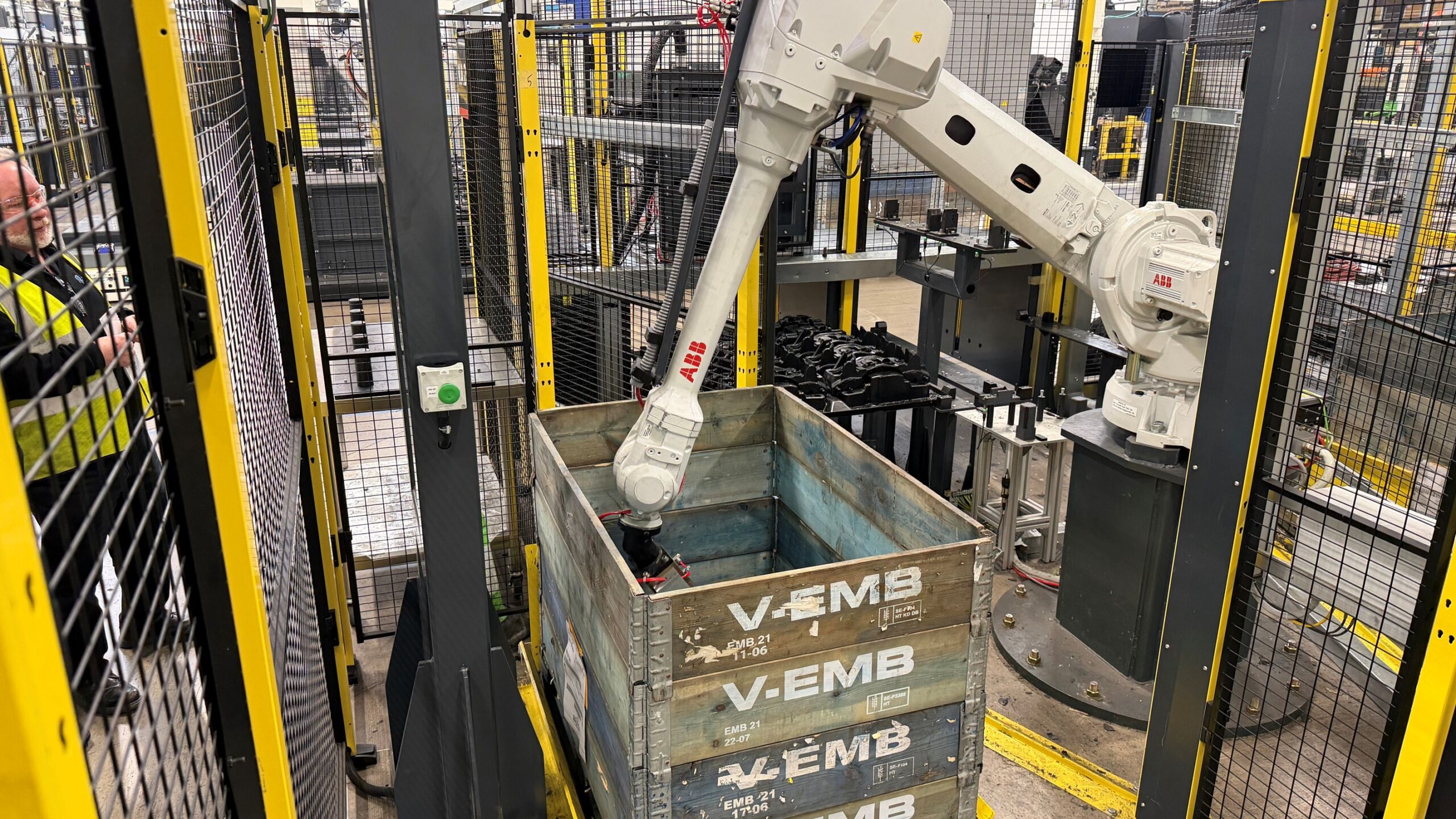
Businesses in Bedford can use Automation Solutions In Bedford to make repetitive production tasks safer, more consistent and easier to scale. From loading machine tools to building stable pallets, a well-designed system can relieve pressure on skilled teams while maintaining the quality customers expect. The best result is not simply a robot on the factory floor; it is a practical process designed around the way your business actually works.
Premier Automation designs, builds and supports robot-based automation and control systems from its Bedford facility. Established in 2000, the company works with organisations across the UK and internationally, helping them introduce new systems, improve existing equipment and get more value from used robots. Each project begins by understanding the product, production targets, available space and the tasks that create the greatest bottleneck.
Automation Solutions In Bedford for Real Production Challenges
Automation is particularly useful where a task is repetitive, physically demanding, difficult to staff or sensitive to variation. Machine tending can automatically load and unload components from CNC machines, allowing longer unattended runs. Palletising systems can stack cases, bags or containers accurately, while welding and dispensing cells deliver repeatable paths and controlled material application. These are focused improvements that can strengthen a single process without requiring a complete factory overhaul.
Collaborative robots, often called cobots, can also suit lower-volume or changeable work. Their compact footprint and adaptable programming can make them useful alongside people for handling, inspection or straightforward assembly tasks. However, a cobot is not automatically safe in every application. The tooling, speed, payload, pinch points and surrounding equipment all affect the risk assessment and the safeguards required.
How Automation Solutions In Bedford Are Tailored to Your Site
A successful installation starts with an honest review of the existing process. This includes cycle times, product range, shift pattern, quality issues, operator movements and how parts arrive at and leave the station. Seemingly small details matter: component orientation, inconsistent packaging, coolant on machine-tended parts or a lack of floor space can all influence the final cell layout. Addressing them early prevents costly changes during commissioning.
Premier Automation can provide the full route from system design and manufacture through to installation, commissioning and after-sales support. Its capabilities include PLC and robot programming, control systems for special-purpose machinery and process lines, robot upgrades, relocations and re-engineering. As a Siemens Solution Partner and ABB Value Provider, the team can select appropriate controls and robots while keeping future servicing and expansion in mind.
Planning Automation Solutions In Bedford with Safety Built In
Safety should shape the design from the outset, rather than be added after the robot has been selected. A properly planned cell considers access for loading, maintenance and fault recovery, as well as guards, interlocked doors, light curtains, emergency stops and safe operating modes. Clear operator training and straightforward recovery instructions are just as valuable as the physical safety measures, particularly where several shifts use the equipment.
The HSE explains that the Provision and Use of Work Equipment Regulations 1998 (PUWER) require work equipment to be suitable for its intended use, maintained in a safe condition and inspected where deterioration could create significant risk. For an automated cell, this supports a disciplined approach to guarding, maintenance schedules and documented checks. A supplier should help you consider these obligations alongside productivity, not treat them as a separate exercise.
It is also sensible to plan for change. Ask whether a robot can handle the next product size, whether end-of-arm tooling can be swapped efficiently and whether the control system has capacity for future signals or stations. Designing for sensible flexibility may cost less than replacing a narrowly specified system once demand changes.
Frequently Asked Questions
How do Automation Solutions In Bedford support safer working?
They can remove people from repetitive lifting, hot processes, sharp components and restricted machine areas. Safety depends on the complete cell design, including risk assessment, guarding, controls and training, rather than on the robot alone.
Is automation only suitable for high-volume manufacturers?
No. High volumes often provide a clear business case, but flexible robot cells and cobots can also help businesses with varied batches. The key is to assess repeatability, changeover needs, labour pressure and the value of improved quality.
Can an existing robot be upgraded instead of replaced?
Often, yes. Re-engineering can include updated controls, programming, safety features, tooling or a new application. A site assessment can establish whether the robot’s condition, reach, payload and supportability make an upgrade worthwhile.
What happens after a system is installed?
Commissioning verifies that the system performs as intended, but ongoing support matters too. Operators need clear guidance, and planned servicing can help maintain reliable performance and reduce avoidable downtime.
If you are considering Automation Solutions In Bedford, Premier Automation can help turn a production challenge into a practical, supported system. A conversation about your process, priorities and available space is a useful first step towards safer, more dependable output.