
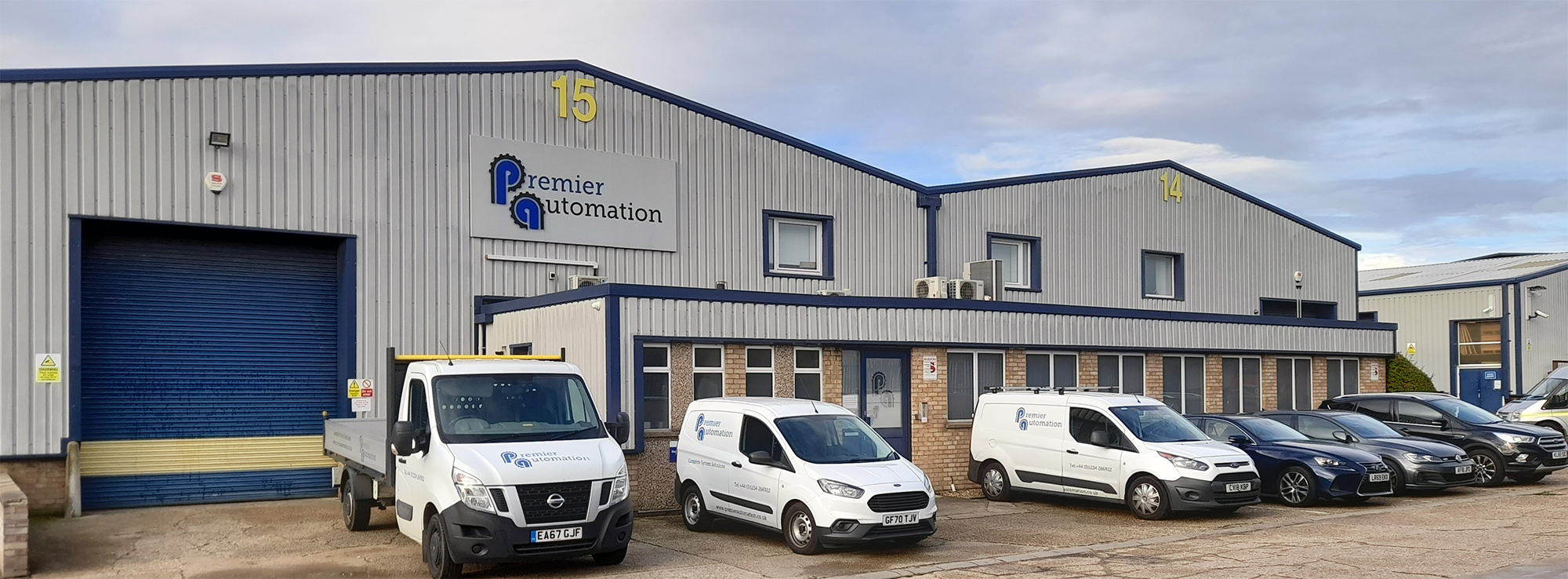
Robotic Automation Solutions In Bedford can help manufacturers and processors increase consistency, reduce repetitive manual handling and create more dependable production capacity. The most useful system is not simply a robot added to an existing line; it is a properly engineered cell that fits the product, people, available space and required output. Premier Automation designs systems around those practical requirements, from first concept through to commissioning.
Robots can take on accurate, repeatable tasks that are difficult to staff consistently, including loading CNC machines, packing products, stacking pallets, welding components and applying sealants. Automation should support the people already in your business, allowing skilled teams to focus on inspection, set-up, improvement work and customer priorities rather than physically demanding routine operations.
Robotic Automation Solutions In Bedford for Real Production Challenges
A successful project begins with the process rather than a preferred robot model. An engineer will consider cycle time, product weight and variation, how parts arrive, the grip needed, quality checks, changeover frequency and where finished items go next. These details determine whether a six-axis robot, collaborative robot, palletising cell or purpose-built handling system is the sensible choice.
For example, machine tending needs safe, reliable communication between the robot and the machine tool, as well as a workable plan for loading raw material and removing completed parts. Palletising requires attention to pack patterns, pallet sizes, layer stability and downstream collection. Addressing these less visible points early prevents an installation that works in a demonstration but struggles during a normal shift.
From Process Review to a Working Automation Cell
Before committing to equipment, establish a clear baseline: current throughput, reject rate, labour input, downtime causes and anticipated product changes. This creates realistic targets for the system and makes payback easier to assess. It also identifies whether the main constraint lies in the task itself or elsewhere, such as material supply, inspection or packing.
Premier Automation can design and build new robot systems, integrate re-engineered used robots, and develop the control systems that connect robots with special-purpose machinery and process lines. PLC and robot programming are planned alongside mechanical design, so the cell has the signals, safeguards and operating sequence it needs from the outset.
Choosing Robotic Automation Solutions In Bedford for the Right Task
Collaborative robots, often called cobots, can be a good fit for lower-volume work or tasks that change regularly, but they are not automatically the safest or fastest answer. Their suitability depends on a documented risk assessment, the tooling, payload, speed and the way people access the work area. Conventional industrial robots may offer greater reach, speed and payload for enclosed, high-output operations.
Tooling deserves equal attention. A gripper must hold every normal variation of a component without marking it, dropping it or requiring excessive adjustment. Vacuum, mechanical, magnetic and bespoke end effectors each have different strengths. Simple, robust tooling often has a greater effect on day-to-day reliability than adding complexity to the robot programme.
Safe, Flexible Systems That Are Easier to Run
Safety must be engineered into the layout, controls and operating procedures, not added after installation. The HSE machinery safety guidance highlights employers’ duties under the Provision and Use of Work Equipment Regulations 1998 (PUWER), including providing suitable equipment, maintaining it and ensuring it is used safely. In a robot cell, this commonly involves appropriate guarding, interlocked access, emergency stops, safe reset arrangements and clear operator training.
Flexibility also protects the investment. Ask how a new product size, packaging format or pallet pattern will be introduced, and who will make the adjustment. Well-organised recipe selection, accessible controls and documented changeover steps can keep routine alterations in-house. Good access for maintenance, sensible cable routing and available spare parts reduce avoidable stoppages over the life of the cell.
Installation, Support and Long-Term Value
Installation should be planned around production commitments, utilities, floor space and acceptance testing. A staged approach can allow controls to be developed and tested before final site work, reducing disruption. Following commissioning, operators need practical instruction on safe operation, recovery and basic checks, while maintenance teams need clear information for planned servicing and fault finding.
Premier Automation provides installation, commissioning, upgrades, relocations and after-sales support as well as system design. This gives customers a route to improve an existing cell, move equipment as a factory changes, or add capacity without starting every project from scratch.
Frequently Asked Questions
Are Robotic Automation Solutions In Bedford suitable for smaller businesses?
Yes, provided the task is repetitive enough and the expected gains are clear. A focused machine-tending, dispensing or palletising application can be more practical than attempting to automate a whole production line at once. A process review helps identify the most worthwhile starting point.
How long do Robotic Automation Solutions In Bedford take to install?
Timescales depend on the complexity of the cell, available equipment, safety requirements and site preparation. Early decisions about layout, utilities, product samples and interfaces with existing machinery help keep a project moving. Installation can often be scheduled to limit disruption to production.
Can Robotic Automation Solutions In Bedford work with existing machinery?
Often, yes. Robots can be integrated with CNC machines, conveyors, packing equipment and process lines where controls and safe access can be established. An assessment will confirm communication needs, cycle timing and any upgrades required to make the connection reliable.
If you are considering a practical next step, speak with Premier Automation about a robot system tailored to your process, production goals and site requirements.