
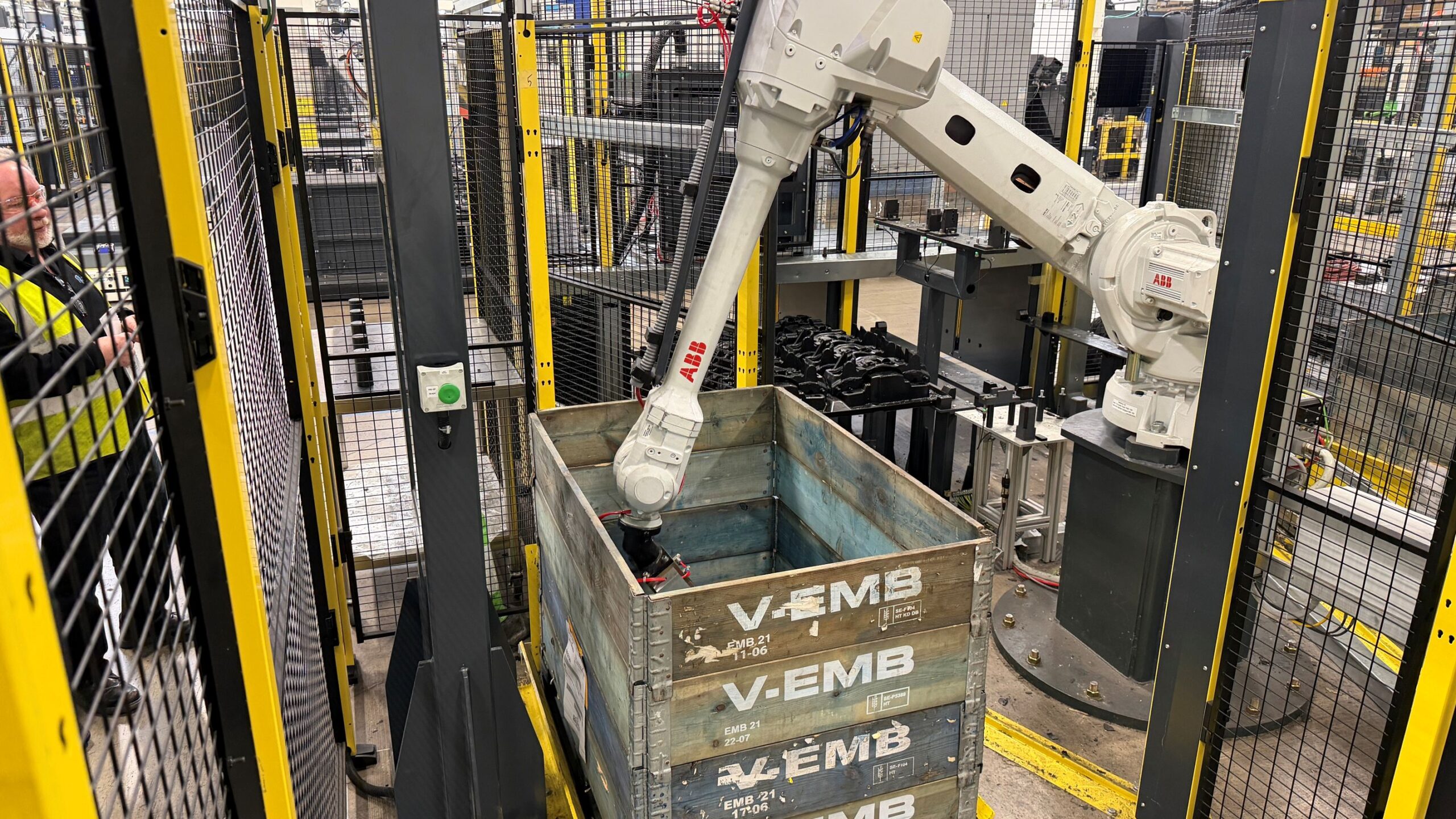
Palletising Robots In Bedford give manufacturers and distribution businesses a practical way to move finished products from production lines to stable, transport-ready pallets. By automating repetitive lifting, stacking and layer-building tasks, a well-designed cell can protect staff, improve consistency and keep dispatch moving during busy periods. The right solution is not simply a robot arm: it is a complete system built around your products, pallet patterns, line speed and available floor space.
For businesses handling cases, trays, sacks, tubs or bags, robotic palletising can remove a common production bottleneck. It can also provide predictable results across shifts, reducing the risk of poorly stacked loads, damaged goods and manual-handling strain. A tailored assessment should consider the whole end-of-line process, including infeed orientation, labelling, pallet supply, stretch wrapping and collection by forklift.
Why Palletising Robots In Bedford Support Better Operations
Manual palletising is physically demanding, particularly where loads are heavy, awkward or handled at pace. Robots can repeat programmed movements accurately over long runs, helping businesses maintain output without relying on a person to perform continuous lifting. This can be valuable for firms with variable staffing levels, tight dispatch windows or a need to increase capacity without extending premises.
A robot can be configured to build multiple pallet formats, alternate case orientation between layers and handle different product sizes. Changeovers may be managed through the control system, operator selection or barcode information, depending on the application. This flexibility makes automation suitable for operations with several stock-keeping units rather than only high-volume, single-product lines.
- More consistent pallet stability and load presentation.
- Reduced exposure to repetitive manual handling.
- Reliable cycle times and clearer production planning.
- Potential to run several pallet patterns from one cell.
Benefits of Palletising Robots In Bedford for Growing Businesses
The commercial case should be based on more than labour saving alone. Better stacking can reduce product damage in storage and transport, while a controlled process can make better use of pallet height and warehouse space. Automation also gives managers useful information, such as completed pallet counts, fault history and cycle performance, which can help identify issues before they disrupt dispatch.
System design matters. A compact robot cell may work alongside conveyors and pallet dispensers in a constrained area, while a larger installation can include automatic pallet exchange, multiple infeed lanes and safety-rated access. Selecting the correct gripper is equally significant: vacuum, clamp, fork or specialist end effectors each suit different pack types and surface conditions.
Planning the Right System
Start with a clear review of the products to be handled. Record case dimensions, weights, surface finish, layer patterns, pallet sizes, expected throughput and the number of product changes per shift. Less obvious factors, such as dusty packs, perforated cartons, unstable bags or cold-store conditions, can affect gripper choice and equipment protection. It is also sensible to allow for future pack changes rather than designing only for the current range.
Site layout should account for safe access, pallet movement, maintenance space and the route taken by people and forklifts. Integrating the robot with existing conveyors, printers, wrappers and warehouse systems can avoid duplicated handling. A good supplier will provide realistic cycle-time calculations, a proposed layout and a clear explanation of what operators need to do during normal running and fault recovery.
Choosing Palletising Robots In Bedford with Safety in Mind
Robot safety must be designed into the cell, not added after installation. Guards, interlocked doors, light curtains, scanners and emergency-stop arrangements should reflect the actual risks and how people work around the equipment. The HSE’s machinery safety guidance on PUWER 1998 explains that work equipment must be suitable, properly maintained and, where appropriate, inspected. These duties remain relevant after commissioning, so planned maintenance and documented checks are essential.
Training is equally important. Operators should understand how to start and stop the system, load consumables, respond to alarms and recognise when escalation is needed. Maintenance personnel require appropriate access procedures and safe isolation arrangements. Clear instructions, sensible control-screen design and support after handover make the installation easier to use safely every day.
Implementing Palletising Robots In Bedford Efficiently
A structured project normally moves from survey and concept design to build, testing, installation and commissioning. Testing pallet patterns and representative products before site installation can uncover grip, alignment or speed issues early. During commissioning, the robot program and PLC controls are tuned to the real line conditions, while acceptance testing confirms that the agreed functions and safeguards operate correctly.
Premier Automation can design and build robot-based palletising systems, integrate equipment with existing processes and provide robot and PLC programming. Its team can also support upgrades, relocations and ongoing after-sales requirements, helping customers take a staged approach where a complete end-of-line transformation is not required immediately.
Frequently Asked Questions
What products can a palletising robot handle?
Robots can handle many cases, trays, bags, tubs and containers, provided the gripper and pallet pattern are matched to the product. A review of sample packs is the best way to confirm suitability.
How much space does a robotic cell need?
Space depends on the robot reach, pallet positions, conveyor arrangement, safety equipment and access needs. Compact layouts are possible, but safe maintenance and forklift routes must not be compromised.
Can one robot build different pallet patterns?
Yes. Suitable systems can store multiple recipes for product sizes, layer arrangements and pallet formats. The practical limit depends on product stability, cycle-time requirements and the required changeover method.
Will automation replace every manual task?
Not necessarily. Operators may still load pallets, replenish packaging materials, carry out quality checks and manage exceptions. The goal is to automate repetitive, demanding handling while keeping people focused on higher-value work.
If you are assessing Palletising Robots In Bedford, Premier Automation can help define a practical, safe and scalable solution for your production or dispatch operation.