Robotic Automation Solutions In The UK help manufacturers improve consistency, protect capacity and reduce the repetitive tasks that can limit growth. A well-planned system is not simply a robot placed beside a production line; it is a complete solution that brings together tooling, safety, controls, material flow and support. The right approach should solve a defined production problem while fitting your people, premises and future plans.
For businesses considering their first cell or expanding an established operation, the process starts with practical questions. Which task is causing the biggest bottleneck? What variation exists in the parts, packaging or incoming materials? How will operators load, inspect and maintain the system? Answering these points early makes investment decisions clearer and avoids designing around assumptions.
Understanding Robotic Automation Solutions In The UK
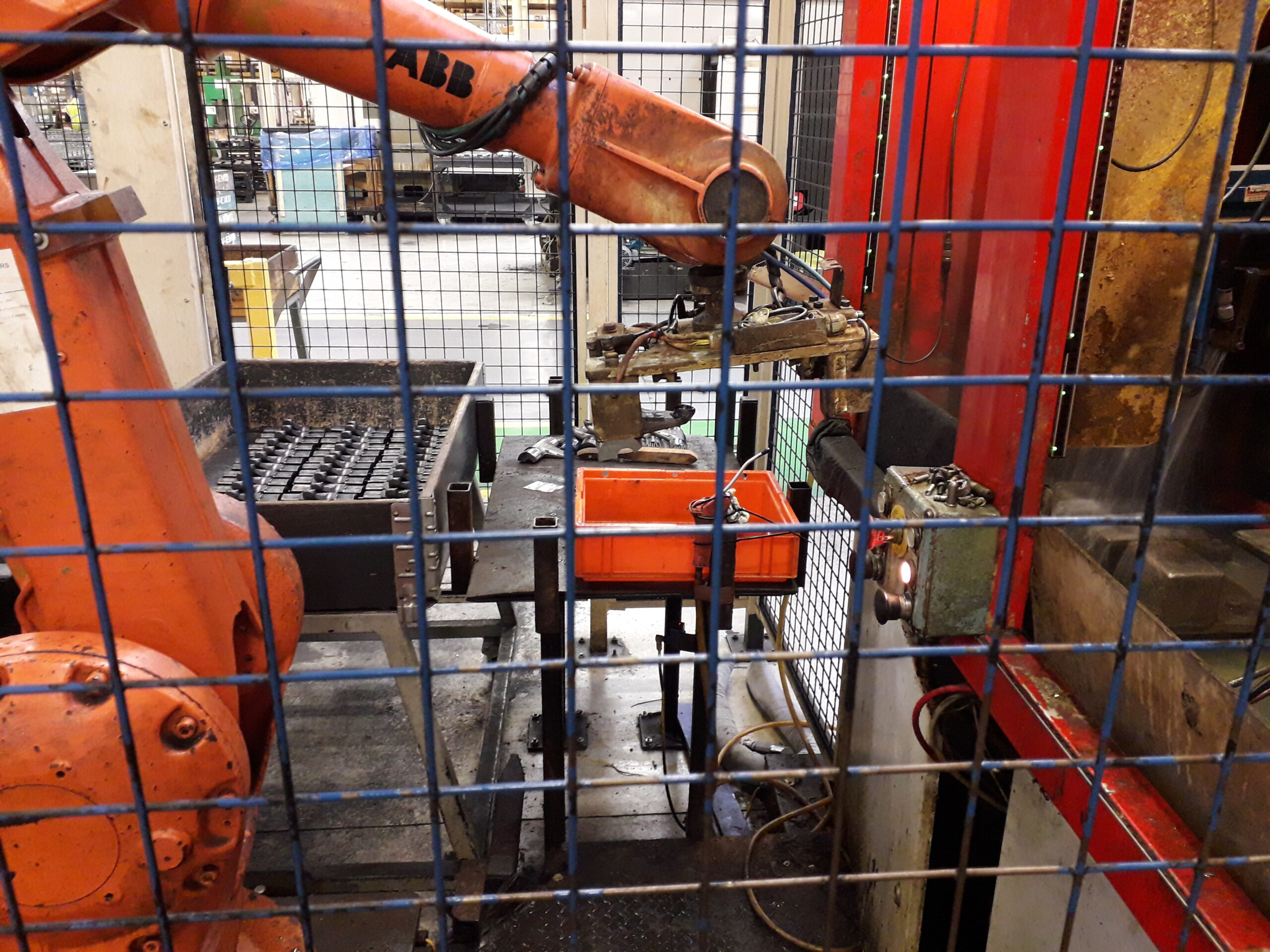
The scope of Robotic Automation Solutions In The UK ranges from straightforward machine tending to fully integrated production lines. Robots can load and unload CNC machines, stack products onto pallets, weld assemblies, apply adhesives or gaskets, and carry out repeatable handling tasks. Collaborative robots, often called cobots, can also be suitable for selected lower-force applications where a flexible workspace and close operator interaction are required.
-
Machine tending can extend productive machine time and create a more predictable cycle.
-
Palletising can improve stacking accuracy and reduce strenuous manual lifting.
-
Welding automation can support repeatable quality on suitable, consistent components.
-
Dispensing systems can control the placement of glues, sealants and gaskets.
-
Control upgrades can modernise existing machinery without replacing every asset.
Robots are most effective where the task is stable enough to define, but not necessarily identical every time. For example, a cell can use vision, sensors or adaptable grippers to manage variation. The key is to review real samples, cycle times and exceptions rather than relying only on ideal production data.
Choosing Robotic Automation Solutions In The UK for Your Process
A sound feasibility review should cover more than the robot’s reach and payload. It should assess part presentation, gripper design, access for changeovers, utilities, floor space, throughput targets and the way finished items leave the cell. A system that achieves a fast demonstration cycle but is difficult to replenish, clean or recover after a stoppage will not deliver the expected day-to-day value.
It is also wise to agree success measures before design begins. These may include output per shift, repeatability, scrap reduction, machine utilisation or fewer manual handling risks. Allow for realistic commissioning time, operator training and acceptance testing. Existing PLCs, safety circuits and plant networks should be reviewed so that the new equipment integrates reliably with the wider operation.
Delivering Robotic Automation Solutions In The UK with Confidence
Delivery should follow a clear sequence: define the application, develop the concept, design the cell and controls, build and test, install, commission and support. Factory acceptance testing is particularly useful because it lets customers see the intended operation before equipment reaches site. It can identify issues with parts, tooling or software while changes are still easier to make.
Based in Bedford, Premier Automation designs and builds robot systems and control solutions for applications including machine tending, palletising, welding, dispensing and special-purpose machinery. Its team can also integrate or re-engineer used robots, undertake upgrades and relocations, and provide PLC and robot programming. This breadth can be valuable where a project must improve an existing line as well as add new automation.
Safety, Support and Long-Term Performance
Safety must be built into the concept, not added at the end. Risk assessment should consider normal production, setup, fault recovery, cleaning and maintenance. The HSE’s machinery safety guidance on the Provision and Use of Work Equipment Regulations 1998 (PUWER) highlights employers’ duties to provide suitable work equipment that is maintained and used by adequately trained people. Guards, interlocks, emergency stops, safe access and documented operating procedures all need to work together.
After installation, support matters as much as initial performance. Keep robot programs, electrical drawings, backup files and spare-parts information accessible. Plan periodic checks of grippers, cables, sensors and safety devices, and train nominated users to deal with routine recoveries. These measures reduce avoidable downtime and make later changes easier to manage.
Frequently Asked Questions
How do I know whether a task is suitable for a robot?
Tasks with repetitive movements, measurable inputs and a clear output requirement are strong candidates. A site review can establish whether variation, access and cycle-time demands are manageable.
Can a robot work with our existing machinery?
Often, yes. Machine tending and control upgrades can connect robots to existing equipment, provided interfaces, safeguarding and machine condition are assessed properly.
Are cobots always safer than industrial robots?
No. Cobots still require a risk assessment. Safety depends on the complete application, including tooling, speeds, payload, layout and the work being performed.
What happens after commissioning?
Ongoing maintenance, software backups, operator training and responsive technical support help the cell continue to meet production needs as volumes and products change.
Whether you need a new cell, a used-robot integration or a controls upgrade, Robotic Automation Solutions In The UK can be tailored around your production priorities. Speak with Premier Automation to explore a practical design, build, installation and support programme for your site.