
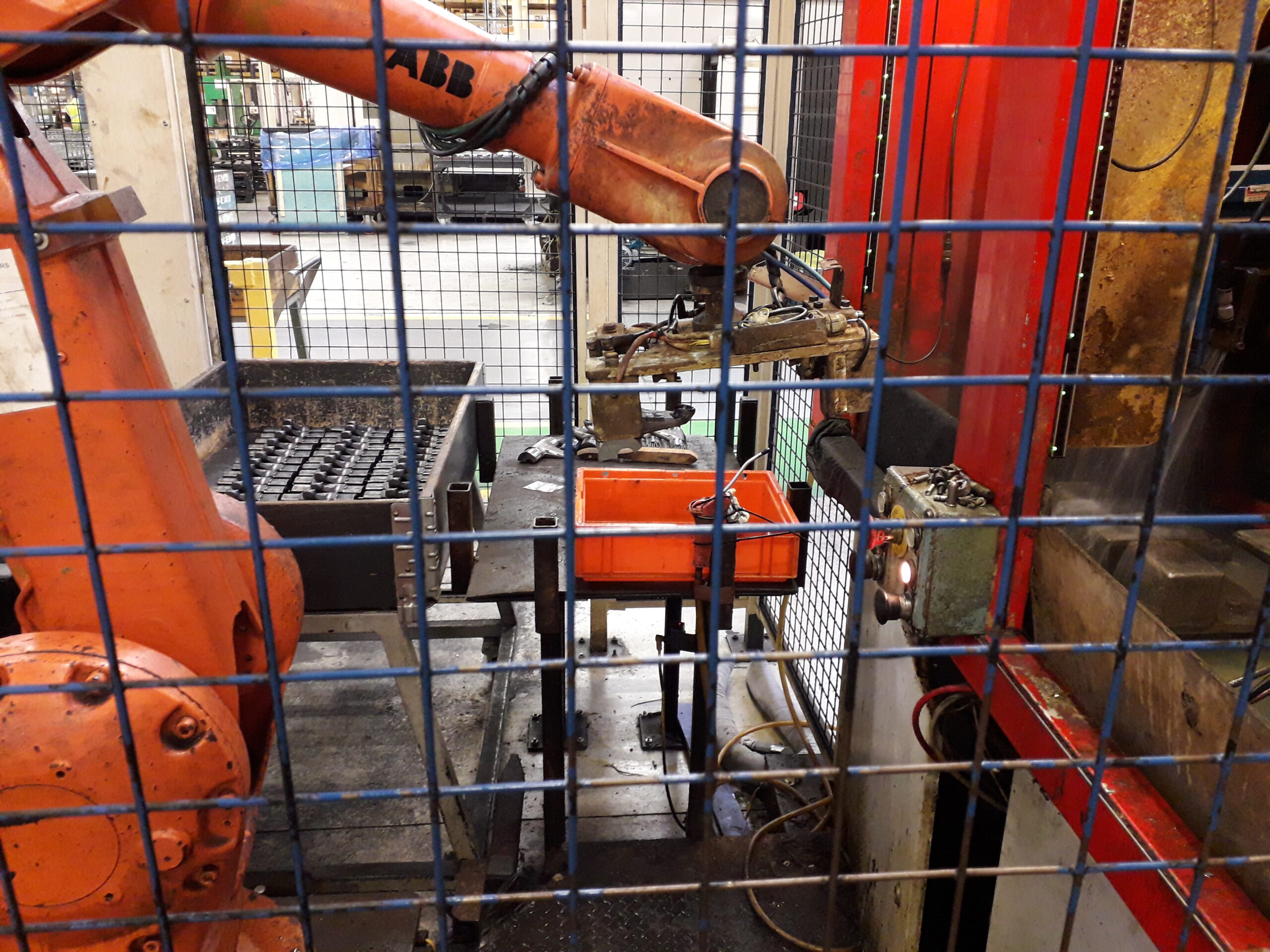
What is Robot Cell Simulation? It is a digital way to plan, test and refine an automated robot workspace before equipment is built or installed. A virtual model can show how robots, conveyors, fixtures, safety guarding and operators will work together. For manufacturers, this creates a clearer route from an early idea to a reliable, productive cell, while reducing the likelihood of costly changes on the factory floor.
Understanding What is Robot Cell Simulation?
A robot cell is a defined area where one or more robots carry out a task, such as welding, palletising, machine tending or dispensing. Simulation uses specialised software to create a three-dimensional version of that area. It represents the robot’s reach, motion, tooling, parts, peripheral equipment and intended operating sequence. Rather than relying solely on drawings or assumptions, the project team can see the proposed process in action.
The model can be built around your actual parts, cycle-time requirements and available floor space. It is not simply an animation for presentation purposes. Good simulation uses robot data, dimensions and programmed movements to examine whether the proposed layout is practical. This helps answer fundamental questions early: can the robot reach every position, will it collide with anything, and can the required output be achieved?
How virtual testing improves automation projects
One of the strongest benefits is the ability to identify constraints before they become installation problems. A robot may technically reach a machine, for example, but have an awkward approach angle that slows loading or interferes with a door. Simulation can reveal this and allow the machine position, robot base, gripper or sequence to be adjusted while changes are still straightforward.
Virtual testing also supports more realistic decisions about throughput. Engineers can test movements, waiting times and hand-offs between equipment to estimate cycle time. They can compare options, such as one robot versus two, a different pallet pattern, or alternative part presentation. This gives customers evidence for choosing an approach that balances speed, flexibility, footprint and budget, rather than selecting equipment based on reach alone.
What is Robot Cell Simulation? for safety and layout decisions
Safety should be considered alongside productivity from the first layout discussion. A simulated cell can help define likely safeguarded areas, access points, loading positions and maintenance space. It can also expose pinch points, restricted visibility and routes where people, fork-lift trucks or materials may conflict with the automated process. These observations inform a proper risk assessment; simulation does not replace one.
In Great Britain, the HSE’s machinery safety guidance covers duties that include the Provision and Use of Work Equipment Regulations 1998 (PUWER), under which work equipment must be suitable for its intended use and maintained appropriately. Reviewing the virtual layout early helps ensure that safety measures are designed into the cell, rather than added hurriedly after the equipment arrives.
Less obvious but valuable checks include cable and hose routing, access for changing grippers, clearance for empty pallet removal and visibility of status indicators. These details affect daily usability. A layout that looks efficient from above may create awkward operator movements at ground level, so reviewing the model from practical working positions is worthwhile.
What is Robot Cell Simulation? in a typical project
What is Robot Cell Simulation? In practice, it is a structured stage within automation design. The process usually begins with information about the product, production target, existing machinery and available space. A concept layout is then developed, followed by a more detailed model containing the selected robot, end-of-arm tooling and associated equipment. Stakeholders can review the proposed operation before design is finalised.
Once a preferred solution is agreed, simulations can support offline robot programming and prove out sequences before commissioning. This may shorten disruption during installation because more decisions have been made in advance. Physical commissioning remains essential: real-world variations in parts, services and surrounding equipment must still be checked. However, the starting point is more mature and better understood.
What is Robot Cell Simulation? and choosing the right partner
The usefulness of a model depends on the quality of the information behind it. Ask a prospective automation provider how it will account for product variation, changeovers, operator interaction and future capacity. It should be willing to explain assumptions around cycle time and identify areas requiring confirmation. The British Automation & Robot Association is a useful industry resource for businesses exploring robotic automation and the wider integration landscape.
It also helps to work with a partner that can carry the project beyond the virtual stage. Premier Automation, based in Bedford, can design, build, install and commission robot-based systems, helping ensure that the simulated concept translates into a workable production cell. This continuity is particularly useful where control systems, robot programming and existing machinery must operate together.
Frequently Asked Questions
Is simulation only useful for large robot installations?
No. Smaller cells can benefit substantially, particularly where space is limited, access is difficult or an existing machine must be integrated. Early layout checks can prevent expensive alterations regardless of project size.
Can a simulation guarantee the final cycle time?
No. It provides a well-informed estimate based on the inputs and assumptions used. Actual performance also depends on factors such as part consistency, machine response, operator activity and material supply.
Does What is Robot Cell Simulation? mean no on-site testing is needed?
No. On-site commissioning and safety validation are still required. Simulation reduces uncertainty and helps prepare programming, but the completed installation must be tested in its real operating environment.
What information should we provide for a simulation?
Useful inputs include part drawings or samples, production volumes, target cycle times, floor plans, details of existing equipment and any planned future changes. The more representative the information, the more useful the model will be.
If you are considering a new robot cell or improving an existing process, Premier Automation can help assess the opportunity, develop a practical simulation and deliver the automation solution through to commissioning and support.