
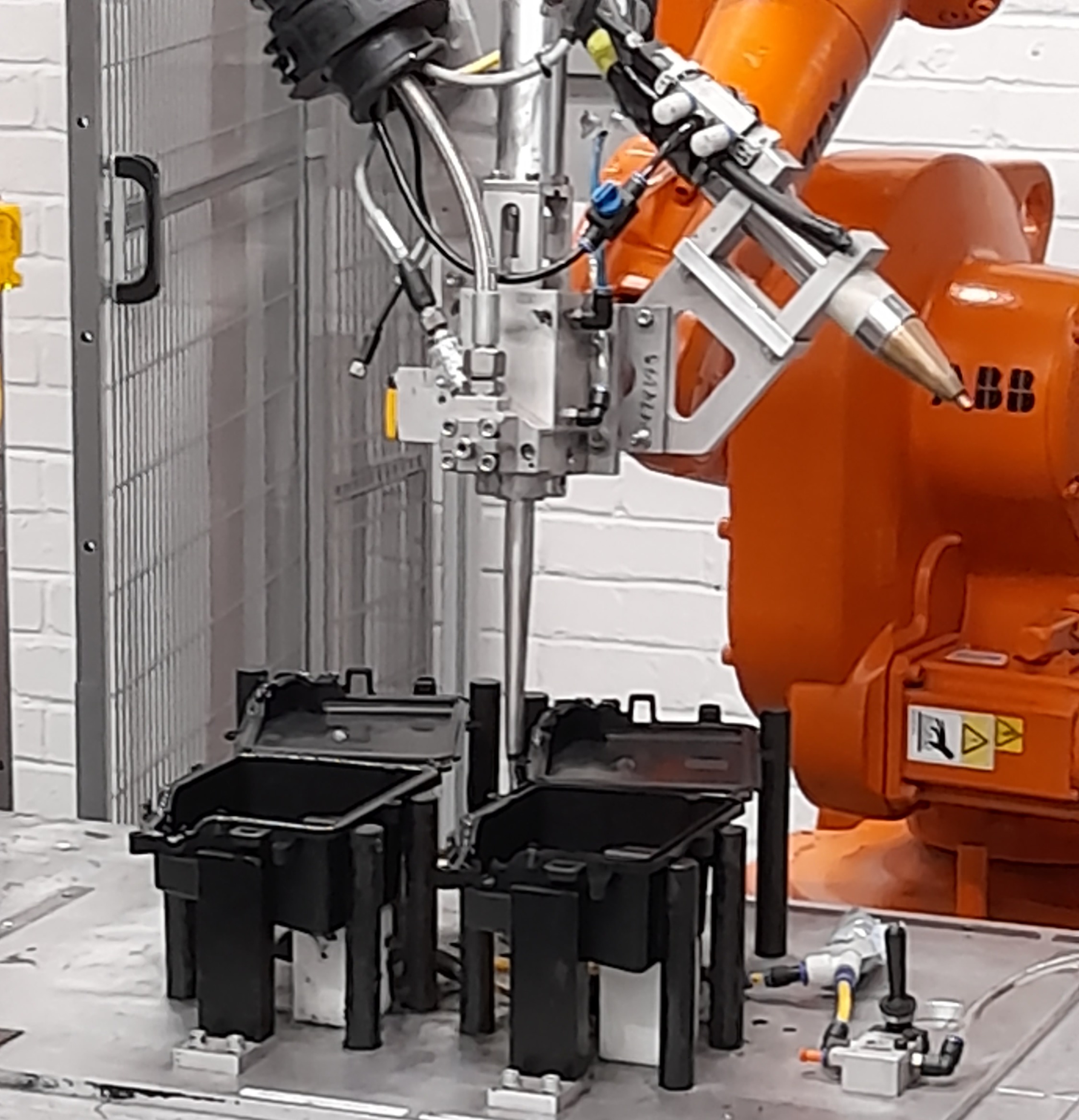
Is Robot Automation suitable for Small Manufacturers? For many businesses, the answer is yes, provided the project starts with a clear production problem rather than a desire to automate everything. Robots can help smaller firms improve consistency, protect capacity and reduce repetitive manual work without requiring a vast factory or a complete production-line rebuild.
The most successful installations usually focus on one stable, labour-intensive task: loading a CNC machine, stacking finished goods, dispensing adhesive or handling parts between processes. By targeting a genuine bottleneck, a manufacturer can see measurable benefits while keeping the first investment manageable.
Is Robot Automation suitable for Small Manufacturers? Start with the right task
A good candidate has repeatable movements, a predictable cycle time and parts that can be presented consistently. Machine tending is a common example: a robot can load and unload a machining centre while an operator manages several machines, checks quality or completes more skilled work. Palletising, welding and sealing or gasket dispensing can offer similar gains.
Variation does not automatically rule out automation, but it must be understood. Consider the number of product versions, batch sizes, part weights, surfaces and changeovers. A process with frequent changes may still suit a flexible cell, especially if grippers and programmes can be changed quickly. A poorly defined task, however, can turn a straightforward project into an expensive workaround.
Is Robot Automation suitable for Small Manufacturers? It is often particularly effective where recruitment is difficult, overtime is becoming routine or an experienced team is spending too much time on repetitive handling. Automation should support people by moving them towards inspection, setup, problem-solving and customer-focused work, rather than being viewed solely as a headcount exercise.
Is Robot Automation suitable for Small Manufacturers? Match flexibility to your production mix
Smaller manufacturers rarely run one product indefinitely, so flexibility matters. Collaborative robots, often called cobots, can be useful for lower-payload duties and applications where people need to work close to the cell. They are not automatically safer in every situation: tooling, payload, speed and the workpiece itself all affect the risk. A conventional industrial robot with proper guarding may be the better, faster option for heavier or higher-volume work.
Ask prospective suppliers to demonstrate how the system will cope with real production conditions. This includes part presentation, reject handling, tool wear, empty trays and planned changeovers. It is also sensible to retain the ability to run manually during commissioning and exceptional circumstances. A robot cell should make production more resilient, not introduce a single point of failure.
A staged approach can reduce risk. Begin with one machine or one end-of-line task, collect data on output and downtime, then use the learning to plan later cells. This gives operators time to become confident with the equipment and lets management validate the business case using their own figures.
Is Robot Automation suitable for Small Manufacturers? Build a realistic cost case
The purchase price is only one part of the decision. Budget for grippers, fixtures, safety equipment, electrical work, programming, installation, operator training and ongoing support. Also consider the cost of poor quality, delays, manual handling injuries, overtime and lost output when a key operator is unavailable. These costs can make a focused automation project more attractive than it first appears.
Measure a baseline before requesting a proposal. Record cycle times, scrap or rework, stoppages, labour input and expected annual volume. Include the time needed for setup and changeovers, not only the ideal running speed. A credible return-on-investment calculation reflects the practical realities of a shift, including planned breaks and maintenance.
Used or re-engineered robots can be a viable route where the application and support arrangements are right. The important factor is not simply the age of the arm; it is whether the cell has suitable controls, documented safety measures, available spares and a design that can be maintained by the business. Is Robot Automation suitable for Small Manufacturers? A scalable specification is usually more valuable than buying unnecessary capacity at the outset.
Plan safety, integration and support before commissioning
Robot automation must be designed around safe operation from the beginning. The HSE explains that the Provision and Use of Work Equipment Regulations 1998 (PUWER) require work equipment to be suitable, maintained and used by trained people. In practice, this means assessing the complete cell, including the robot, gripper, conveyors, fixtures and access for clearing faults or performing maintenance.
Safety measures may include fixed guards, interlocked doors, light curtains, safety-rated scanners and clearly designed emergency stops. Risk assessment should account for stored energy, sharp components, hot parts and unexpected movements after a reset. Involving operators early is valuable because they understand the everyday exceptions that are easily missed in a drawing or cycle-time study.
Integration is equally important. The robot needs reliable signals from machines and peripheral equipment, sensible fault messages and a control approach that fits the site. Based in Bedford, Premier Automation can design, build, install and commission robot and control systems, helping businesses connect a cell to the way they actually manufacture.
Frequently Asked Questions
How much floor space does a robot cell need?
It depends on the task, guarding and material flow. Compact machine-tending and cobot cells can fit into modest areas, but safe access for loading, maintenance and escape routes must be included in the layout.
Can a robot handle several product types?
Yes, if the parts, gripper strategy and programming are planned for changeovers. Fixtures, barcode selection and recipe-based programmes can help, but each additional variation should be tested before approval.
Will staff need specialist programming skills?
Operators need practical training to run the cell, respond to routine messages and carry out approved changeovers. More advanced programming and safety changes should be controlled by competent personnel or a support partner.
How quickly can an automation project be introduced?
Timescales vary with complexity, equipment availability and site preparation. Early decisions on parts, cycle requirements, utilities and safety layout reduce avoidable delays during build and commissioning.
If you are considering a first cell or an upgrade to existing equipment, Premier Automation can help assess the application, develop an appropriate robot solution and provide support from design through to commissioning.