
Businesses searching for Automation Companies In Bedford need more than a machine supplier. They need a partner that can understand the product, process, available floor space and production targets, then turn that information into a dependable system. In Bedford, local access to specialist engineering can make planning, site visits and ongoing support far more straightforward.
Automation can solve practical issues across manufacturing and processing: repetitive manual handling, inconsistent cycle times, restricted access to skilled labour and the need to increase output without expanding the building. The right solution may involve a robot, bespoke tooling, safety equipment, conveyors and controls that communicate with the rest of the line. A clear brief is the best starting point, but a capable provider should also identify opportunities that may not be obvious before a survey.
Choosing Automation Companies In Bedford for Your Project
Start by defining the job rather than specifying a robot too early. Record the parts or packs being handled, their weight and dimensions, the target cycle time, shift pattern, changeover needs and acceptable reject rate. Photographs, drawings and samples are useful, while a short video of the existing task often reveals awkward reaches, variable positioning or upstream delays that affect the design.
Among Automation Companies In Bedford, assess whether the provider can take responsibility from concept through to installation. This matters because the robot is only one part of a working cell. Grippers, fixtures, guarding, sensors, PLC controls and interfaces with existing equipment must operate as one system. Ask how the supplier will prove the cycle time, manage product variation and train the people who will run the equipment each day.
It is also sensible to discuss the whole-life plan. A lower initial price can become costly if there is limited access for maintenance, no arrangement for spare parts or no route for future product changes. Good designs allow operators to load materials safely, make routine adjustments without unnecessary delay and diagnose common faults through clear control-screen messages.
Automation Companies In Bedford and the Systems They Can Deliver
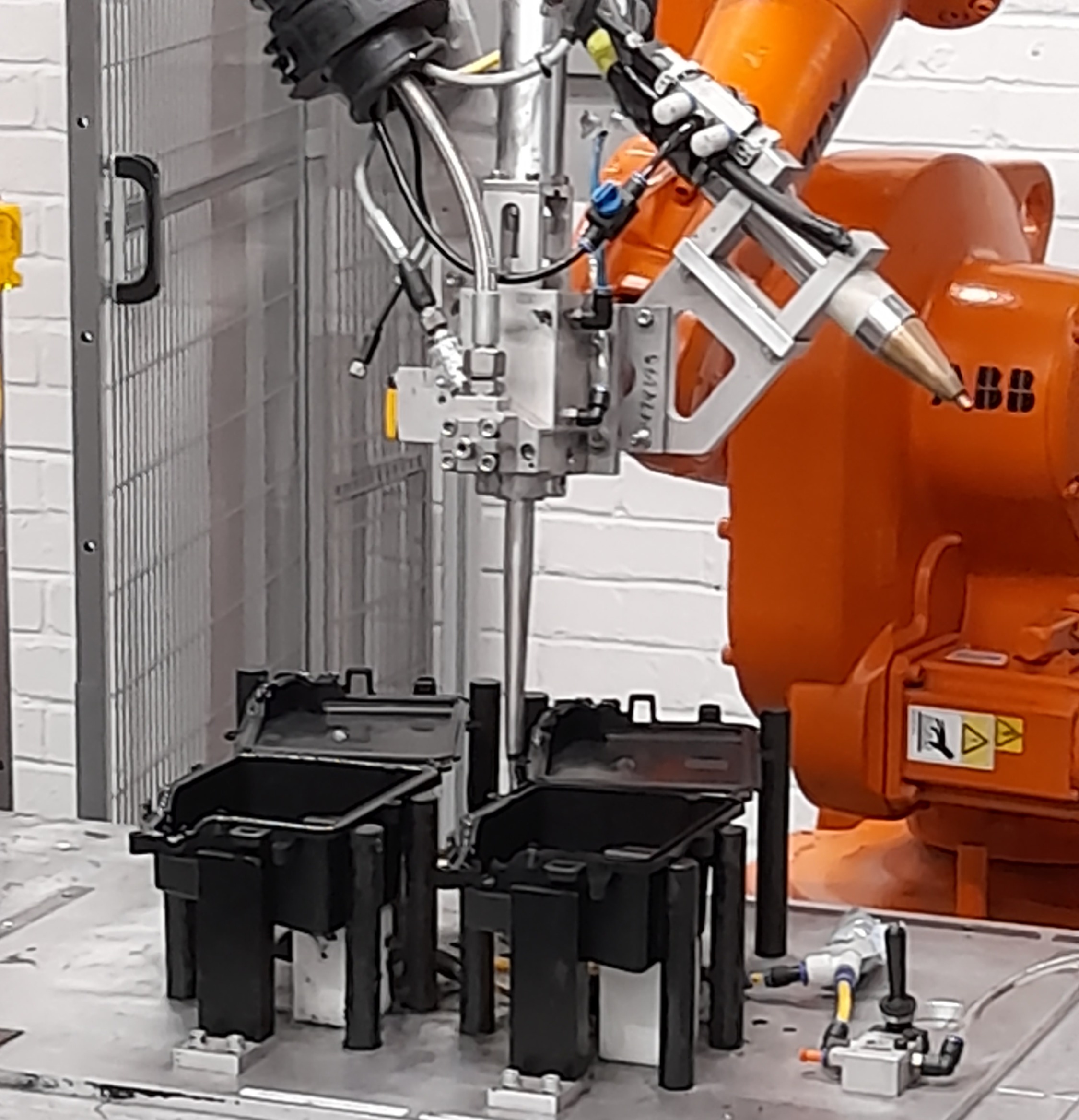
Robotic automation is adaptable across a wide range of tasks. Machine tending can load and unload CNC machines consistently, while palletising systems can build stable pallet patterns and reduce demanding lifting. Welding cells improve repeatability for suitable components, and dispensing systems can apply adhesives, sealants or gaskets with controlled paths and quantities. Each application needs its own feasibility assessment; payload alone does not determine whether a robot is suitable.
Collaborative robots, often called cobots, can be valuable where people and automation share a work area. However, a cobot is not automatically safe without further assessment. Speed, tool type, payload, pinch points and the task itself all influence the safeguarding required. For higher-throughput or heavier operations, a conventional industrial robot with appropriate guarding may be the more productive and robust option.
Control systems deserve equal attention. A well-designed PLC and HMI can show production status, alarms and maintenance prompts in a format that operators can use confidently. It can also support traceability or communicate with upstream and downstream machinery where required. Selecting an approach that suits the existing plant reduces disruption and makes later upgrades easier to manage.
Automation Companies In Bedford: Safety, Testing and Commissioning
A successful project should include safety from the earliest layout discussions, not as an add-on at the end. The HSE guidance on the Provision and Use of Work Equipment Regulations 1998 (PUWER) explains that work equipment must be suitable, maintained and used by adequately trained people. For an automated cell, this informs decisions about guarding, interlocked access doors, emergency stops, safe isolation and operating instructions.
Before delivery, factory acceptance testing allows customers to review the sequence, tooling and controls in a controlled setting. Where possible, testing with representative products is valuable because real-world variation can expose issues that drawings do not show. Site acceptance testing then confirms the installation works safely alongside the existing process, with agreed performance checks and operator training completed before handover.
Installation planning should account for more than the footprint of the cell. Consider electrical supplies, compressed air, extraction where relevant, forklift access, floor loading, service clearances and the route for bringing equipment into position. A phased installation may help businesses keep production moving, especially where the new system replaces a manual station or ageing equipment.
Frequently Asked Questions
How long does an automation project take?
Timescales depend on the complexity of the cell, availability of components, site preparation and the level of testing needed. A detailed survey and agreed specification help establish a realistic programme.
Can an existing robot be upgraded?
Often, yes. Re-engineering, new controls, revised tooling or improved safety systems can extend the useful life of suitable equipment. A technical review will establish whether an upgrade is practical.
Will automation replace our operators?
Automation commonly moves people away from repetitive, heavy or inconsistent tasks. Staff can then focus on quality checks, material supply, changeovers, supervision and other higher-value work.
What support is needed after installation?
Routine inspections, preventive maintenance, backups of programs and prompt fault support help protect availability. Training key operators also reduces avoidable downtime.
For businesses comparing Automation Companies In Bedford, Premier Automation provides robot-based systems, bespoke control solutions, installation, commissioning, upgrades and after-sales support. A discussion about your current process can help identify a practical route to safer, more consistent production.