Automation Companies In The UK can help manufacturers and production businesses improve consistency, capacity and workplace safety without losing sight of day-to-day operational needs. The right partner does more than supply a robot: it understands the product, process, people and available space, then delivers a system that produces measurable results. For customers planning a first cell or modernising an established line, a carefully scoped project reduces risk and creates a practical route to growth.
What Automation Companies In The UK Should Deliver
A capable automation provider should take responsibility across the full project lifecycle. This includes reviewing the existing process, defining the cycle time and quality requirements, designing guards and controls, building the system, installing it and supporting it after handover. A clear single point of responsibility avoids gaps between equipment suppliers, programmers and site contractors.
Ask how a supplier will prove the proposed solution before it reaches your factory. A demonstration, simulation or factory acceptance test can identify issues with part presentation, reach, tooling and throughput early. It is also sensible to establish what information will be supplied at handover, such as electrical drawings, operating instructions, risk assessments, backup files and training records.
How to Compare Automation Companies In The UK
Start with your business case rather than a preferred machine or robot brand. Describe the task that causes the greatest bottleneck, quality variation or manual handling concern. Useful measures include current output, reject rates, shift pattern, product range, changeover frequency and the level of operator involvement required. These details allow suppliers to recommend a solution suited to the real process.
Experience in comparable applications matters, but flexibility matters too. A system designed only for one part size may become restrictive as demand changes. Discuss likely future products, spare capacity, recipe management and the possibility of adding inspection, conveyors or extra stations later. Request a transparent proposal that separates core equipment, optional features, site works and ongoing support.
Applications That Bring Practical Benefits
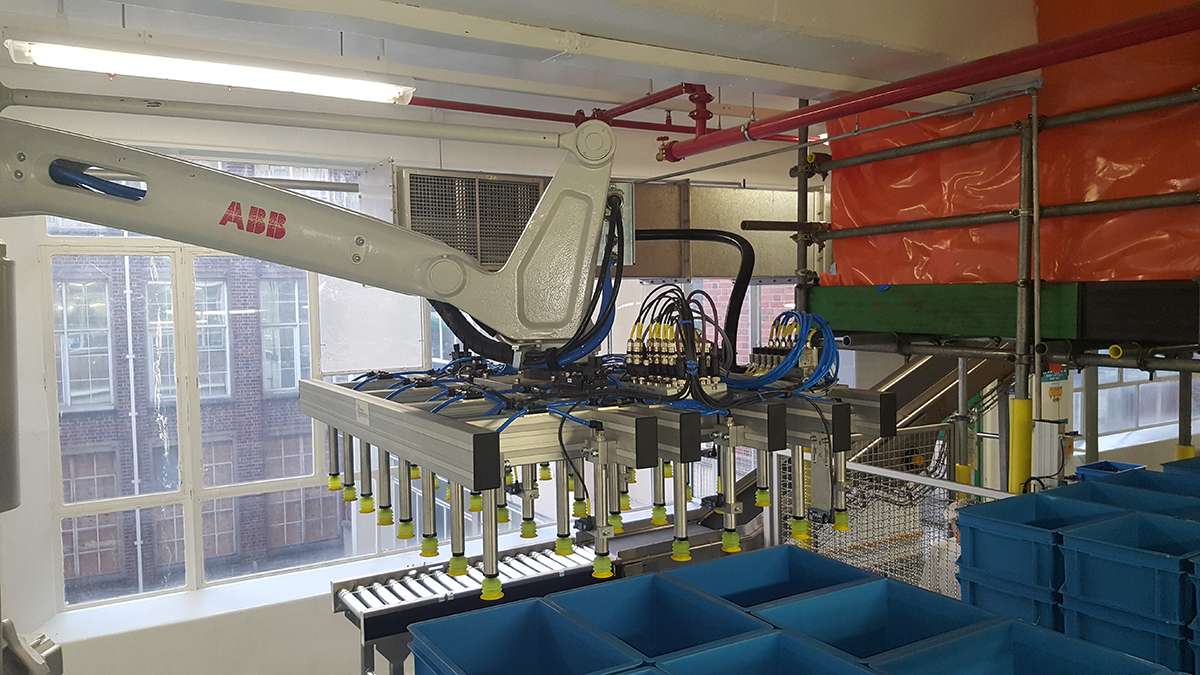
Robot automation is used for far more than high-volume production. Machine tending can load and unload CNC equipment with dependable timing, while palletising can reduce repetitive lifting and create stable, consistent loads. Welding cells can improve repeatability, and dispensing systems can apply adhesives or gaskets with controlled paths and quantities. Collaborative robots may suit tasks where people and automation need to work in close proximity, provided the application has been assessed correctly.
For a business in Bedford, proximity can make early surveys, trials and commissioning easier, although a national provider should be able to support sites wherever they operate. The most suitable application is not necessarily the most complex one; it is often a stable, repetitive task where automation releases skilled employees for higher-value work.
Safety Expectations for Automation Companies In The UK
Safety should be designed into the cell from the outset, not added after a layout is agreed. Guards, interlocked access points, emergency stops, safe operating modes and clear procedures must reflect how staff will actually use, clean and maintain the equipment. Risk assessment also needs to consider foreseeable activities such as clearing a jam, changing tooling and recovering from a fault.
The HSE explains that the Provision and Use of Work Equipment Regulations 1998 (PUWER) require work equipment to be suitable, maintained and inspected where necessary. In practice, this means customers should expect their automation partner to discuss safe access, maintenance arrangements and operator training alongside productivity. Safety documentation and validation should be treated as deliverables, not paperwork left until the end.
Planning a Project With Automation Companies In The UK
A successful project begins with accurate samples and honest process data. Provide a representative range of products, including awkward or variable examples, plus information on materials, tolerances, contamination and upstream or downstream constraints. Small details can determine the final design: a warped tray, inconsistent bag fill or difficult-to-grip surface can affect fixture design, vision requirements and achievable cycle time.
Plan the installation window early. Consider utilities, floor loading, network access, extraction, material flow, forklift routes and how production will continue during changeover. Agree acceptance criteria before build starts, covering throughput, quality, uptime assumptions and what counts as a successful test. This gives both parties a fair basis for commissioning and helps prevent late changes.
Frequently Asked Questions
What should Automation Companies In The UK include in a quotation?
A useful quotation should define the scope, equipment, performance assumptions, safety approach, lead time, exclusions and commissioning activity. It should also state whether operator training, documentation, spares and post-installation support are included. Comparing scope is more meaningful than comparing headline prices alone.
Can a used robot be a sensible option?
Yes, if it is properly assessed, re-engineered and matched to the task. The complete cell still needs suitable controls, guarding, tooling and validation. A used robot can be economical, but its condition, availability of parts and compatibility with the planned controls should be considered before committing.
What support is needed after commissioning?
Most systems benefit from responsive technical support, preventive maintenance, software backups and a clear route for faults or future changes. Ask about remote support, on-site attendance, spare parts and whether the supplier can upgrade or relocate the cell if your production layout changes.
Premier Automation designs and builds robot-based automation and control systems, from machine tending and palletising to welding, dispensing and collaborative applications. With design, installation, commissioning, programming, upgrades and after-sales support available, Premier Automation can help you explore a practical automation project that fits your process and future plans.