Automation Solutions In London can help businesses improve consistency, increase output and make better use of skilled people. From a single robot cell to a fully connected production line, the right project should address a defined operational problem rather than add technology for its own sake. A clear brief, careful safety planning and dependable ongoing support are what turn automation into a worthwhile investment.
Why Automation Solutions In London Support Business Growth
London businesses operate in a demanding environment, often balancing limited floor space, high operating costs, changing order volumes and pressure to deliver quickly. Automation can take repeatable, physically demanding or precision-critical work away from manual processes. This may include loading machines, assembling parts, applying adhesives, packing products or stacking finished goods for dispatch.
The benefits are broader than speed. A well-designed system can reduce variation between shifts, improve traceability and provide more predictable cycle times. It can also help teams focus on inspections, customer service, process improvement and work that requires judgement. The best results start with realistic targets, such as reducing bottlenecks, lowering rework or improving uptime on a specific process.
Where Robot and Control Systems Add Practical Value
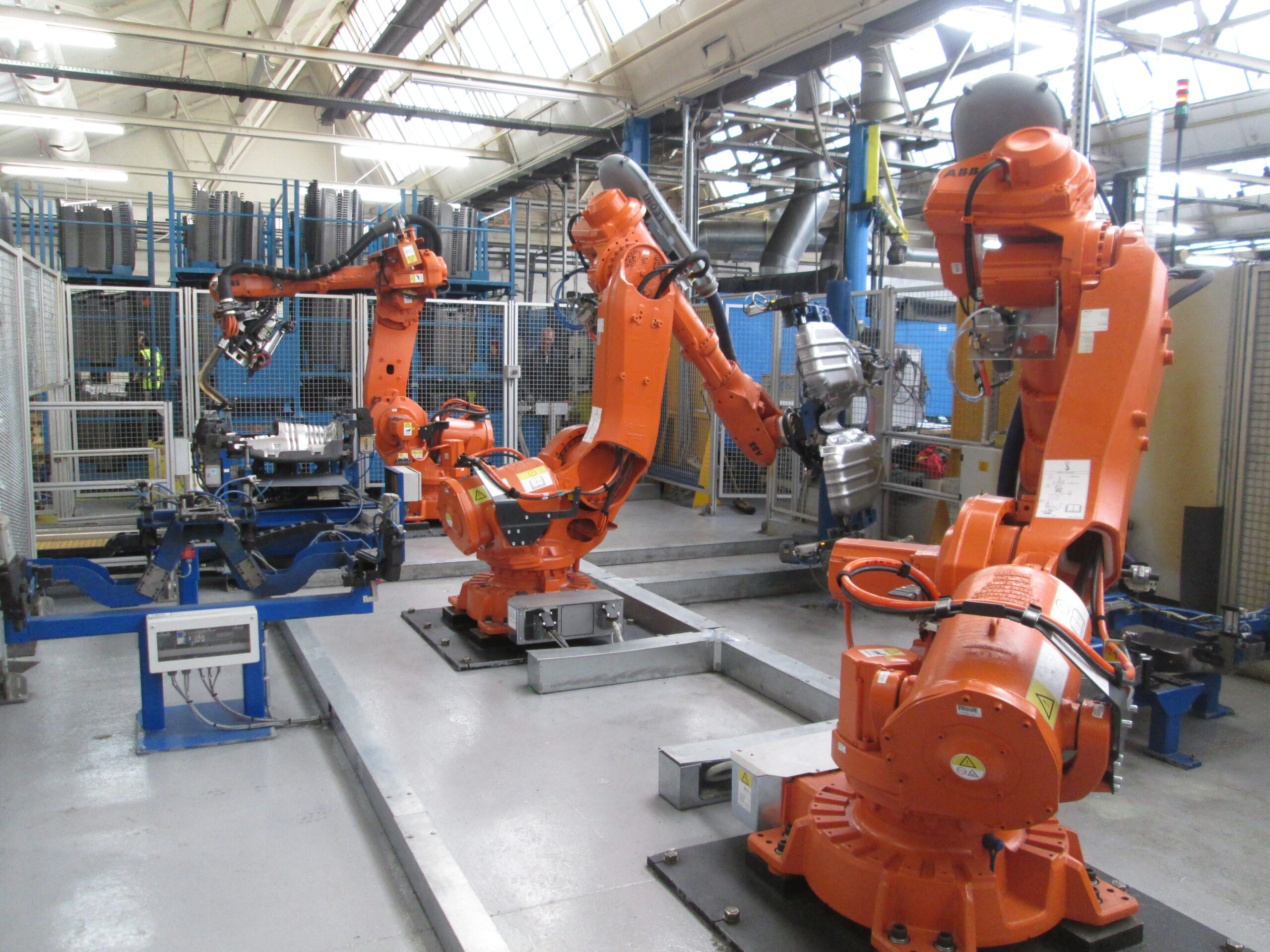
Machine tending is a common starting point for manufacturers. A robot can load and unload CNC machines or presses, allowing production to continue through breaks and outside normal staffing patterns where appropriate. Palletising systems can remove repetitive lifting at the end of a line, while welding cells deliver repeatable weld paths for suitable components.
Gluing and gasket dispensing are also strong candidates because material placement needs to be consistent. A programmed robot can follow a defined path and support quality checks that are difficult to sustain manually over long runs. For businesses with frequent product changes, flexible tooling and sensible programming can make it easier to accommodate different sizes, pack formats or batch requirements.
Collaborative robots, often called cobots, may be suitable where people and automation need to work in close proximity. However, a cobot is not automatically safe in every application. Tooling, payload, sharp edges, speed, reach and the surrounding equipment all affect the risk assessment. The right choice depends on the task, the available space and the required production rate.
Planning Automation Solutions In London Around Your Process
A productive project begins with observing the existing process in detail. Cycle times, changeover frequency, product variation, scrap levels and manual handling requirements should all be recorded. It is equally useful to identify exceptions: the awkward part that arrives slightly out of position, the occasional rework step or the batch that needs a different label. These details often determine whether an automated cell will run reliably.
Integration matters as much as the robot itself. Controls need to communicate clearly with conveyors, sensors, safety devices, machine tools and any upstream or downstream equipment. PLC and robot programming should give operators straightforward status information, practical fault recovery guidance and controlled access for authorised adjustments. Planning for spare parts, training and remote or on-site support from the outset can reduce disruption after commissioning.
For some sites, used or existing robots can be re-engineered and integrated into a new application. This can be a cost-conscious route where the equipment is suitable and its condition is properly assessed. In other cases, a new system provides the most appropriate combination of warranty, capability and long-term availability. Automation Solutions In London should be specified on whole-life value, not purchase price alone.
Safety, Compliance and a Smooth Installation
Safety must be designed into the system rather than added at the end. Guarding, interlocked access doors, emergency stops, safety-rated controls and safe operating procedures need to match the actual risks of the application. The HSE’s machinery safety guidance explains the duties around safe work equipment under the Provision and Use of Work Equipment Regulations 1998 (PUWER), including the need for suitable maintenance and inspection.
Installation should also be planned around production commitments. A staged approach may include off-site build and testing, a site survey, utility checks, installation during an agreed shutdown and structured commissioning. Operators and maintenance staff should receive training tailored to their responsibilities, including normal operation, safe isolation, routine checks and escalation routes. Clear documentation helps maintain consistency as teams change.
Selecting Automation Solutions In London That Can Adapt
Choose a supplier with experience of both robotic applications and the control systems that make them work together. Ask how the proposed design handles product variation, fault recovery, future expansion and relocation if your premises change. It is sensible to review sample cycle-time assumptions and agree what success looks like before work starts, whether that is output, quality, availability or ergonomic improvement.
Premier Automation designs and builds robot-based automation and control systems for applications including machine tending, palletising, welding, dispensing and collaborative robotics. Its team can also integrate or re-engineer used robots, develop special-purpose machinery controls and support installation, commissioning, programming, upgrades and after-sales requirements. This joined-up capability is valuable for projects that need to fit into an established operation.
As a Siemens Solution Partner and ABB Value Provider, Premier Automation can help customers consider established control and robot platforms alongside the practical needs of their site. The aim is not to overcomplicate a process, but to provide an engineered system that operators can use confidently and that managers can maintain over time.
Frequently Asked Questions
How long does an automation project take?
Timescales depend on complexity, equipment availability, testing requirements and site readiness. A defined application with standard components can move more quickly than a bespoke line, but proper design, build and commissioning time should never be rushed.
Can automation work in a small production area?
Yes. Compact cells, thoughtful layouts and appropriate safety arrangements can make efficient use of limited space. A site survey is essential to assess access, workflow, operator positions and maintenance clearance.
Will a robot replace our existing team?
Automation is commonly used to support teams by removing repetitive, heavy or difficult-to-staff tasks. People remain essential for oversight, quality, setup, maintenance and continuous improvement.
Can an existing robot be upgraded?
Often, yes. Subject to condition and application requirements, an existing robot may be relocated, reprogrammed, fitted with new tooling or integrated with updated controls and safety equipment.
If you are assessing Automation Solutions In London for a specific process, Premier Automation can discuss your objectives, review the practical constraints and develop a system suited to your operation.