Cons of Manual Handling and How Automation Can Reduce the Risks
The Cons of Manual Handling can affect far more than day-to-day productivity. Repeated lifting, carrying, loading and positioning can contribute to workplace injuries, inconsistent output, damaged products and rising operational costs. For manufacturers relying heavily on employees to move materials or complete repetitive production tasks, these issues can gradually restrict growth and place unnecessary pressure on the workforce.
Cons of Manual Handling for Employee Safety
One of the clearest disadvantages of manual handling is the physical strain placed on employees. Regularly lifting heavy products, reaching into awkward spaces or repeating the same movement throughout a shift can increase the likelihood of back injuries, muscular problems and repetitive strain conditions.
Even relatively light products can create difficulties when they are handled frequently or at an uncomfortable height. Fatigue can also affect concentration, making slips, dropped items and incorrect movements more likely as a shift progresses. Employers must therefore consider the weight, frequency, working position and surrounding environment involved in each task.
The Health and Safety Executive’s machinery and work equipment guidance provides useful information for businesses assessing equipment risks and workplace safety responsibilities. Reducing unnecessary physical handling can support a safer working environment while allowing employees to focus on tasks that require judgement, supervision and technical ability.
Cons of Manual Handling for Productivity
Manual processes are often limited by the speed and endurance of the people completing them. Employees need breaks, may work at different speeds and can become slower as physical fatigue develops. This can make it difficult to maintain a predictable production rate, particularly during busy periods or when larger orders need to be completed quickly.
The Cons of Manual Handling also include increased dependence on staff availability. Absence, recruitment difficulties or high employee turnover can leave a production line short of the people required to meet its targets. Training replacement workers takes time, while inexperienced employees may initially complete handling tasks more slowly.
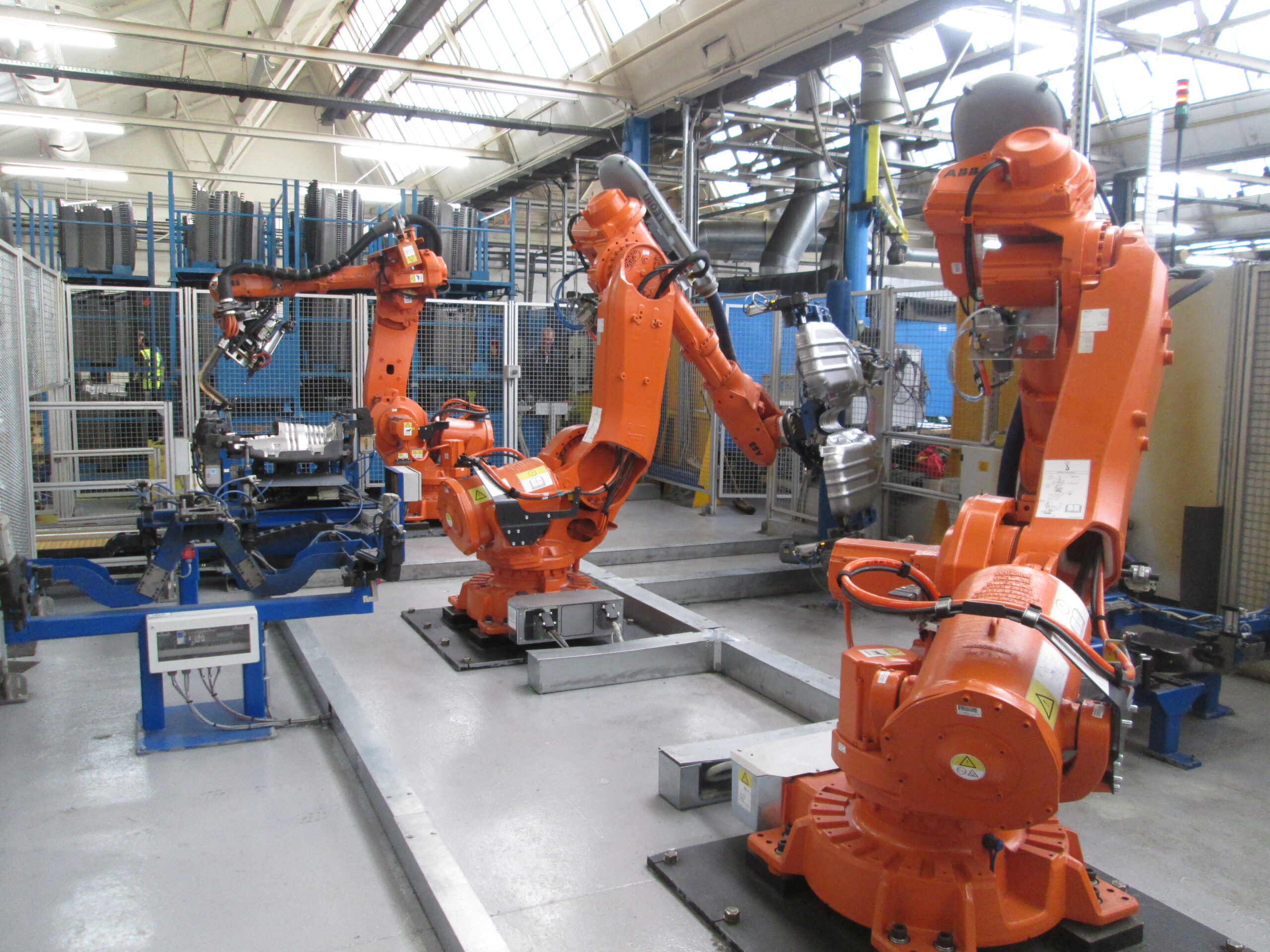
Automated handling systems can operate at a controlled cycle rate and repeat the same movement accurately over extended periods. They can also support additional shifts or periods of unmanned production where the wider process allows it. This provides manufacturers with greater control over throughput and makes production planning more dependable.
Inconsistent Product Handling and Quality
People naturally handle products in slightly different ways. One operator may position a component accurately every time, while another may use a different angle, pressure or sequence. These small variations can affect product quality, packaging presentation and the stability of completed pallet loads.
Manual handling can also increase the risk of products being dropped, knocked or incorrectly stacked. Damaged goods create waste, require reworking and can lead to customer complaints. In palletising applications, inconsistent placement may produce unstable loads that are more difficult to store or transport safely.
Robotic systems follow programmed movements and positioning instructions. Once properly designed and commissioned, they can deliver repeatable handling across every production cycle. Sensors, vision systems and purpose-built grippers can also help an automated cell identify, pick and place products with controlled accuracy.
Cons of Manual Handling for Business Costs
The visible cost of manual handling is usually labour, but several less obvious expenses should also be considered. Workplace injuries can lead to absence, temporary staffing requirements, disrupted schedules and additional management time. Product damage, inconsistent output and overtime can further increase the true cost of a labour-intensive process.
The Cons of Manual Handling may become more noticeable as production volumes grow. A process that is manageable at a low output can become inefficient when demand rises, requiring additional employees, more supervision and extra working space. Businesses may eventually find that increasing headcount no longer delivers a proportionate improvement in productivity.
Automation requires an initial investment, but the commercial assessment should consider the full payback period rather than the purchase price alone. Labour savings, reduced waste, higher output, improved consistency and fewer handling-related disruptions can all contribute to the return on investment.
Where Automated Handling Can Be Used
Automated handling can support applications including machine tending, palletising, packaging, assembly and the movement of parts between production stages. Industrial robots are particularly useful for repetitive tasks involving predictable products and clearly defined movements. Collaborative robots may also be suitable for selected applications where people and automation need to operate within a shared working area.
The most suitable system depends on product weight, size, presentation, required cycle time and available factory space. Automation is not the right answer for every process, so a detailed assessment is essential. The British Automation and Robot Association also provides information about industrial automation and robotics within the UK.
Based at its facility in Bedford, Premier Automation designs new robotic systems, integrates used robots and modifies existing equipment. Systems can be developed around individual production requirements, technical constraints and realistic payback criteria.
Reducing the Cons of Manual Handling with the Right System
A successful automation project begins with understanding the existing process. This includes identifying bottlenecks, safety concerns, product variations and the output the business needs to achieve. The system can then be designed around the actual application rather than forcing the production process to fit a standard solution.
Existing robot cells may also be upgraded to handle new products, reduce cycle times or improve reliability. In some cases, re-engineering an existing system can provide a cost-effective alternative to replacing it completely. Offline programming and digital simulation can help assess movements and optimise the cell while limiting disruption to active production.
Premier Automation provides robot integration, control system design, programming, manufacturing, system upgrades and relocation services. Its engineering team offers practical, unbiased advice to help manufacturers decide whether automation is commercially and technically suitable for their operation.
Frequently Asked Questions
What types of manual handling can be automated?
Tasks such as palletising, machine loading, unloading, packaging, component transfer and repetitive product positioning can often be automated. Suitability depends on the products, process variation and required production speed.
Does automation completely remove manual handling?
Not always. Automation may remove the most repetitive, heavy or awkward parts of a process while employees continue to manage quality checks, replenishment, supervision and maintenance.
Can an existing robot system be upgraded?
Yes. Existing cells can often be reprogrammed, fitted with new tooling, modified for different products or upgraded with modern controls and safety equipment.
How do I know whether automation will provide a return?
A system assessment can compare investment costs with expected labour savings, output improvements, reduced waste and other operational benefits. Premier Automation can review your current process and help identify a robust, cost-effective solution that meets your production and payback requirements.