Factory Automation Solutions In Bedford can help manufacturers increase consistency, reduce repetitive manual work and make better use of existing floor space. The right system is not simply a robot placed beside a production line; it is a properly engineered process that considers parts, cycle times, operator access, safety and future demand. Premier Automation designs practical systems around the real requirements of each site.
Why Factory Automation Solutions In Bedford Are Worth Considering
Automation can address common production pressures without forcing a complete factory redesign. Robot cells can load and unload machine tools, palletise finished goods, apply adhesives or gaskets, and carry out repeatable welding tasks. These applications can improve throughput while giving employees more time for inspection, set-up, quality checks and other skilled work that benefits from human judgement.
A successful project begins with a clear objective. It may be to remove a bottleneck, improve presentation of products on pallets, reduce handling damage or make a difficult shift easier to staff. Establishing a realistic target for output, changeover time and quality before selecting equipment helps ensure the investment solves the right problem rather than automating an inefficient existing process.
Where Factory Automation Solutions In Bedford Deliver Value
Machine tending is often a strong starting point, particularly where CNC machines are waiting for an operator to load components. A robot can present parts consistently, work through breaks and support multi-machine layouts where appropriate. For lower-volume or frequently changing work, flexible grippers, quick-change tooling and carefully planned product recipes can make a cell useful across more than one component family.
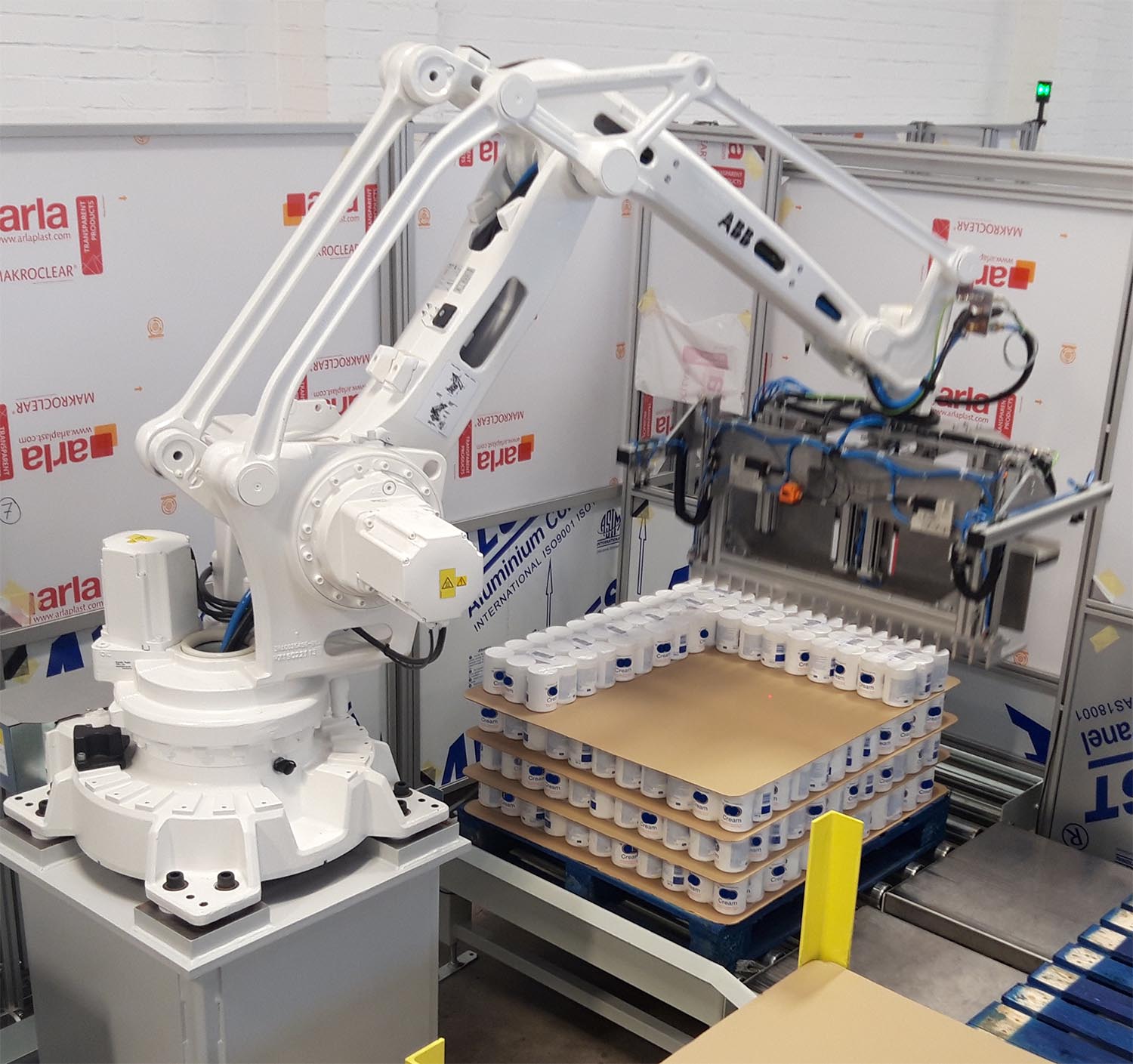
Palletising is another area where repeatability matters. The less-obvious detail is that a reliable palletising cell depends on the condition and consistency of incoming cases, trays or bags as much as the robot itself. Variations in pack dimensions, unstable loads and inconsistent pallet quality can affect stack patterns. Good system design therefore includes product infeed, orientation, load stability and a clear route for operators to replenish consumables safely.
Factory Automation Solutions In Bedford can also support dispensing, welding and assembly processes. Accurate robot paths, controlled material delivery and integrated vision or sensing can reduce variation where a manual process is hard to repeat. Collaborative robots may suit selected duties where shared workspace is needed, but they still require a task-specific risk assessment; a cobot is not automatically safe simply because it is collaborative.
Planning Factory Automation Solutions In Bedford Projects Properly
Start with a site assessment that records the current process in detail: production volumes, part range, takt time, reject causes, utilities, available footprint and how materials arrive and leave. This information makes it easier to identify whether a dedicated robot cell, a flexible system or an upgrade to existing controls will provide the best return. It also prevents costly surprises during installation.
Integration should cover more than mechanics. PLC and robot programming need to communicate clearly with machine controls, conveyors, safety devices and, where required, production data systems. Operators should be able to understand status messages, recover from routine faults and change approved product settings without relying on specialist intervention for every adjustment. Training and clear documentation are essential parts of handover.
Established equipment can often be given a productive second life. Used robots may be re-engineered for a suitable application, while older lines can benefit from modern control panels, improved guarding or revised programming. This approach can be particularly valuable where the core production equipment remains sound but reliability, capability or supportability has become a concern.
Safety, Installation and Long-Term Support
Safety must be designed into the project from the outset. The Health and Safety Executive explains that the Provision and Use of Work Equipment Regulations 1998 (PUWER) require work equipment to be suitable for its intended use, maintained and used by people who have received adequate information, instruction and training. For automated machinery, this means considering guarding, interlocks, emergency stops, safe access and foreseeable recovery activities, not only normal running.
Installation planning also reduces disruption. A staged programme can allow off-site build and testing before delivery, followed by mechanical installation, electrical connections, commissioning and acceptance testing. Agreeing responsibilities for services, access, materials and operator availability early helps protect production schedules. After commissioning, responsive support and sensible spares planning can keep a system delivering value for years.
Premier Automation can provide design, build, installation, commissioning, programming, upgrades, relocation and ongoing support for robot and control projects. Its experience spans machine tending, palletising, welding, dispensing and special-purpose machinery, allowing the proposed solution to reflect the process rather than a one-size-fits-all package.
Frequently Asked Questions
How do I know whether my process is suitable for automation?
Processes with repetitive movements, predictable parts, high handling demand or a clear production bottleneck are often suitable. A review of cycle time, product variation, quality issues and available space will indicate whether automation is practical.
Can a robot system handle different product sizes?
Yes, provided this is considered during design. Adjustable tooling, sensors, recipe selection and quick-change fixtures can support planned product variation. The full range of products should be reviewed before equipment is specified.
Will automation replace our operators?
Many projects redeploy people from repetitive or physically demanding tasks to quality, supervision, maintenance and value-adding work. The outcome depends on the application and how the business plans its workforce alongside the new system.
Can an existing robot cell be upgraded?
Often it can. Controls, safety systems, tooling and programming may be improved, and a robot can sometimes be relocated or reconfigured for a new task after a proper technical and safety assessment.
If you are assessing Factory Automation Solutions In Bedford, Premier Automation can discuss your process, identify practical options and help plan a system that fits your production goals.