Factory Automation Solutions In The UK can help manufacturers improve consistency, protect staff from repetitive tasks and increase output without compromising quality. The most effective projects begin with a clear operational problem, such as slow loading, inconsistent packing or a production bottleneck, rather than a decision to buy a particular robot. A tailored system should fit your products, available space, shift pattern and future plans.
Why Factory Automation Solutions In The UK Deliver Value
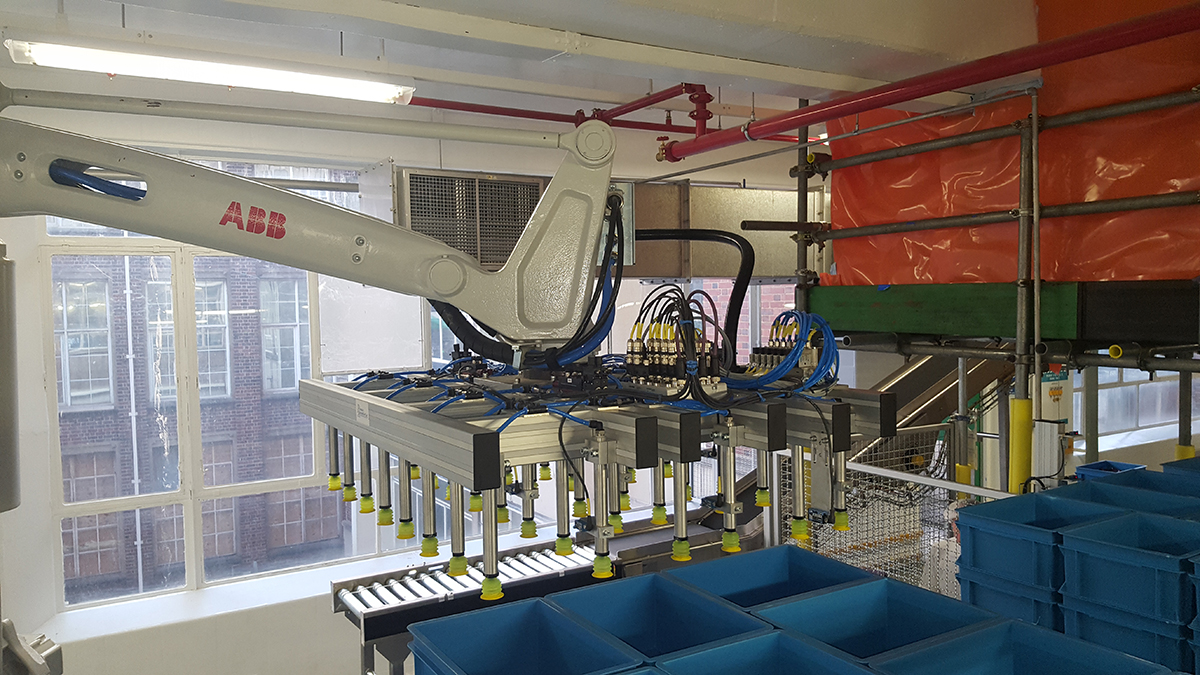
Automation can take on repeatable, physically demanding or precision-critical work. Common applications include machine tending, palletising, welding, gluing and gasket dispensing. A robot can maintain a reliable cycle time, while a well-designed control system can coordinate the equipment around it, including conveyors, sensors, guarding and quality checks.
The benefit is not simply replacing manual work. A practical system can make production easier to plan, reduce avoidable variation and provide a safer route for handling awkward loads or working near hot, sharp or moving machinery. It can also help teams redeploy skilled people to inspection, set-up, maintenance and customer-focused work.
How Factory Automation Solutions In The UK Are Scoped
Start by mapping the existing process. Record the product range, cycle times, changeovers, operator actions, reject causes and constraints around utilities and floor space. Product variation deserves particular attention: a cell that handles one carton size efficiently may need different grippers, sensing or programming to manage several sizes.
A good feasibility review also considers the less obvious details, including how parts arrive at the cell, where empty pallets and packaging are stored, and how an operator safely clears a jam. These practical points determine whether a project performs reliably on a busy shift rather than only in a demonstration.
Planning Factory Automation Solutions In The UK for Growth
Build flexibility into the brief where it supports a realistic business need. This may mean allowing spare robot reach, designing interchangeable tooling, reserving panel capacity or making space for an additional conveyor. It does not mean paying for every possible future option; it means avoiding costly redesign where a likely change can be anticipated.
Integration matters as much as the robot itself. Controls should communicate clearly with upstream and downstream equipment, and operators need straightforward status information. Defined fault messages, sensible recovery procedures and accessible manuals reduce downtime and make the cell easier for your own team to run.
Choosing Factory Automation Solutions In The UK Safely
Safety must be designed into the whole installation, not added after commissioning. The Health and Safety Executive explains that the Provision and Use of Work Equipment Regulations 1998 (PUWER) require work equipment to be suitable, maintained and, where necessary, inspected. For automated machinery, that calls for a considered assessment of hazards, safeguarding, emergency stops, access for maintenance and safe operating procedures.
A collaborative robot is not automatically safe in every situation. Its suitability depends on the task, tooling, payload, speed, surrounding equipment and the way people access the area. Risk assessment may still identify a need for guarding, safety-rated sensing or restricted operating modes. Staff training and clear handover documentation are equally important.
Getting the Right Delivery and Support Model
Ask prospective suppliers who will take responsibility for mechanical design, electrical controls, programming, installation, commissioning and support after handover. One accountable team can simplify decisions where several systems must work together. It is also sensible to discuss acceptance criteria early, including throughput, repeatability, product quality and the test conditions used to confirm performance.
Premier Automation, based in Bedford, designs and builds robot-based automation and control systems for manufacturers across a range of applications. Its services cover new installations, used-robot integration and re-engineering, control-system design, programming, upgrades, relocation and ongoing support. This breadth can be valuable where an existing line needs improvement rather than complete replacement.
Measuring Results After Commissioning
Agree a baseline before work starts. Useful measures include units per hour, unplanned stoppages, reject rates, changeover time, manual handling exposure and energy use per unit where relevant. Review these figures after the system has settled in, then use the findings to refine programmes, tooling or material presentation. Continuous improvement often releases more value than the initial installation alone.
Frequently Asked Questions
How long does an automation project take?
Timescales depend on process complexity, equipment lead times, testing needs and site access. A clear brief, timely product samples and early decisions on utilities and layout help prevent delays. Your supplier should provide a staged programme covering design, build, factory testing, installation and commissioning.
Can an existing robot be upgraded?
Often, yes. Controls, guarding, tooling, software and peripheral equipment may be updated to improve reliability or accommodate a changed product. A site assessment should establish the robot’s condition, available spare parts and whether the revised cell can meet current safety requirements.
Will automation work with small production runs?
It can, particularly where tooling changes are quick and programmes are easy to select. The strongest case is usually a repeated task across a family of products, not necessarily one high-volume item. Flexible fixtures and thoughtful material presentation can make lower-volume work more viable.
For Factory Automation Solutions In The UK that are grounded in your process and production goals, Premier Automation can help assess the opportunity, develop a practical system and support it throughout its working life.