
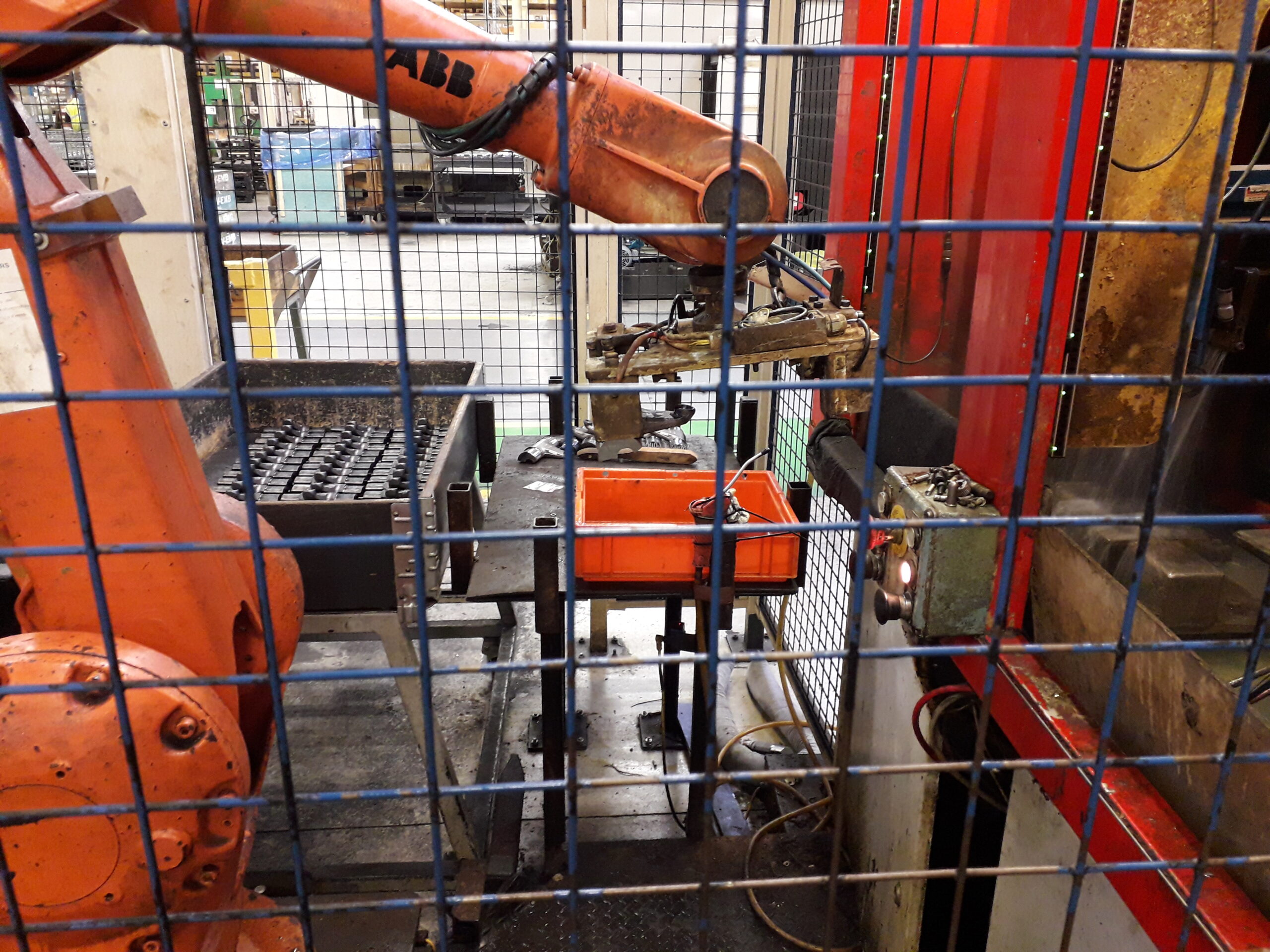
How do you calculate the ROI of Industrial Automation? The answer is not simply the price of a robot compared with a wage. A useful business case measures the full cost of a proposed system against the measurable financial gains it creates over its working life. For manufacturers, the strongest cases usually combine labour capacity, higher output, more consistent quality, lower waste and safer handling. Start with your own production data, rather than a generic payback claim, so the decision reflects the constraints and opportunities on your site.
Build a reliable baseline before investing
First, define the process that may be automated. It could be loading a CNC machine, palletising finished goods, welding assemblies, applying adhesive or transferring parts between stations. Record the current cycle time, shifts worked, number of operators, hourly employment cost, output, rejection rate, downtime and annual maintenance spending. Use at least several representative weeks of information, including busy periods, to avoid basing the model on an unusually good or poor day.
Separate direct labour savings from capacity gains. If automation allows you to remove a role or avoid recruiting for an additional shift, the saving can be counted directly. If existing employees move to inspection, assembly or other valuable work, describe this as recovered capacity and assign a value only where it enables additional output or prevents a genuine cost. This distinction makes forecasts more credible to finance teams.
How do you calculate the ROI of Industrial Automation? Start with total investment
Calculate the complete installed cost, not just the quoted robot price. Include the robot or cobot, end-of-arm tooling, guarding, safety devices, conveyors or fixtures, controls, PLC programming, integration, installation, commissioning, operator training and documentation. Allow for any building work, electrical supplies, compressed air, network changes and production interruption during installation. If equipment is financed, include interest and arrangement costs in the cash-flow view.
Also budget for ownership after handover: preventive maintenance, spares, software support, energy, tooling wear and periodic validation. A system that is easy to maintain can deliver a better lifetime return even if its initial price is higher. Ask suppliers to set out assumptions about uptime, throughput and staffing clearly, then challenge those assumptions against your actual operating conditions.
How do you calculate the ROI of Industrial Automation? Value the annual benefits
Annual benefit is the sum of verified savings and additional contribution. A straightforward calculation is annual labour saving plus additional gross profit from extra saleable units, plus reduced scrap and rework, plus avoided temporary labour, minus the annual running costs of the automated cell. For extra output, use contribution margin rather than turnover: sales revenue is not profit, because materials, distribution and other variable costs still apply.
For example, a machine-tending cell might release 1.5 operator equivalents across two shifts, reduce rejects and keep a machine running through breaks. If the business can sell the additional parts, value those parts at their contribution margin. If demand is fixed, do not claim sales that cannot be realised; instead, quantify lower overtime, better delivery performance or the ability to take on a higher-margin product.
Safety can have financial and operational value, but it should never be treated as a shortcut for a weak calculation. Automation may reduce exposure to repetitive lifting, hot parts, sharp edges or fumes. The HSE guidance on work equipment and machinery explains the relevance of the Provision and Use of Work Equipment Regulations 1998 (PUWER), which requires work equipment to be suitable, maintained and used by properly trained people. Include guarding, risk assessment and training costs from the outset.
How do you calculate the ROI of Industrial Automation? Test payback and risk
Use two complementary measures. ROI is commonly expressed as: annual net benefit divided by total investment, multiplied by 100. A £250,000 project producing £100,000 of annual net benefit has an annual ROI of 40 per cent. Simple payback is total investment divided by annual net benefit, so the same project has a 2.5-year payback period. Payback is easy to communicate, while ROI helps compare projects of different sizes.
For larger investments, build a yearly cash-flow forecast over the expected life of the system and consider net present value. This recognises that money received sooner is worth more than money received later. Run a conservative scenario as well as the expected case: lower volumes, slower ramp-up, reduced uptime or a delay in customer approval. If the project still works under sensible downside assumptions, it is more likely to earn approval and deliver the forecast result.
Less obvious factors can materially change the result. A robot cell may need a short period of parallel running while operators gain confidence. Product variants may require several grippers or fixtures, and a planned annual shutdown may be the best time to install. Include these realities in the timetable. Equally, a well-designed cell can improve traceability through controls data, helping identify recurring stoppages and quality issues before they become expensive.
Frequently Asked Questions
How do you calculate the ROI of Industrial Automation? for a small production run
Use the same method, but focus on flexibility. Include changeover time, programming effort and reusable tooling. A collaborative robot or re-engineered robot may suit variable work where a fully dedicated line would not. The benefit may be consistent staffing and reduced bottlenecks rather than maximum volume.
Should labour savings be the only benefit?
No. Include only benefits that can be evidenced, such as scrap reduction, overtime avoided, additional contribution from sold output and lower rework. Quality and safety improvements are valuable too, but document how they affect costs or production rather than assigning an unsupported figure.
How do you calculate the ROI of Industrial Automation? if demand changes?
Model several demand levels and assess whether the cell can be redeployed to another product. A flexible robot system can protect the investment if volumes move, but its capability should be confirmed during the design stage rather than assumed after installation.
A sound ROI calculation is a decision tool, not a promise of a single outcome. By checking the data, total cost, operational assumptions and risks, you can select automation that solves a real production problem. For help assessing a robot cell, control upgrade, machine-tending project or palletising application, Premier Automation can support design, build, installation, commissioning and ongoing service.