For businesses comparing Industrial Automation Companies In Bedford, the right partner should do more than supply equipment. They should understand the production challenge, design a workable solution and remain available after installation. Automation can reduce repetitive manual handling, improve consistency and give teams more time for skilled, value-adding work.
Industrial Automation Companies In Bedford are often asked to solve issues such as slow cycle times, difficult-to-staff tasks, variable quality and constrained floor space. A successful project starts by defining the outcome: perhaps more parts per shift, safer handling of heavy items, reliable pallet patterns or a cleaner dispensing process. Clear objectives make it easier to select technology that produces measurable value.
Why Industrial Automation Companies In Bedford Support Growth
Local access can make the early stages of a project more straightforward. A site visit allows engineers to assess the actual process, available footprint, product variation and interfaces with existing machinery. It also helps identify practical details that are easily missed on a drawing, including operator access, material presentation, guarding positions and maintenance clearance.
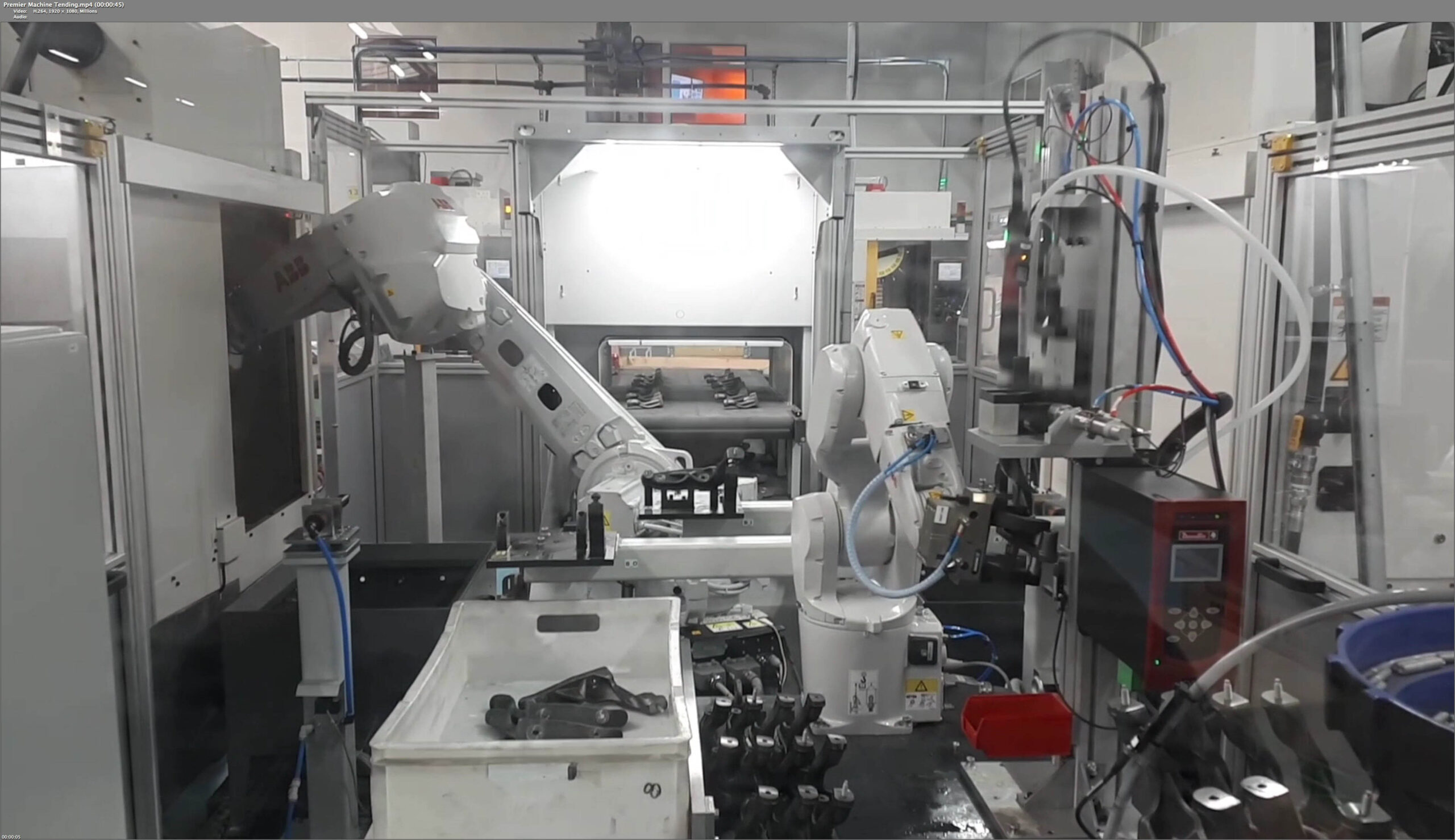
A well-designed cell should fit the way your factory operates, rather than force staff to work around it. Robot-based systems can be applied to machine tending, palletising, welding, gluing and gasket dispensing, while collaborative robots can be suitable for selected tasks that need closer operator interaction. The best option depends on payload, reach, speed, part handling and the degree of product changeover required.
What Industrial Automation Companies In Bedford Should Deliver
Look for a provider that can take responsibility from concept through to commissioning. This normally includes mechanical and electrical design, controls engineering, robot and PLC programming, build, installation, testing and operator handover. Having these capabilities in one team can reduce handovers and give you a clearer point of contact throughout the project.
Premier Automation designs and builds robot systems and control systems for special-purpose machinery and process lines. Its services also include integrating and re-engineering used robots, upgrades, relocations and ongoing support. This breadth can be valuable if you need to improve an existing asset rather than replace a complete production process.
Planning an Industrial Automation Companies In Bedford Project
Before requesting proposals, gather a representative range of parts, packaging and production data. Include the difficult cases, not simply the ideal product. A palletising system, for example, must cope with real box dimensions, label positions, load stability and changes in supply. For machine tending, define how components arrive, how they are gripped and what should happen if a machine stops unexpectedly.
Industrial Automation Companies In Bedford should also discuss future flexibility. Small design choices, such as spare PLC inputs, adjustable fixtures, recipe-based programming or space for an additional conveyor, can make later changes less disruptive. Ask how quickly common changeovers can be completed and whether your own team will be able to carry out approved adjustments safely.
Safety, Controls and Long-Term Reliability
Safety must be designed into the system from the outset, not added after the robot is installed. The HSE machinery safety guidance explains employers’ duties under the Provision and Use of Work Equipment Regulations 1998 (PUWER), including ensuring work equipment is suitable, maintained and used by appropriately trained people. For automated cells, risk assessment should cover normal operation, setup, fault recovery, cleaning and maintenance.
Reliable controls are equally important. Specify how alarms will be displayed, how faults can be diagnosed and which production information you need to see. Good commissioning should include proving the cycle with real products, documenting settings and training relevant operators. Premier Automation provides PLC and robot programming alongside installation, commissioning and after-sales support, helping customers maintain a practical route back to assistance after handover.
Frequently Asked Questions
How do I know whether automation is financially viable?
Compare the total project cost with measurable benefits, including labour redeployment, improved throughput, reduced rejects, lower rework and safer handling. A supplier can help model likely cycle times, but use your genuine operating data and account for planned maintenance and changeovers.
Can a robot work with our existing machines?
Often, yes. Robots can be integrated with existing CNC machines, conveyors, process equipment and safety systems. Compatibility depends on available signals, machine condition, access, guarding and the way parts are loaded and unloaded.
Are collaborative robots always safe without guarding?
No. A cobot does not automatically remove the need for a risk assessment. Tooling, payload, speed, sharp edges, surrounding machinery and the task itself all affect the safeguards required.
Can a used robot be a sensible choice?
It can be, provided it is properly assessed, re-engineered where necessary and supported by suitable controls and safety measures. This approach may offer a cost-effective route for defined applications, especially where a fully new system is not essential.
If you are reviewing a new robot cell, controls upgrade or existing system relocation, Premier Automation can help you explore a solution that fits your process, space and production goals.