
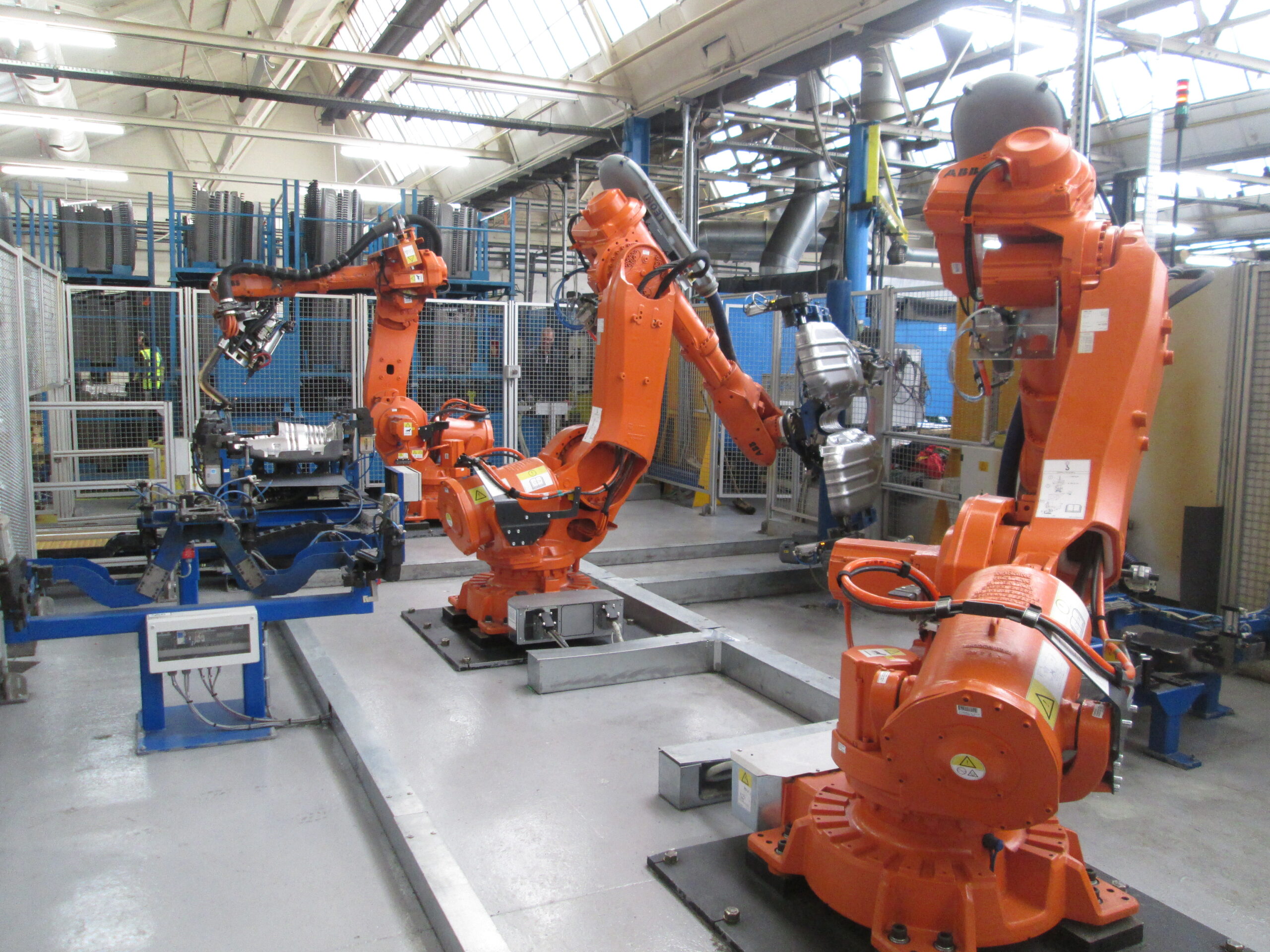
Industrial Automation In London gives manufacturers, warehouses and process businesses a practical route to greater consistency, safer handling and stronger capacity. Rising space costs, demanding delivery schedules and varied product runs can make manual processes difficult to scale. A well-planned automated cell does not simply replace a task; it creates a repeatable process that can be measured, adjusted and supported as requirements change.
For customers, the starting point is usually a clear operational problem: frequent bottlenecks, difficult lifting, inconsistent finishing, a shortage of skilled labour or a need to improve traceability. Automation can address these issues through robotic machine tending, palletising, welding, adhesive dispensing, assembly and control-system upgrades. The best result comes from matching the equipment, software and safeguarding to the actual workflow rather than selecting a robot in isolation.
Why Industrial Automation In London Supports Growth
London-based operations often need to achieve more from constrained floor space and limited downtime windows. Compact robot cells, collaborative robots and carefully designed material flow can help businesses increase output without automatically needing a major building expansion. Automation can also make output less dependent on a single shift pattern, supporting predictable throughput during busy periods.
Robots are particularly effective where a repetitive action must be completed in the same way every time. For example, a palletising system can maintain stable load patterns, while machine tending can keep a CNC machine supplied consistently. These improvements can reduce rework and release employees from repetitive or ergonomically demanding tasks, allowing them to focus on inspection, set-up, maintenance and customer-facing work.
The right project should retain flexibility. Product dimensions, packaging formats and production volumes may change, so tooling, fixtures and programming should be considered early. A cell that can accommodate a sensible range of parts may deliver a better long-term return than a system designed only for one narrow task.
Planning Industrial Automation In London Projects Properly
A successful project begins with a site review and a realistic process assessment. This should examine cycle times, product variation, upstream and downstream delays, utilities, operator access and the route used to load materials. It is also worth identifying where exceptions occur. A robot may run efficiently for standard products, but a practical design must define how unusual parts, faults and changeovers will be handled.
Establish measurable objectives before design work starts. Useful measures can include parts per hour, reject rate, changeover time, manual handling exposure and machine utilisation. These targets give everyone a common basis for reviewing the proposed solution and later confirming that commissioning has achieved the intended outcome.
Integration matters as much as the robot itself. Controls may need to communicate with existing machinery, conveyors, scanners or production records. PLC programming, interlocks and clear operator screens help the automated area work as part of the wider operation. Phased installation can be a sensible approach where production cannot stop for an extended period.
Safety, Compliance and Reliable Operation
Automation must be designed around people as well as performance. Risk assessment should cover access to the cell, loading and unloading, clearing faults, maintenance and unexpected restart. Guards, interlocked doors, light curtains, emergency stops and safe operating modes each have a role, but their suitability depends on the application and the way people genuinely use the equipment.
The HSE’s machinery safety guidance explains duties under the Provision and Use of Work Equipment Regulations 1998 (PUWER), including the need for work equipment to be suitable, maintained and used by adequately trained people. This is a useful reminder that handover is not the finish line: documented training, planned maintenance and clear procedures are essential to sustaining safe performance.
Less obvious details can make a meaningful difference. Cable routes, pneumatic air quality, spare I/O capacity and access around a robot controller may seem minor during design, yet they influence fault-finding and future modifications. Equally, recording the approved robot and PLC software versions at handover gives a reliable baseline for later support, upgrades or relocation.
Choosing Industrial Automation In London for Your Application
Different applications call for different approaches. Conventional industrial robots are often suited to fast, repeatable work within safeguarded cells, such as welding and high-volume palletising. Cobots can be useful for lower-force tasks and varied production, although they still require an application-specific risk assessment; a collaborative robot is not automatically safe in every installation.
Customers should also consider whether a new system, a re-engineered used robot or an upgrade to existing controls offers the best value. Reusing suitable equipment can be cost-effective, but it needs a thorough review of condition, safety functions, availability of parts and compatibility with the proposed process. The aim is dependable operation rather than a short-term saving that creates support difficulties later.
Premier Automation designs and builds robot systems and control solutions for applications including machine tending, palletising, welding, gluing and gasket dispensing. Its services can cover design, manufacture, installation, commissioning, robot and PLC programming, upgrades, relocation and after-sales support, providing continuity from an initial concept through to day-to-day operation.
Frequently Asked Questions
How quickly can Industrial Automation In London deliver a return?
Payback depends on labour usage, cycle time, operating hours, quality improvements and the cost of the complete installation. A proper assessment should model the current process and include realistic allowances for changeovers, maintenance and training rather than relying on an optimistic headline figure.
Can automation work in a small production area?
Yes. Compact cells, sensible fixture design and good material flow can make automation viable in limited space. A survey is needed to confirm access, safeguarding distances, loading arrangements and maintenance clearance.
Will employees need specialist knowledge to run a robot cell?
Operators need training appropriate to their role, including normal operation, safe stopping and basic fault reporting. More advanced programming and maintenance can be supported by trained in-house staff or an automation partner.
Can existing machinery be connected to a new robot?
Often it can. The feasibility depends on machine condition, available interfaces, safety circuits and the required sequence of operation. Controls integration should be assessed before committing to the final cell layout.
If you are considering Industrial Automation In London, Premier Automation can help assess the process, develop a practical system and provide support after installation. A focused discussion about your products, output targets and site constraints is a useful first step.