Industrial Automation In The UK is helping manufacturers, warehouses and process businesses improve consistency, capacity and safety without losing control of day-to-day operations. From a single robot cell to a fully connected production line, the right solution removes repetitive bottlenecks and gives people more time for skilled, value-adding work. The best projects start with a clear operational problem rather than a decision to automate for its own sake.
For customers, automation should deliver measurable outcomes: steadier output, improved quality, safer handling, reduced waste or greater flexibility across product ranges. A well-planned system can also make it easier to respond to recruitment pressures and changing order volumes. Success depends on matching the technology, process and support package to the reality of your site.
How Industrial Automation In The UK Delivers Practical Benefits
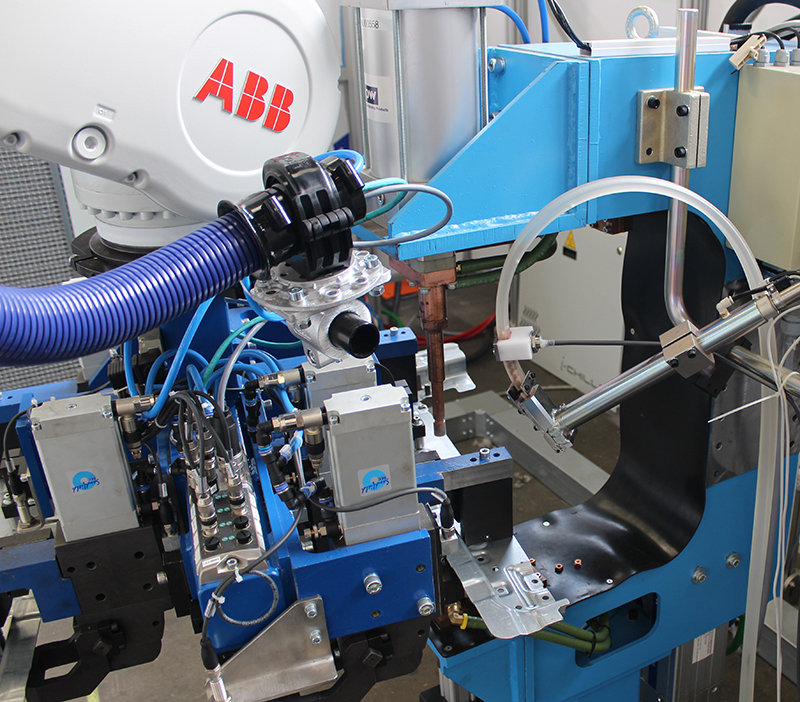
Robotic automation is particularly effective for repeatable tasks involving lifting, loading, packing, welding, dispensing or transferring parts between machines. Machine tending can keep CNC equipment productive for longer periods, while palletising systems can create stable, consistent loads and reduce manual handling. Collaborative robots, or cobots, may suit applications where people and automation need to work in a shared area, subject to a proper risk assessment.
The gains are not limited to speed. Sensors and control systems can provide better visibility of cycle times, stoppages and product flow. This information helps managers identify where small changes will have the greatest effect. Automation can also protect product quality by applying the same movement, force or dispensing pattern every cycle, which is valuable in sectors with tight tolerances or traceability requirements.
Choosing Industrial Automation In The UK for Your Process
Start by mapping the current process in detail. Consider the range of parts, their weight and presentation, required cycle time, operator tasks, changeover frequency and available floor space. A robot that handles one product perfectly may be unsuitable if your work regularly changes in size, orientation or packaging. Identifying these variations early avoids costly redesign later.
It is useful to define acceptance criteria before design begins. These might include throughput per hour, repeatability, reject rates, uptime targets and the time needed to change to another product. Also account for upstream and downstream equipment. A fast robot will not solve a constraint caused by inconsistent infeed, slow labelling or limited space for finished goods.
- Machine tending for loading and unloading manufacturing equipment.
- Palletising for repeatable end-of-line stacking and wrapping workflows.
- Welding and dispensing for controlled, repeatable application processes.
- Control-system upgrades where ageing hardware or limited programming support creates risk.
Safe Integration of Industrial Automation In The UK
Safety must be designed into the system, not added after installation. Guarding, interlocks, emergency stops, safe access for maintenance and clear operating procedures all need consideration. The HSE guidance on the Provision and Use of Work Equipment Regulations 1998 (PUWER) explains that work equipment must be suitable, maintained and inspected where deterioration could create danger. These duties remain relevant after a new automated cell is commissioned.
A thorough risk assessment should cover normal production, fault recovery, cleaning, tooling changes and maintenance. It should also consider who may enter the safeguarded area and how the machine is isolated. For cobot applications, a collaborative robot does not automatically make an application safe; the tooling, payload, speed, layout and surrounding equipment must all be assessed together.
Planning Industrial Automation In The UK Around Your Site
Successful implementation involves more than selecting a robot. Electrical supply, pneumatic services, network access, foundations, access routes and operator training can all affect the programme. In an established facility, installation may need to be phased around live production. A site survey and realistic commissioning plan help prevent avoidable disruption.
Customers should also consider the lifetime of the solution. Ask how recipes are managed, whether spare parts are readily available, how faults will be diagnosed and who can support future changes. Upgrades and re-engineered used robots can be sensible options where budgets are constrained, provided the equipment is assessed properly and integrated with suitable controls and safeguarding.
Frequently Asked Questions
How quickly can an automated system deliver a return?
The timescale varies with labour savings, production volume, operating hours, quality improvements and the complexity of the installation. A clear business case should assess total costs, including integration, training, maintenance and expected downtime during installation.
Can automation work with small production runs?
Yes. Flexible tooling, configurable programs and planned changeovers can make robots viable for varied work. The key is designing for the number of products and change frequency you actually have, rather than only for one idealised task.
Do existing machines need replacing?
Not necessarily. Robots and modern controls can often be added around existing machinery. Compatibility, machine condition, safety interfaces and available space should be reviewed before committing to an approach.
What support is needed after commissioning?
Operators need practical training, while maintenance teams need clear documentation and access to technical assistance. Planned servicing, backups of robot and PLC programs, and periodic safety checks help sustain reliable operation.
Turning Requirements into a Reliable Project
A productive automation project combines practical process knowledge with robust engineering, safe installation and responsive support. Based in Bedford, Premier Automation designs and builds robot systems and control solutions for applications including machine tending, palletising, welding, gluing and dispensing. For a considered route into Industrial Automation In The UK, Premier Automation can help assess your process, develop the right system and support it through commissioning and beyond.