Businesses in Bedford are under pressure to produce consistently, respond quickly to changing orders and protect their teams from repetitive work. Machine Automation In Bedford provides a practical route to more reliable operations, whether you need one automated workstation or a complete process line. The right solution is built around the product, the available space and the result you need to achieve.
Premier Automation designs and builds robot-based automation and control systems for manufacturers across the UK and beyond. Its local facility gives Bedford businesses access to support from the early feasibility stage through to installation, commissioning and ongoing maintenance.
Machine Automation In Bedford for practical production gains
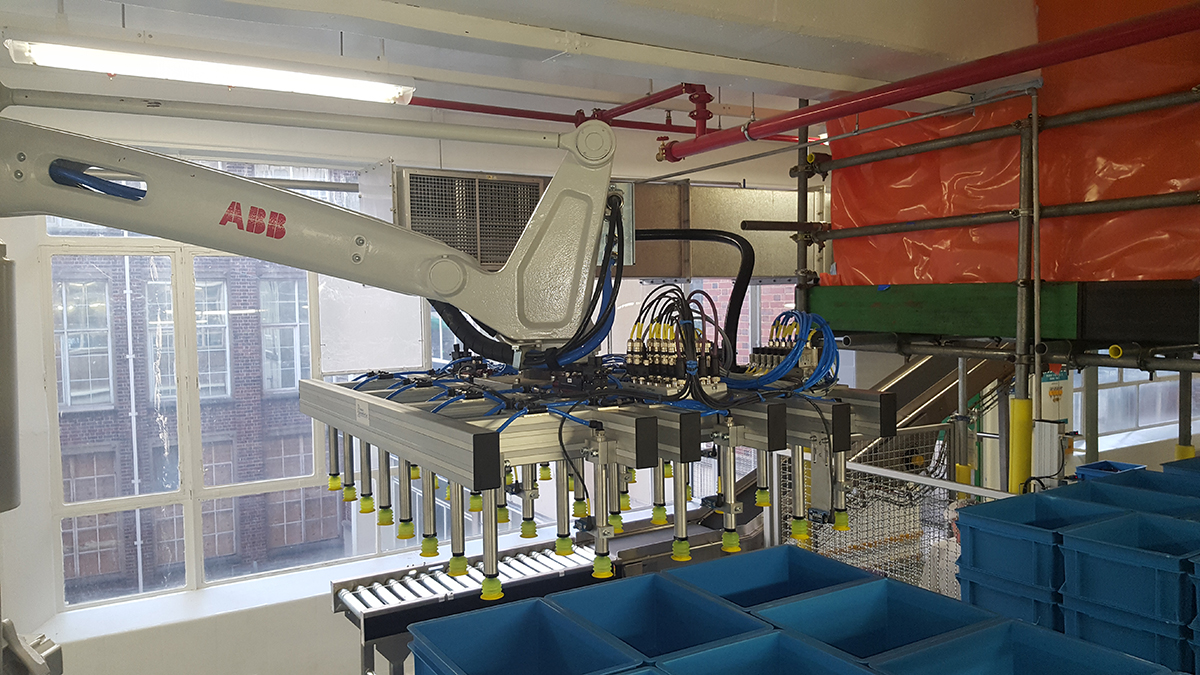
Automation can take over predictable tasks that slow a production team down or create avoidable variation. Common applications include machine tending, palletising, welding, gluing, gasket dispensing and assembly handling. A robot can load and unload equipment, move parts between stages or apply material with a repeatable programmed path, allowing people to focus on inspection, problem-solving and higher-value work.
The benefit is not simply speed. A well-planned cell can improve repeatability, reduce material waste and help maintain output during recruitment challenges or shift changes. For example, a palletising system can use programmed patterns and controlled handling to create stable loads, while a machine-tending cell can maintain a consistent cycle without asking an operator to repeatedly lift components.
Start with the process, not the robot
A successful project begins by understanding the current process in detail. Before specifying Machine Automation In Bedford, examine cycle times, product sizes, batch volumes, changeovers, quality issues and the way materials arrive at and leave the workstation. This reveals where automation will make a genuine difference and where a simpler improvement may be more appropriate.
Less obvious details matter. Parts may vary slightly between suppliers, surfaces may be difficult to grip, or a machine may need time to settle before a robot can safely open its door. Allowing for these real-world conditions early can prevent costly alterations later. It is also sensible to consider access for maintenance, tool changes and cleaning, rather than designing solely around the smallest possible footprint.
Machine Automation In Bedford tailored to your operation
There is no single automation format that suits every site. Collaborative robots can be useful where people and automation need to work in the same area, while larger industrial robots may suit heavier loads, faster cycle times or more demanding tasks. Purpose-designed control systems connect the equipment, safety devices, sensors and production machinery into one usable process.
Premier Automation can design new robot systems, integrate or re-engineer used robots, and create controls for special-purpose machinery and process lines. This flexibility is valuable for businesses that want to modernise an existing asset rather than replace everything at once. PLC and robot programming should also be planned for future product changes, so routine adjustments do not require a complete rebuild.
Build safety and usability into the design
Automation must be safe for operators, maintenance staff and anyone working nearby. Risk assessment should consider foreseeable tasks, including clearing a jam, changing a tool and recovering after a fault, not only normal automatic running. Guards, interlocked doors, safety scanners, emergency stops and clearly defined operating modes all have a role in a properly designed cell.
The HSE guidance on machinery and the Provision and Use of Work Equipment Regulations 1998 makes clear that work equipment must be suitable, maintained and used by people with adequate information, instruction and training. Practical handover documentation and staff training are therefore as valuable as the hardware itself.
Machine Automation In Bedford with long-term support
Installation is the start of the system’s working life, not the final step. Clear commissioning, acceptance testing and operator training help a team become confident with the new equipment. Reliable after-sales support is equally useful for diagnosing faults, refining a cycle, adding a product variant or planning a relocation.
As production changes, an automated cell may need new grippers, revised software or additional safety measures. Choosing a partner that understands both robots and controls helps keep these updates coordinated, reducing disruption and protecting the original investment.
Frequently Asked Questions
How long does an automation project take?
Timescales depend on the application, equipment availability, safety requirements and testing needs. A site survey and defined scope provide the most reliable programme, rather than relying on a generic estimate.
Can an existing robot be upgraded?
Often, yes. Used or older robots can sometimes be re-engineered with updated controls, guarding, tooling or programming. A technical assessment will establish whether this is practical and cost-effective.
Will automation remove the need for operators?
Usually, it changes the work rather than removing people entirely. Staff can move away from repetitive handling towards quality checks, supplying materials, supervising the cell and resolving exceptions.
What information is needed for an initial discussion?
Bring details of the product, production volumes, cycle target, layout, photographs or video of the current process, and any known problems. This gives a clearer starting point for a solution.
For Machine Automation In Bedford that is designed around your production goals, speak with Premier Automation about a survey, a new system, an upgrade or ongoing support.