Robot Cell Design In London for Safer, Smarter Manufacturing
For manufacturers in London, automation needs to deliver clear results: better output, dependable quality and a sensible return on investment. Robot Cell Design In London is not simply about adding a robot to a production line. It is about creating a complete working system that fits your products, your floor space, your staffing and your commercial goals. That is why many businesses choose Premier Automation for practical advice, custom-built systems and upgrades that solve real production problems rather than adding unnecessary complexity.
Why Robot Cell Design In London needs a tailored approach
No two production environments are identical. A cell that works well for welding may be completely unsuitable for palletising, machine tending or adhesive dispensing. The right design starts with understanding the process itself: what the product is, how fast it needs to move, what level of repeatability is required and how operators will interact with the system day to day.
A well-designed robot cell should improve throughput without creating new bottlenecks. It should also be straightforward to maintain, simple to operate and flexible enough to handle future product changes where possible. That matters for businesses that want automation to support growth over several years, not just solve one immediate issue.
Premier Automation designs and builds new robotic systems, integrates used robots where appropriate and modifies existing automation to improve performance. For customers, that means a wider range of options. In some cases, a new cell is the right answer. In others, re-engineering an existing system can reduce cycle times, improve reliability or adapt the line for new products at a lower overall cost.
What customers should expect from Robot Cell Design In London
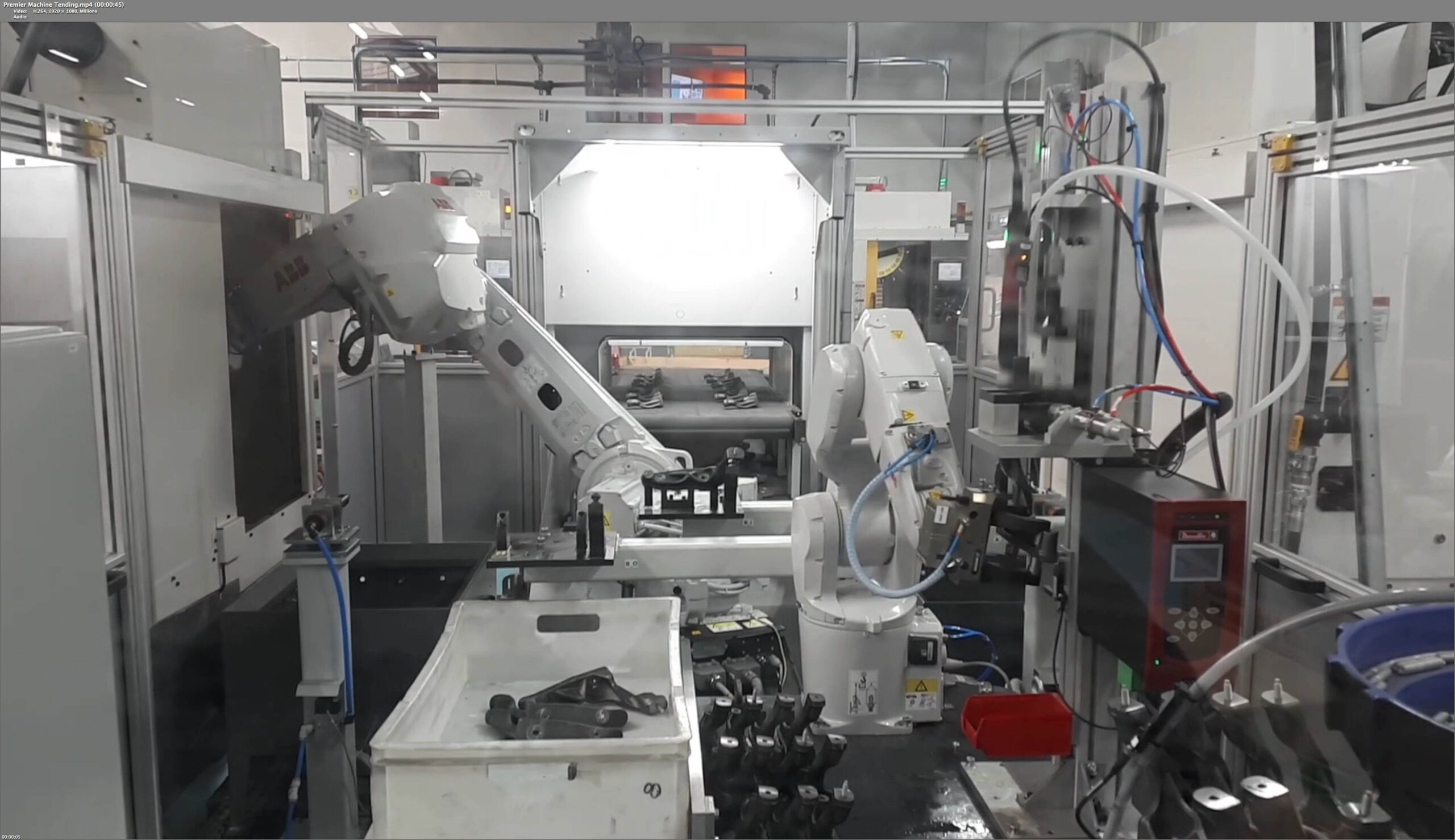
Customers should expect more than a robot arm and a guard. A complete cell usually includes the robot, end-of-arm tooling, fixtures, control systems, safety measures, operator interfaces and the programming needed to make everything work together reliably.
The control system is especially important because it shapes how easy the cell is to run and troubleshoot. A good interface helps operators understand machine status quickly, reduces avoidable downtime and supports smoother handover into production. Strong cell design also considers installation, commissioning and staff training from the start, rather than treating them as afterthoughts.
Safety must also be built into every stage of the project. UK manufacturers should follow recognised machinery safety guidance, including the information provided by the HSE Machinery Safety pages. This covers the safe use of work equipment and the wider responsibilities that come with introducing automated machinery into the workplace.
Choosing the right robot application for your production line
Robot cells can support a wide variety of tasks, but the best results come from matching the system to the job. Machine tending remains one of the strongest uses for industrial robots because it reduces manual handling, supports longer unattended running and improves consistency. Palletising is another popular choice, especially for businesses dealing with repetitive lifting and stacking.
Other applications include welding, glue and gasket dispensing, inspection support and product handling. In some environments, collaborative robots may also be suitable. Cobots can be a good option where flexibility, compact layouts and simpler programming are priorities, although they are not automatically the best fit for every task.
Customers often benefit from working with an integrator that can assess a broad mix of options rather than pushing a single preferred solution. Premier Automation has experience across multiple robot brands and applications, which helps customers compare what is technically suitable and what makes commercial sense.
Robot Cell Design In London and the value of upgrading existing systems
Not every automation project starts from scratch. Many manufacturers already have robot cells in place, but they may no longer meet current production demands. Perhaps cycle times are no longer competitive, the controls are dated, the product has changed or the system needs to be moved to a different area or site.
Upgrading an existing cell can be a highly effective route. Re-engineering may involve new tooling, revised programming, replacement control hardware, additional safety measures or layout changes that improve access and performance. In the right situation, this can preserve useful assets while giving the system a second life.
This is also where experience matters. A relocation or upgrade project needs careful assessment so that downtime, transport risk and recommissioning issues are managed properly. With facilities in Bedford and access across the UK, Premier Automation supports customers with system surveys, redesign work, installation and commissioning for both new and existing automation.
How to choose a reliable automation partner
For most customers, the ideal partner is one that communicates clearly, gives honest advice and stays focused on outcomes. That includes explaining where automation will help, where it may not be the best answer and what kind of payback is realistic. Strong project management also matters because delays, unclear specifications and poor support can undermine the benefits of even a well-built system.
It is also useful to work with a company that can cover the full process, from design and panel build through to software, installation and after-sales support. Membership of recognised trade bodies can be another sign of industry engagement, and customers may find the resources from BARA helpful for understanding the wider UK automation sector.
Good automation should feel like a practical business improvement, not a leap into the unknown. The most successful projects are built around the customer’s actual process, available space, staffing needs and long-term plans.
If you are considering Robot Cell Design In London, Premier Automation offers new systems, upgrades, relocations and control solutions shaped around individual production requirements, with a clear focus on reliable performance and sound commercial value.