Robot Integration In The UK for Smarter, More Reliable Manufacturing
For manufacturers aiming to improve output, consistency and efficiency, Robot Integration In The UK offers a practical way to modernise production without losing sight of commercial reality. Automation is not simply about adding a robot to a factory floor. It is about designing a complete system that suits the process, supports operators and delivers measurable value over time. Premier Automation works with customers to design and build new robot systems, integrate used robots, modify existing automation and develop control solutions that meet individual production requirements and payback targets.
Many businesses reach a point where manual processes begin to limit growth. Cycle times can become harder to reduce, quality can vary across shifts and labour-intensive tasks may place unnecessary strain on staff. A well-integrated robot system helps solve these issues by combining the robot, tooling, controls, guarding and software into one reliable production solution. The result should be a system that is efficient, safe and easier to manage day after day.
Why More Manufacturers Are Turning to Automation
Factories are under constant pressure to improve productivity while controlling costs. At the same time, customers expect greater consistency, shorter lead times and dependable quality. Robotics can support these goals in the right application, particularly for repetitive, precise or physically demanding tasks.
Applications such as machine tending, palletising, welding, gluing and gasket dispensing are all well suited to automation when the process has been properly assessed. In some cases, a business may need a brand-new robotic cell. In others, the smarter option may be to upgrade an older system, reprogram an existing installation or relocate equipment to a different site.
Premier Automation has built a reputation for delivering cost-effective automation systems that match both technical and commercial objectives. Operating from Bedford, the company supports customers across the country with robot systems, control panels, programming, fabrication and ongoing engineering support. That broad capability allows projects to be approached as complete solutions rather than isolated pieces of equipment.
What Good Robot Integration In The UK Looks Like
Successful integration starts with understanding the full production challenge. That includes the product being handled, target cycle times, available space, safety requirements, operator involvement and future production plans. A robot on its own does not create value unless it works as part of a properly engineered system.
This is where detailed design becomes essential. The control system sits at the centre of most automation projects, linking the robot to conveyors, tooling, sensors, peripheral equipment and external systems. It needs to be functional, dependable and intuitive for the people using it. Premier Automation designs control systems for a wide range of industrial applications and delivers the supporting documentation needed for installation, operation and long-term support, including schematics, panel layouts, parts lists, cable schedules, safety reports and controls risk assessments.
Build quality matters too. Panels need to be assembled and tested correctly before dispatch, then installed and commissioned with care on site. Programming also has a major impact on performance. Offline tools can be used to optimise cell design, create digital twins and minimise disruption before installation, while on-site programming ensures the final system performs as intended under real production conditions.
Where Integrated Robot Systems Add the Most Value
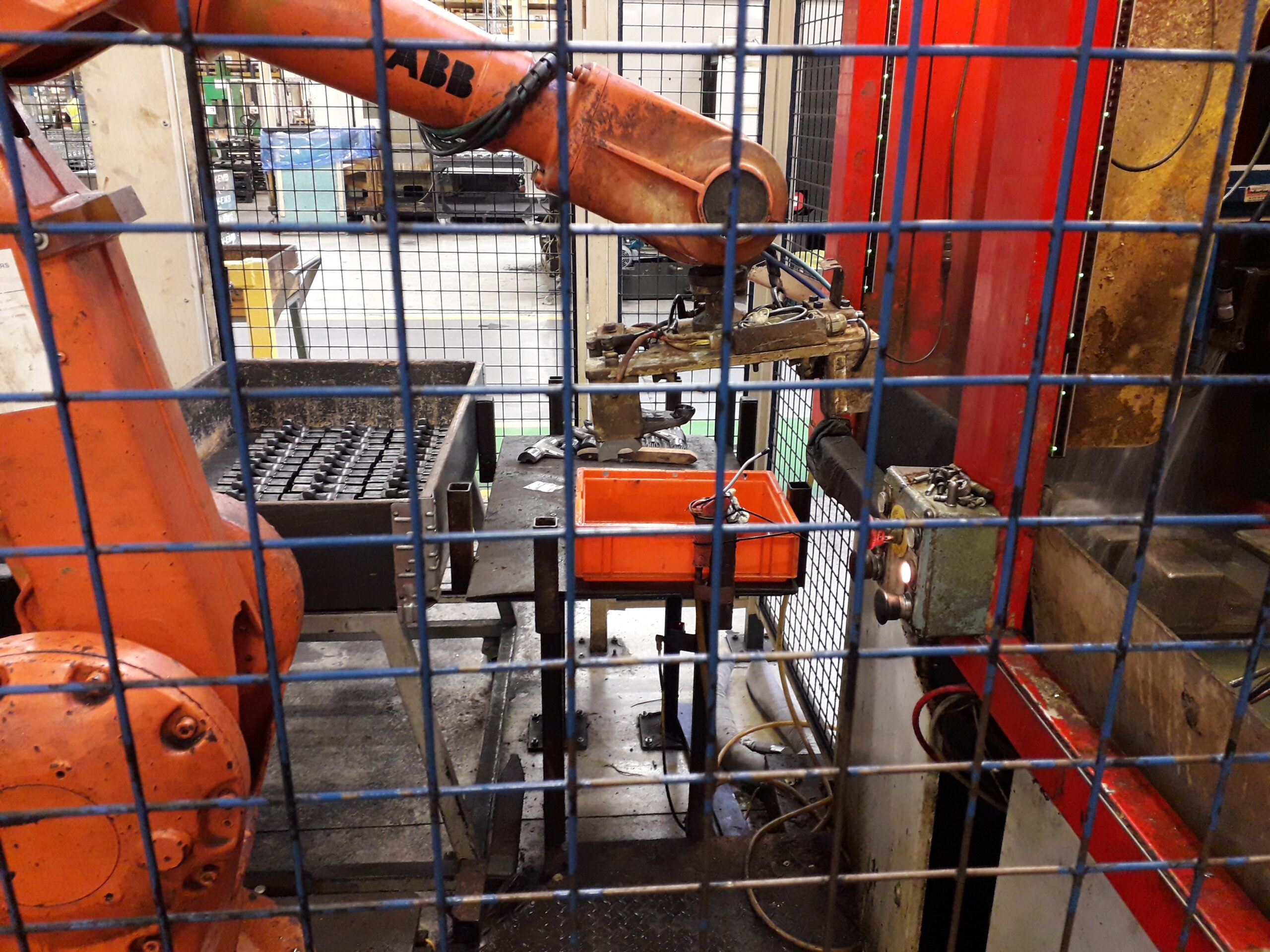
The best automation projects are those that solve a real operational problem. For one business, that might mean automating a welding task to improve repeatability. For another, it could be a palletising cell that reduces manual lifting and keeps the end of line moving smoothly. In a machine tending application, a robot may load and unload parts while also carrying out secondary handling tasks, helping the factory move closer to extended unattended running.
Collaborative robots can also be useful where flexibility and compact layouts are important. Their ease of programming and ability to work safely alongside people in suitable applications make them attractive to businesses handling smaller batches or more varied product lines. Traditional industrial robots remain a strong choice for faster, heavier or more demanding processes where guarding and dedicated cell design are appropriate.
Premier Automation has experience integrating a wide range of robot models from leading manufacturers across multiple industries. That matters because the right answer is not always the same robot or the same style of cell. It depends on the process, the throughput requirement and the level of flexibility needed for future production.
Why Robot Integration In The UK Must Be Built Around Safety
Productivity is only one side of a successful project. Automation must also protect the people working around it. Safety should be considered from the earliest design stage, not added later as an afterthought. This means assessing hazards, selecting suitable guarding and safety devices, and ensuring the whole system complies with the relevant standards and directives.
Guidance from the HSE on machinery and work equipment safety is useful for businesses reviewing automation projects or making changes to existing equipment. Organisations such as BARA also help promote good practice within the UK robotics and automation sector.
Good safety design covers more than barriers and interlocks. It also includes maintenance access, fault recovery, operator training and how the system behaves during changeovers or restarts. A well-integrated robot cell should allow production to run efficiently without creating avoidable risk.
Planning for Long-Term Performance
Automation should continue to support the business long after installation. Products may change, output requirements may increase and layouts may need to be revised. That is why flexibility and support matter so much. Existing systems can often be upgraded, re-engineered or relocated rather than replaced entirely, provided the right engineering assessment is carried out.
Investing in Robot Integration In The UK is often as much about future-proofing as it is about solving today’s production issue. With the right approach, manufacturers can improve quality, reduce downtime and build a stronger foundation for growth. If you are considering a new robotic system, an upgrade to existing automation or a full control system project, Premier Automation can help you identify the right solution and deliver a system built around your process.