Robotic Automation Solutions In London can help manufacturers, warehouses and processing businesses increase output without compromising consistency or safety. Automation is not simply about replacing a manual task; it is about creating a dependable process that supports your people, improves product handling and gives you clearer control over quality. The right system is designed around your actual workflow, available space and production targets.
Why Robotic Automation Solutions In London Make Business Sense
London businesses often operate with high premises costs, demanding delivery schedules and limited room for disruption. A robot cell can take on repeatable work such as loading a machine, stacking finished goods or applying adhesive accurately, allowing skilled employees to focus on inspection, set-up and exception handling. This can reduce bottlenecks, make shift patterns easier to manage and produce more predictable cycle times.
The best case for automation starts with a clearly defined problem. Perhaps a machine is regularly waiting to be loaded, pallets are inconsistent at the end of a line, or an awkward handling task is creating avoidable strain. By measuring the current process, including changeover time, reject levels and staffing requirements, a business can identify where a robot will deliver practical value rather than add unnecessary complexity.
Processes Robotic Automation Solutions In London Can Improve
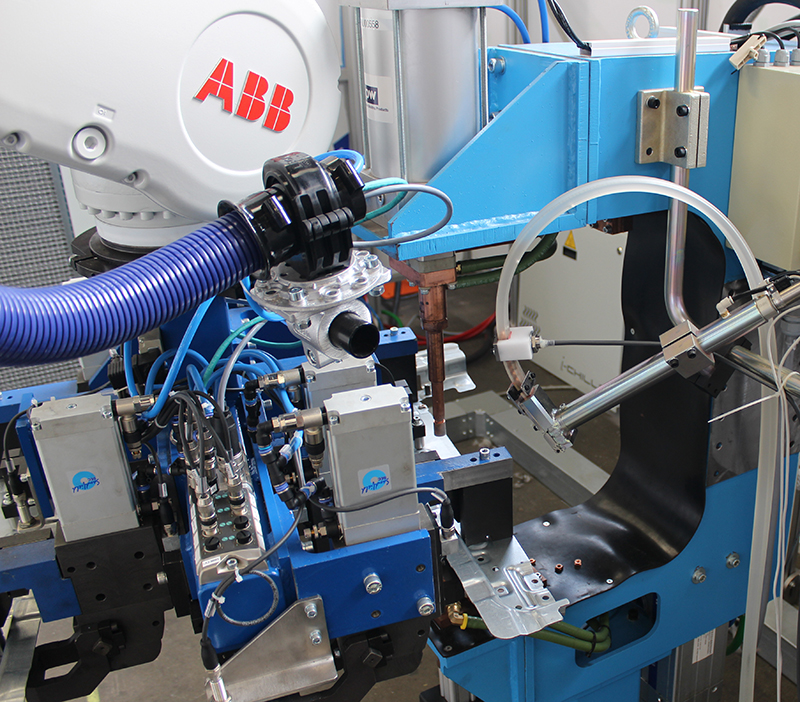
Robots are adaptable tools, not one-size-fits-all machines. For machine tending, a robot can load and unload parts while allowing an operator to manage several processes. In palletising, it can build stable, repeatable loads ready for storage or dispatch. Welding, gluing and gasket dispensing applications benefit from controlled movement and consistent material application, which can help maintain finish and reduce waste.
Collaborative robots, often called cobots, can be useful where people and automation need to work closely. However, a cobot is not automatically safe without further assessment. Its tooling, payload, speed, reachable area and the task itself all affect the safeguards required. A well-designed solution considers the complete cell, including fixtures, conveyors, access points and how people work around it.
Planning the Right Project from the Start
A productive project begins with a site review. This should examine part variations, volumes, takt time, utilities, floor condition and the flow of materials into and out of the proposed cell. It is also worth checking how frequently products change. A system intended for several product sizes may need flexible grippers, recipe-based programming or quick-change tooling, while a dedicated high-volume line may favour a simpler, faster arrangement.
Integration matters as much as the robot itself. The system may need to exchange signals with existing machinery, safety devices, sensors, vision equipment or a factory PLC. Reliable handshaking prevents parts from being picked too early, machines from being started at the wrong time and faults from causing prolonged downtime. Good programming also gives operators straightforward messages and recovery steps instead of cryptic alarm codes.
A practical Robotic Automation Solutions In London project should include realistic acceptance criteria before the build starts. Agree the parts to be tested, expected cycle time, quality tolerances, operator responsibilities and training needs. Factory acceptance testing before delivery can expose issues early, while a planned commissioning period helps ensure the equipment works reliably in its intended environment.
Safety and Robotic Automation Solutions In London
Safety must be built into the design rather than added after installation. Risk assessment should cover foreseeable use, cleaning, jam clearance, maintenance and recovery following a fault, not only normal production. Depending on the application, suitable measures can include perimeter guarding, interlocked access doors, light curtains, safety-rated scanners and clearly positioned emergency stops.
The HSE’s machinery safety guidance on the Provision and Use of Work Equipment Regulations 1998 (PUWER) is particularly relevant: work equipment must be suitable for its intended use, maintained in an efficient state and used by people who have received appropriate information, instruction and training. This is why documented handover, operator training and a maintenance plan are valuable parts of an automation investment, not optional extras.
Future support should also be considered before purchase. Ask who can adjust recipes, source spare parts, back up programs and respond if production requirements change. Choosing equipment and controls with a clear support route can protect uptime over the system’s working life and make later upgrades less disruptive.
Frequently Asked Questions
Are Robotic Automation Solutions In London only suitable for large factories?
No. Smaller operations can benefit where a repetitive task limits capacity, affects quality or creates a handling concern. The solution should be proportionate to the application, with realistic production and payback objectives.
How long do Robotic Automation Solutions In London take to install?
Timescales depend on the cell’s complexity, tooling, safety measures and links to existing equipment. Early site information and clear acceptance criteria reduce surprises and support smoother commissioning.
Can an existing robot system be upgraded?
Often, yes. Controls, guarding, tooling, programming and safety functions may be updated, while a used robot can sometimes be re-engineered for a new task. A technical assessment will establish whether this is the sensible route.
Premier Automation designs, builds, installs and supports robot-based systems for applications ranging from machine tending and palletising to welding and dispensing. If you are assessing an opportunity or need to improve an existing cell, Premier Automation can help you explore a tailored, practical route forward.