Robotic Palletising Systems In Bedford for Safer, More Efficient End-of-Line Operations
For manufacturers handling cartons, trays, bags or boxed products, Robotic Palletising Systems In Bedford can offer a practical way to improve output, reduce manual handling and create more consistent pallet loads. The right system should match your product, your floor space and your production targets without adding unnecessary complexity. That is why many businesses choose Premier Automation for automation projects that are designed around real operating needs, clear commercial goals and long-term reliability.
Why more businesses are investing in palletising automation
Palletising is often one of the most repetitive tasks on a production line. It can also be one of the most physically demanding. Repeated lifting, twisting and stacking can slow operations, increase the risk of injury and make it harder to maintain a consistent finish across every pallet. Automation helps remove those problems by giving businesses a steady, repeatable process that supports line speed and improves load quality.
For customers, the advantages are straightforward. A robotic palletising cell can reduce product damage, lower dependence on manual labour for repetitive tasks and help create stable pallet loads for storage and transport. It can also allow operators to focus on jobs that need judgement and oversight rather than continuous heavy handling. The result is often a safer workplace and a smoother end-of-line process.
Premier Automation designs and builds new robot systems, integrates used robots where suitable and modifies existing automation to meet each customer’s requirements and payback targets. This gives businesses more than one option when planning automation. In some cases, a completely new cell is the best route. In others, a re-engineered or upgraded system may offer better value.
How Robotic Palletising Systems In Bedford are tailored to each site
No two palletising projects are exactly alike. One customer may need a compact cell for a limited footprint, while another may require a larger system serving multiple lines. Product type also matters. Lightweight cartons, heavy bags and awkwardly shaped packs all need different handling methods, pallet patterns and gripper designs. A successful project begins by understanding those details before any equipment is selected.
This is where bespoke integration makes a real difference. A well-designed system considers infeed arrangements, pallet positions, guarding, controls, operator access and the movement of finished pallets to the next stage. It should also be practical to maintain and simple for staff to use. Strong design work can prevent bottlenecks, reduce downtime and make future changes easier to manage.
Premier Automation has experience integrating a wide range of robot models across multiple applications, including palletising. The company also designs and manufactures control systems for robots, special purpose machinery and process lines, giving customers a single source of support for the full electrical, mechanical and software side of the job. That joined-up approach can make installation and commissioning much more straightforward.
What to expect from a complete palletising solution
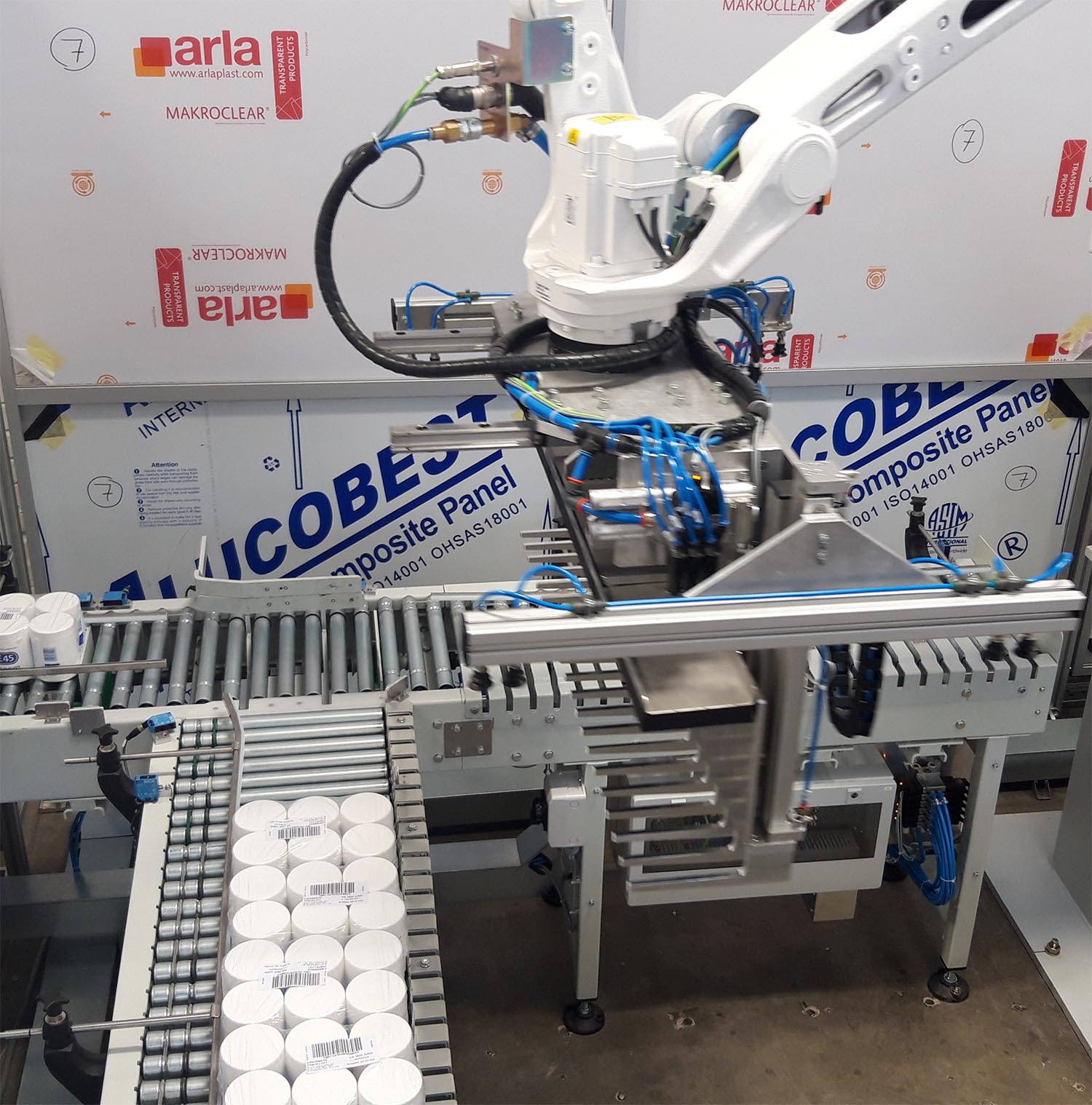
A palletising cell is more than a robot arm. Customers should expect a complete system that includes the robot, tooling, conveyors or infeeds where required, safety measures, controls and programming. The control system is especially important because it shapes how easy the equipment is to operate and how quickly faults can be identified and resolved. Clear interfaces and dependable controls help staff keep production moving with less disruption.
Safety should also be considered from the beginning of the project. Any automation system needs to be designed and installed with proper attention to guarding, access, risk reduction and user interaction. Businesses planning new automated equipment or changes to existing machinery can refer to the guidance provided by HSE Machinery Safety for useful information on responsibilities and good practice.
For many customers, reliability matters just as much as speed. A palletising cell that runs fast but is awkward to maintain or difficult to adjust can soon become a frustration. A good solution is one that performs consistently over time and can adapt where products or packaging requirements change.
When Robotic Palletising Systems In Bedford are not built from scratch
Not every palletising project needs a brand-new installation. Some businesses already have automation in place but need it to work more efficiently, cope with a new product or fit within a changed layout. In these situations, upgrading or modifying an existing system can be the most sensible route. Improvements might include revised programming, replacement controls, new tooling or changes to the physical layout of the cell.
Relocation is another common requirement. If production is being reorganised within a facility or moved to another site, an existing palletising system may still have strong value. Based in Bedford, Premier Automation is well placed to support customers locally as well as nationally and internationally with relocation, assessment and recommissioning work. That can help preserve investment while reducing the risks that come with moving automation.
This flexibility is often important for growing businesses. Production demands can shift quickly, and a system that can be upgraded or re-used later may offer a better return than a rigid design with no room for change.
Choosing the right automation partner for long-term value
For most customers, the best automation partner is one that offers honest advice and focuses on what will work in practice. That includes being clear about whether palletising automation is the right fit, what level of performance is realistic and how the project should be managed from design through to support. Technical skill matters, but so do communication, planning and after-sales service.
It also helps to work with a company that understands the wider picture of automation rather than a single narrow application. Resources from BARA can be useful for understanding the UK robotics sector, but customers usually get the best results by choosing an integrator that can support design, programming, installation and ongoing improvements in one place.
If you are considering Robotic Palletising Systems In Bedford, Premier Automation can support you with new robot cells, upgrades, relocations, control systems and programming services tailored to your production needs.