
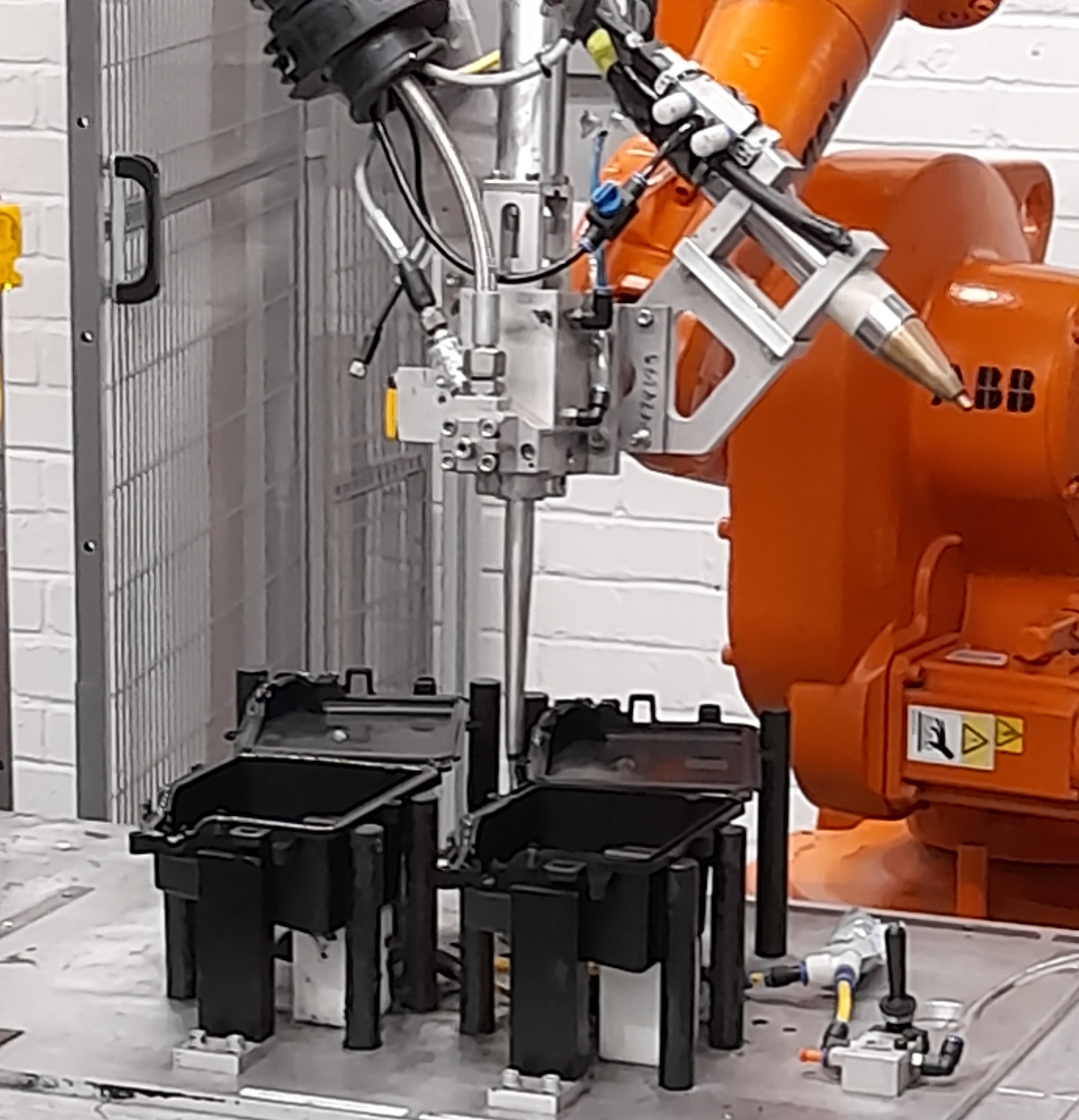
Tig Welding and the Benefits of Robotic Automation
Tig Welding is valued for producing precise, clean and visually consistent joints across a wide range of metals. It is commonly used where weld quality, appearance and control are more important than maximum deposition speed. However, maintaining the same standard across every component can be difficult when production volumes rise. Robotic automation can help manufacturers achieve repeatable results, reduce operator exposure to hazards and create a more reliable production process.
How Tig Welding Works
The process uses a non-consumable tungsten electrode to create an electric arc between the welding torch and the workpiece. A shielding gas, usually argon, protects the weld area from contamination. Depending on the application, filler material may be added separately or the joint may be fused without it.
This level of control makes the process suitable for stainless steel, aluminium, mild steel and various specialist alloys. It is often selected for components that require narrow weld beads, low distortion and a neat finish. Typical applications include fabricated assemblies, automotive components, food-processing equipment, aerospace parts and products where the final weld remains visible.
Manual operation requires considerable skill. The welder must maintain the correct torch angle, travel speed, arc length and filler position throughout the joint. Even an experienced operator can produce small variations between parts, particularly during long shifts or repetitive production runs.
Why Automate Tig Welding?
A robotic system follows a programmed path with controlled movement and consistent timing. Once the welding parameters have been established, the robot can repeat the operation accurately across every suitable component. This can reduce variation caused by fatigue, changes in technique or differences between operators.
Automation is particularly useful for repeatable products manufactured in medium or high volumes. It can also benefit lower-volume production where several product variants share similar joints, provided the robot cell and tooling are designed for efficient changeovers.
Consistent torch positioning supports stable weld quality and can reduce the need for rework, grinding or cosmetic correction. Robots can also maintain a steady travel speed around curves, corners and complex joint profiles that may be tiring for a person to complete repeatedly.
Automation does not remove the need for welding knowledge. The process still requires suitable joint design, accurate component preparation, effective fixturing and carefully selected parameters. A successful installation combines welding expertise with robot programming, mechanical design and control-system integration.
Improving Quality and Production Consistency
One of the main reasons manufacturers invest in robotic welding is the ability to achieve predictable results. A correctly engineered cell controls the movement of the torch, the position of the component and the timing of each stage. This helps maintain consistent penetration, bead shape and heat input.
Accurate fixturing is essential because the robot will follow the programmed path even if a component has been positioned incorrectly. Fixtures may therefore include location features, clamps, sensors and part-presence checks. Depending on the application, seam tracking or vision technology may also be incorporated to compensate for controlled levels of component variation.
Production data can be captured through the cell’s control system, providing greater visibility of cycle times, faults and operating conditions. This information can help manufacturers identify recurring issues, plan maintenance and improve overall equipment performance.
Safety, Staffing and Practical Considerations
Robotic welding can reduce direct operator exposure to arc radiation, heat, fumes and repetitive physical movements. The cell must still be designed with appropriate guarding, extraction, interlocks and safety controls. The HSE guidance on work equipment and machinery provides useful information about employer responsibilities and safe equipment use.
Operators remain important to the process. Their responsibilities may include loading components, checking finished parts, monitoring production, changing consumables and responding to system messages. Automation can allow experienced welders to concentrate on process development, inspection and more complex fabrication work rather than completing the same repetitive joint throughout a shift.
Before investing, manufacturers should consider product volumes, component tolerances, available floor space, required cycle time and the range of parts that the cell must accommodate. The business case should include potential savings from reduced rework, improved throughput, better material control and more predictable staffing requirements.
Planning a Robotic Welding System
A well-designed system begins with a detailed assessment of the product and production requirements. This includes reviewing joint access, material type, component presentation, fixture design, welding equipment, extraction and quality expectations. Simulation and offline programming can help confirm robot reach, torch angles and potential collision points before the equipment is manufactured.
The cell may use a fixed welding table, a powered positioner or multiple loading stations. Positioners can rotate the component so the joint remains in a favourable orientation, while twin-station arrangements may allow an operator to load one fixture while the robot welds another. The right arrangement depends on component size, cycle-time targets and safe working practices.
Premier Automation designs new robotic systems, integrates used robots and modifies existing automation to suit changing production requirements. From its facility in Bedford, the engineering team can provide mechanical design, control-system development, robot programming, fabrication, installation and commissioning.
Industry guidance and technical resources from the British Automation & Robot Association can also help businesses understand the wider role of robotics within UK manufacturing.
Frequently Asked Questions
Is robotic welding suitable for small production batches?
It can be, especially where products are repeated regularly or several variants use similar fixtures and weld paths. Offline programming and quick-change tooling can reduce the time required between batches.
Can an existing robot be used for Tig Welding?
In some cases, yes. The robot’s condition, payload, reach, controller, accuracy and compatibility with the welding equipment must be assessed. Guarding, extraction, tooling and safety systems may also require modification.
Will automation completely replace welding operators?
No. Skilled people are still needed to develop the process, prepare components, inspect welds, maintain equipment and manage production. The robot takes over the repetitive movement rather than the full welding function.
Can an existing robotic welding cell be upgraded?
Many systems can be re-engineered with updated controls, programming, fixtures, positioners or welding equipment. Premier Automation can assess an existing installation and recommend practical improvements based on its condition, production goals and likely payback.
For manufacturers exploring Tig Welding automation, Premier Automation can provide honest guidance and develop a solution around the technical, operational and commercial requirements of the application.