
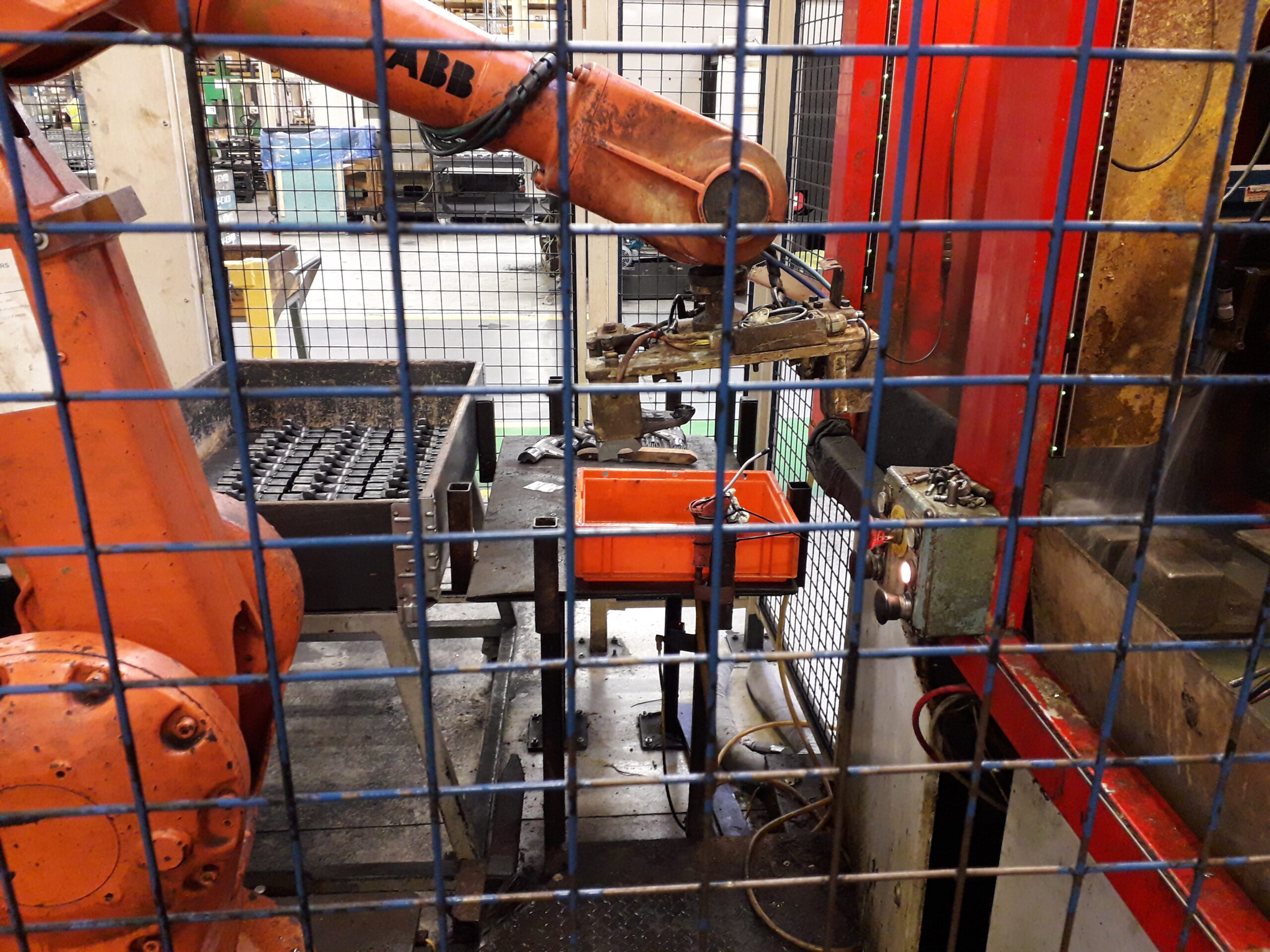
Tig Welding Robots In London for Faster, More Consistent Production
Manufacturers in London are under constant pressure to improve quality, increase throughput and control labour costs without compromising safety. That is why Tig Welding Robots In London are becoming a practical investment for businesses that need repeatable, high-quality welds across a wide range of components. From specialist fabrication to larger production environments, robotic TIG welding can help reduce variation, improve arc stability and create a more dependable process from one batch to the next.
Premier Automation works with manufacturers to design and build new robotic systems, integrate used robots and upgrade existing automation where required. That means the right solution is not always a completely new installation. In many cases, an existing cell can be re-engineered, reprogrammed or adapted to suit new products, revised cycle times or changing commercial targets.
Why Tig Welding Robots In London are gaining attention
TIG welding is widely chosen for applications where weld appearance, precision and control matter. It is often used on thinner materials, stainless steel, aluminium and components where a clean, accurate finish is essential. While manual TIG welding can deliver excellent results, it also depends heavily on operator consistency, available skills and production pace. A robotic system helps remove much of that variation.
For manufacturers, the benefits are clear. A well-designed robot cell can produce more consistent weld paths, controlled travel speeds and repeatable torch positioning. This supports better quality while also reducing scrap, rework and downtime. For businesses working to tight delivery schedules, robotic TIG welding also makes planning easier because output becomes more predictable.
In a busy region such as London, where floor space, labour availability and production efficiency all influence competitiveness, automation can provide a measurable advantage. It is not only about replacing manual work. It is about improving process reliability and allowing skilled staff to focus on oversight, quality control and higher-value tasks.
Choosing the right Tig Welding Robots In London for your process
No two welding applications are exactly the same. Joint design, material type, part presentation, fixture accuracy and production volumes all affect the best solution. Some businesses require a dedicated cell for repeat work, while others need a flexible system that can handle multiple product variants with quick changeovers.
This is where a detailed review of the production process matters. Premier Automation assesses the technical and commercial requirements before recommending a route forward. That may involve a new robot cell, a modified existing installation or the reuse of a robot within a different application. The aim is always to create a robust system that delivers worthwhile payback rather than automation for its own sake.
Control systems also play a central role. A welding robot needs to do more than move accurately. It must communicate with surrounding equipment, provide a clear operator interface and support safe, efficient day-to-day use. With experience in robot integration, PLC programming, panel design and commissioning, Premier Automation can deliver joined-up solutions rather than isolated pieces of equipment.
What a successful robotic welding cell needs
A good robotic TIG welding installation depends on more than the robot arm itself. Tooling, fixturing, guarding, programming and operator interaction all contribute to performance. If one element is overlooked, the whole process can suffer. Reliable part location is especially important, because the robot can only repeat the conditions it is given.
This is why project planning should include design, build, installation and commissioning as part of one clear process. Offline programming can also help reduce disruption by allowing programmes to be developed or refined before changes are made on site. For businesses that cannot afford lengthy stoppages, this can be a major advantage.
Safety must also be built into the project from the start. Employers should ensure machinery and automated equipment are properly assessed, controlled and operated in line with current guidance. The Health and Safety Executive provides useful information on machinery safety, while the British Automation & Robot Association offers further industry insight into robotic automation in the UK.
Upgrading existing Tig Welding Robots In London
Not every business needs to start from scratch. Existing systems can often be upgraded to improve performance, handle new products or restore efficiency after years of use. In some cases, a customer may want to move a robot to another line, another building or another site entirely. In others, the need may be for revised tooling, new controls or updated software.
These projects can deliver strong value because they make better use of equipment already owned by the business. A system assessment can identify what still works well, what is holding the process back and where targeted investment is likely to have the biggest effect. For manufacturers around London, this can be a sensible way to modernise production without the full cost of a completely new cell.
Support beyond installation also matters. Production demands change over time, and automation needs to keep pace. Access to engineering support, on-site programming, control upgrades and replacement tooling helps protect the long-term value of the system.
Working with an experienced automation partner
Robotic welding projects succeed when the supplier understands both engineering detail and commercial reality. A technically impressive system is of limited value if it is too complex, difficult to maintain or poorly suited to the customer’s workflow. The best outcomes come from close collaboration, honest advice and a detailed understanding of what the process needs to achieve.
Founded in 2000, Premier Automation has developed broad experience across robot integration, control systems, programming, upgrades and relocation. Operating from Bedford with access to customers across the UK, the team supports a wide range of industrial applications and works with leading robot manufacturers. That depth of experience helps customers identify whether TIG welding automation is the right fit and, if so, how to implement it in a way that supports reliability, productivity and return on investment.
For manufacturers reviewing welding quality, cycle times or capacity, Tig Welding Robots In London can offer a practical route to a more efficient production process. If you are exploring a new robotic welding cell, an upgrade to an existing system or advice on how automation could support your operation, Tig Welding Robots In London may be the next step worth considering. Speak to Premier Automation to discuss a solution tailored to your process, product range and production goals.