
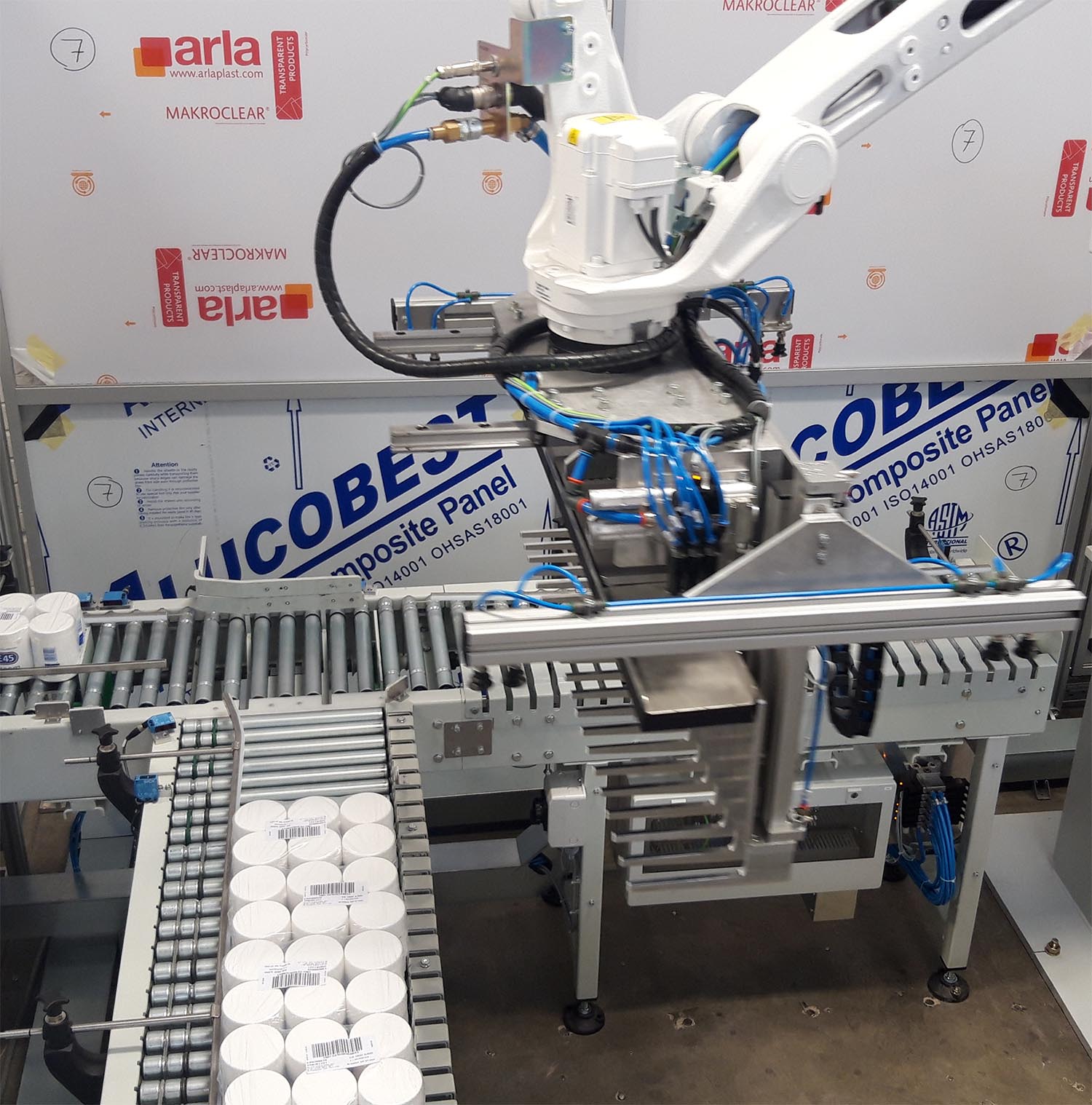
What is Offline Robot Programming? It is a method of creating, testing and refining a robot’s movements in specialist software rather than on the production floor. A digital model of the robot, its tools, safety zones and surrounding equipment is used to build the application before the physical system is available. For businesses considering automation, this approach can make installation more predictable, reduce disruption and reveal practical issues earlier.
What is Offline Robot Programming? How the process works
Offline programming begins with accurate information about the proposed cell: robot model, reach, payload, gripper or welding torch, fixtures, conveyors, guarding and the parts being handled. Engineers create a virtual representation of that environment, often called a digital cell, then define positions, paths, speeds, tool orientations and operating logic.
The software checks whether the robot can reach each point without colliding with fixtures, fencing or other equipment. It can also estimate cycle time and identify poor approaches, such as a tool orientation that forces the robot close to a joint limit. Once the programme is prepared, it is transferred to the real controller, where engineers validate it against the installed equipment and make final adjustments.
This is not simply a computer simulation for its own sake. The virtual model provides a controlled place to resolve many programming decisions before production machinery is stopped. Physical commissioning is still essential because real parts, tolerances, cable routing and equipment response must be checked, but the amount of work required at that stage can be significantly reduced.
What is Offline Robot Programming? Benefits for your operation
The clearest benefit is less downtime. Conventional robot programming may require the robot and nearby machinery to be taken out of service while positions are taught and paths are improved. With much of the work completed away from the line, the on-site window can focus on verification, calibration and acceptance rather than starting from a blank programme.
It also helps businesses assess an automation proposal before committing to a layout. A simulation can show whether a robot has enough reach to service multiple machines, whether pallet patterns are achievable, or whether a welding path is likely to be awkward. That evidence supports better decisions about robot size, end-of-arm tooling and cell footprint.
Repeatability is another advantage. A structured virtual model makes it easier to document the intended process and retain programme knowledge if staff change. For companies planning several similar cells, proven programme elements can often be adapted, while still allowing for each site’s parts and safety arrangements.
Where What is Offline Robot Programming? adds the most value
Offline programming is especially valuable for complex cells and projects with limited access to the production area. Machine tending applications can be mapped around door positions, chuck access and part presentation. Palletising simulations can test stack stability, layer patterns and reach across different pallet sizes. For welding, gluing and gasket dispensing, it helps establish consistent tool paths before material trials refine the final parameters.
It can also support re-engineered or relocated robots. Existing equipment may have incomplete drawings or programmes that no longer reflect the working cell. Rebuilding the layout digitally creates a clearer basis for upgrades, new tooling or a move to another facility. Collaborative robot applications benefit too, although a cobot’s safety functions do not remove the need to assess the complete task and its surrounding equipment.
The approach is most effective when the input data is reliable. Accurate CAD models, robot calibration information, tooling dimensions and realistic part tolerances all matter. A highly detailed simulation built from inaccurate measurements can create false confidence, so a good integrator will identify assumptions and plan for on-site confirmation.
Safety, validation and real-world commissioning
A virtual cell can flag likely collisions and restricted access, but it does not certify a machine as safe. The finished installation must be assessed as a complete system, including guards, interlocks, emergency stops, operating modes and foreseeable misuse. The HSE’s machinery safety guidance on the Provision and Use of Work Equipment Regulations 1998 (PUWER) is a useful starting point for understanding employers’ duties to provide suitable, maintained and safe work equipment.
During commissioning, engineers compare the digital model with the physical installation, set accurate reference frames and test the programme at safe speeds. They then confirm interlocks, recovery routines and handover procedures. This final stage is where a simulation becomes a dependable production solution rather than an attractive visualisation.
Customers should ask how programme backups, version control and future changes will be managed. A small adjustment to a fixture, gripper or part can affect a previously validated path. Keeping the offline model current makes later improvements quicker and helps preserve the value of the original engineering work.
Frequently Asked Questions
Is What is Offline Robot Programming? only for large factories?
No. Larger, multi-robot projects often gain substantial time savings, but smaller cells can benefit where downtime is costly, layouts are tight or the process needs careful proof before installation. The likely return depends on the application’s complexity and the quality of available design data.
Does it replace on-site robot programming?
No. It reduces and structures on-site work rather than eliminating it. Engineers still need to calibrate the real robot, verify actual parts and tooling, test safety functions and optimise performance under production conditions.
Can What is Offline Robot Programming? improve an existing robot cell?
Yes. Creating a digital model of an existing cell can support cycle-time improvements, new product variants, tooling changes and relocation planning. It is particularly useful where changes must be planned carefully to protect output.
If you are exploring a new robot system, an upgrade or a more efficient commissioning plan, Premier Automation can design, programme, install and support practical robot automation solutions tailored to your process.