What is Robot Vision? It is the use of cameras, lighting and intelligent software to help a robot understand what is in front of it and decide how to act. Rather than repeating the same movement regardless of the item’s position, a vision-guided robot can locate parts, check their condition and adjust its path. For manufacturers, this can make repetitive processes more accurate, flexible and easier to monitor.
What is Robot Vision? The core principle
A robot vision system captures an image or a series of images, then processes that information to identify useful features. These may include an object’s position, orientation, dimensions, colour, label, edge or surface condition. The system sends coordinates or a pass/fail result to the robot controller, which uses the information to pick, place, inspect or reject an item.
Most systems combine a camera with carefully selected lighting, a lens, image-processing software and an industrial robot. Lighting is often the difference between a reliable installation and inconsistent results. A glossy component, for example, may need diffuse light to reduce glare, while a raised mark may be easier to read with angled illumination that creates contrast.
How a vision-guided robot operates
The process begins by defining what the camera must see. A robot may need to find mixed parts in a tray, confirm that a cap is present, or read a code before packing. Engineers set up the camera view, establish a repeatable image and train the software to recognise acceptable and unacceptable conditions. The robot is then calibrated so that image coordinates accurately match its working area.
Calibration is a less visible but essential step. It links the camera’s view to the robot’s coordinate system, allowing the robot to move to the correct real-world location. If a fixture, camera or conveyor changes, calibration may need checking again. Good system design also accounts for cycle time: a camera can only improve throughput if image capture, processing and robot movement all fit the required production rate.
What is Robot Vision? For inspection, picking and assembly
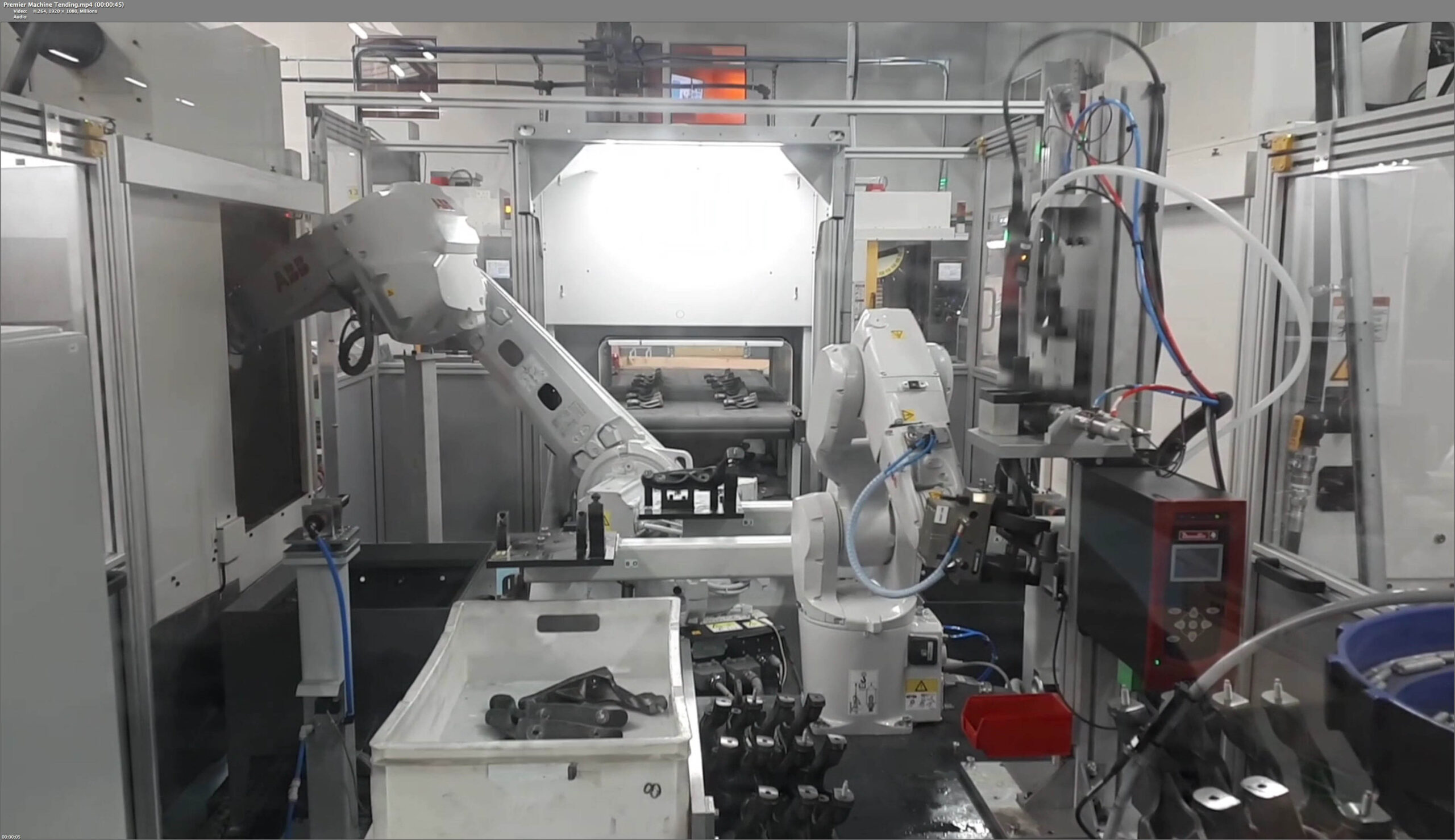
Robot vision is useful wherever products vary in position or need a consistent quality check. In machine tending, it can confirm that a component is correctly presented before the robot loads it into a CNC machine. In bin picking, it can locate randomly arranged items so the robot can select them without a dedicated fixture. It can also guide palletising, verify labels and check that assembled products include the right components.
For quality control, vision can detect missing features, incorrect orientation, visible damage or poorly applied adhesive. It does not need to replace every manual check. The best application is one with a clear decision, stable product presentation and a measurable benefit, such as reducing rework, avoiding a downstream stoppage or improving traceability.
What is Robot Vision? Considerations before installation
Before selecting equipment, define the product range, required accuracy, acceptable defect criteria and expected production volumes. Sample parts should include normal variation, not just ideal examples. Consider surface finishes, changing ambient light, dust, vibration and whether parts arrive consistently on a conveyor or in a container. These practical details determine the camera resolution, field of view, lighting arrangement and robot end effector.
Safety must be designed around the complete cell, not solely the camera. Vision may help a robot recognise an item, but it is not usually a safety-rated method of protecting people. The HSE guidance on work equipment and machinery explains employer duties under the Provision and Use of Work Equipment Regulations 1998 (PUWER). Appropriate guarding, interlocks, risk assessment and safe operating procedures remain necessary for robot installations.
A useful starting question is not simply, What is Robot Vision? It is whether vision solves a defined production problem better than a fixed jig, sensor or manual operation. A review of the task can reveal whether a straightforward 2D camera is sufficient or whether 3D imaging is needed for depth, stacked items or complex shapes. Matching the technology to the task avoids unnecessary cost and complexity.
Frequently Asked Questions
What is Robot Vision?
It is a system that gives a robot visual information through cameras and software. The robot uses that information to locate, inspect or handle products more accurately.
Can robot vision work with different product sizes?
Yes. A properly designed system can recognise approved product variants, provided their range, presentation and quality criteria are defined during testing and programming.
Does a vision system always need 3D cameras?
No. Many checking, positioning and code-reading tasks work well with 2D vision. 3D cameras are valuable where height, depth or randomly stacked parts must be understood.
For a practical assessment of vision-guided automation, Premier Automation can design, build, install and support robot systems tailored to your process, products and production targets.